
Tectonic plate boundaries are like the quiet seams in a floorboard: you can walk over them for years, then one day they creak, shift, and remind you the whole house is moving. In IB Geography, that simple idea is exam gold. Most geophysical hazards cluster where plates meet, because motion builds stress, friction locks it in place, and sudden release sends energy through rock, water, and communities.
IB Geography quick checklist: what to mention in answers
-
Name the boundary type (convergent, divergent, transform)
-
Describe the movement (towards, apart, sliding)
-
Link movement to stress/friction and energy release
-
Identify the hazards (earthquakes, volcanoes, tsunamis)
-
Add a human layer: exposure, vulnerability, capacity to cope
For syllabus-aligned practice, start with IB Geography Option D Geophysical Hazards.
Convergent boundaries: where pressure builds dramatic hazards
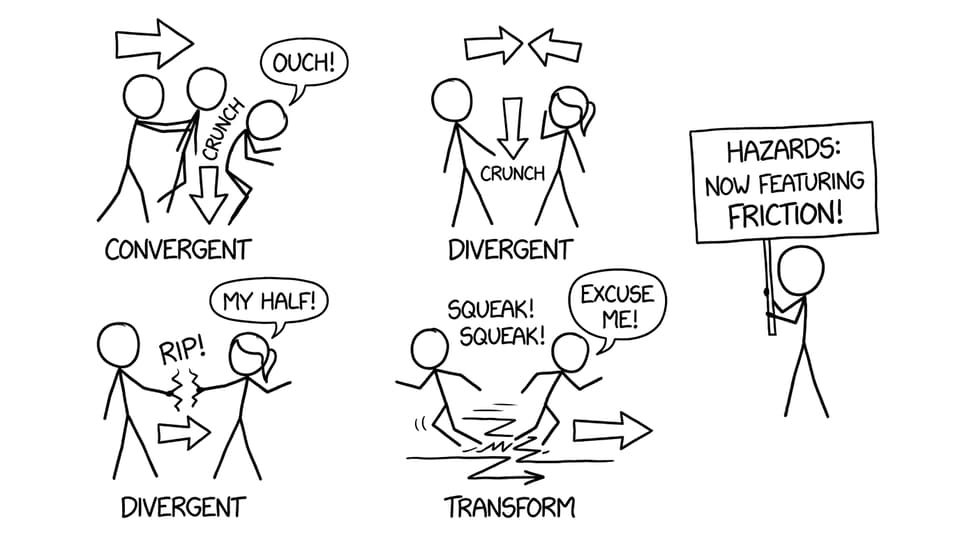
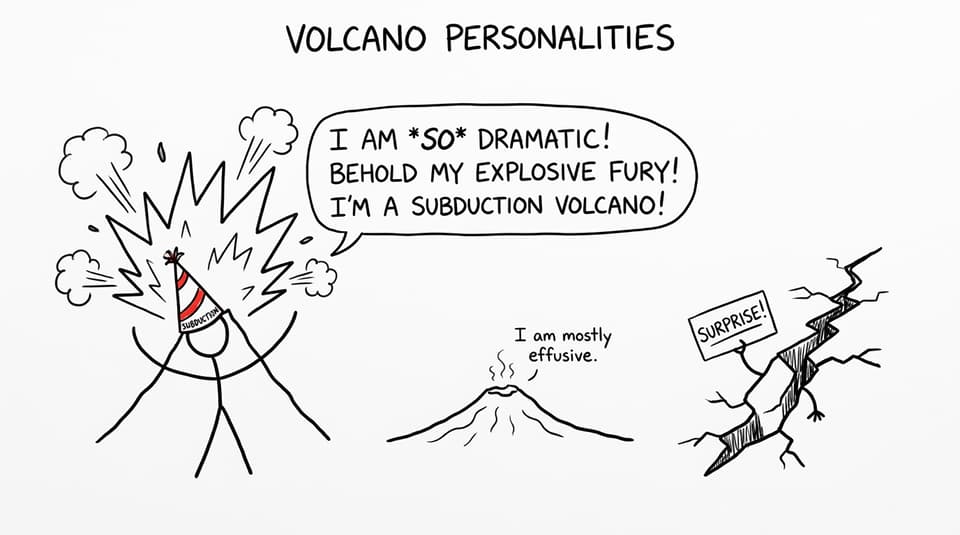
At convergent (destructive) margins, plates move towards each other. If an oceanic plate meets a continental plate, the denser oceanic crust subducts. As it descends, parts melt and generate magma, which rises and can feed explosive volcanoes. Meanwhile, the plate interface can lock due to friction. Stress accumulates for decades or centuries, then releases in seconds as a major earthquake.
That sudden vertical movement of the seabed can displace water and generate tsunamis. In IB Geography, the clean chain is: subduction zone → locked fault → earthquake → seafloor displacement → tsunami risk.
To revise the broader pattern of where these hazards cluster, use D.2.1 Distribution of Geophysical Hazards Notes.
Divergent boundaries: frequent but often lower-intensity hazards
At divergent (constructive) margins, plates move apart. Tension fractures the crust, magma rises to fill the gap, and new crust forms. This produces volcanic activity that is typically more effusive (runny lava) than subduction-zone eruptions. Earthquakes occur too, but they tend to be shallower and smaller because the stress is released more continuously as the plates separate.
A key IB Geography twist: many divergent margins are mid-ocean ridges, so hazards can be less directly damaging to people (lower exposure), even if the processes are constant.
If volcano details blur together, refresh with D.1.2 Volcanic Characteristics and Hazards Notes.
Transform boundaries: sliding plates, locked faults, sharp earthquakes
At transform boundaries, plates slide past each other horizontally. There is no major subduction or upwelling magma, so volcanoes are uncommon. But the friction problem is severe: the plates do not glide smoothly. They stick, stress builds, and then they slip suddenly, producing earthquakes.
These earthquakes can be especially destructive when they occur near cities, because shallow shaking plus dense infrastructure equals high risk. For earthquake mechanics and why shallow events often feel worse, see D.1.3 Earthquake Characteristics and Hazards Notes.
The exam-scoring link: hazards are physical, disasters are human
A boundary creates a hazard, but vulnerability determines the outcome. In IB Geography, you can lift your response by explicitly separating:
-
Hazard (earthquake/eruption/tsunami)
-
Exposure (people and assets in harm’s way)
-
Vulnerability (building quality, inequality, preparedness)
-
Capacity to cope (governance, emergency services, wealth)
RevisionDojo’s Notes for Option D Geophysical Hazards help you keep those terms tight and consistent.
Conclusion: make boundaries predictable, even when hazards aren’t
Plate boundaries create hazards through motion, friction, and sudden energy release. Convergent margins concentrate the most explosive combinations (earthquakes, volcanoes, tsunamis), divergent margins create frequent but often lower-intensity activity, and transform margins specialise in damaging earthquakes near the surface.
If you’re studying IB Geography, your goal isn’t to memorise three definitions. It’s to tell the cause-and-effect story clearly enough that an examiner can see the process, the hazard, and the human risk in under a minute. Build that skill with RevisionDojo’s Study Notes, Flashcards, Questionbank, AI Chat, Grading tools, Predicted Papers, Mock Exams, Coursework Library, and Tutors, and walk into exams knowing exactly how plate boundaries turn geology into real-world hazards.