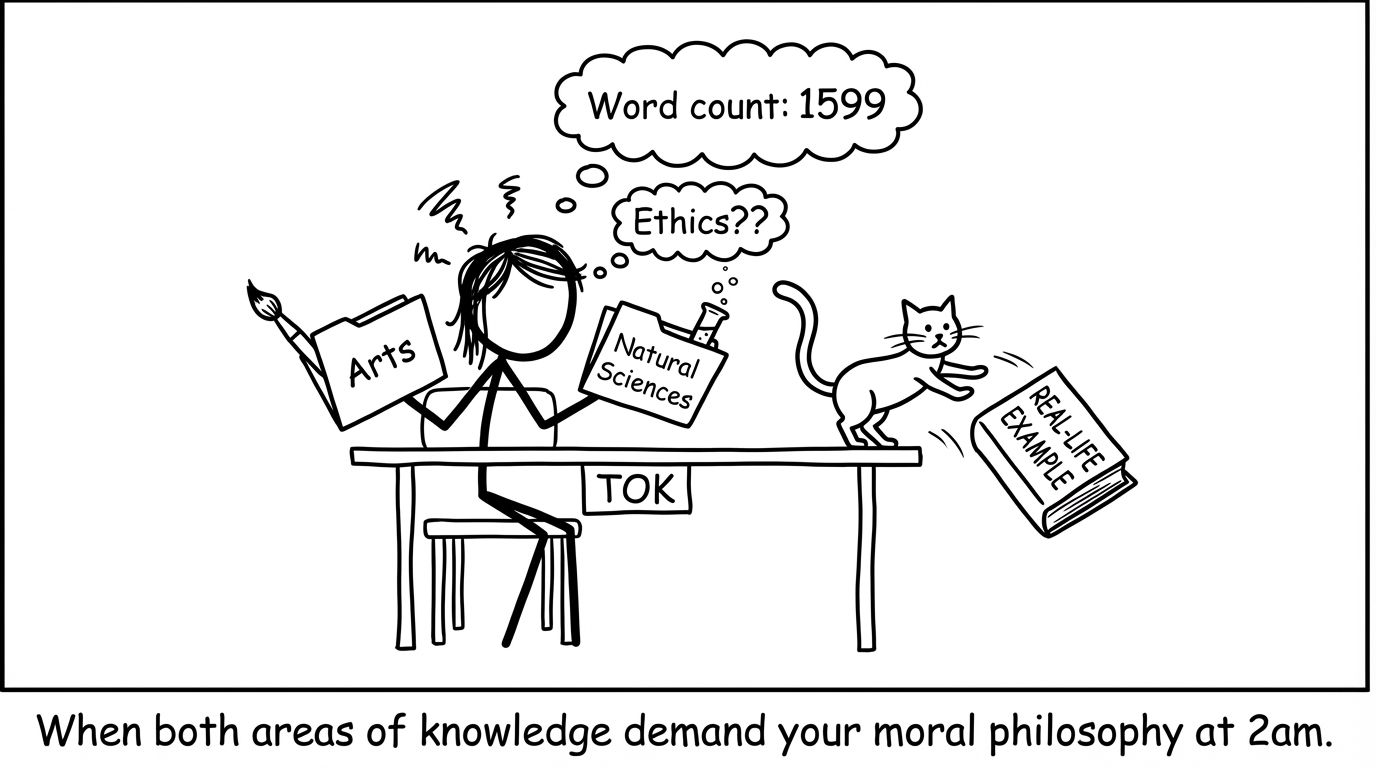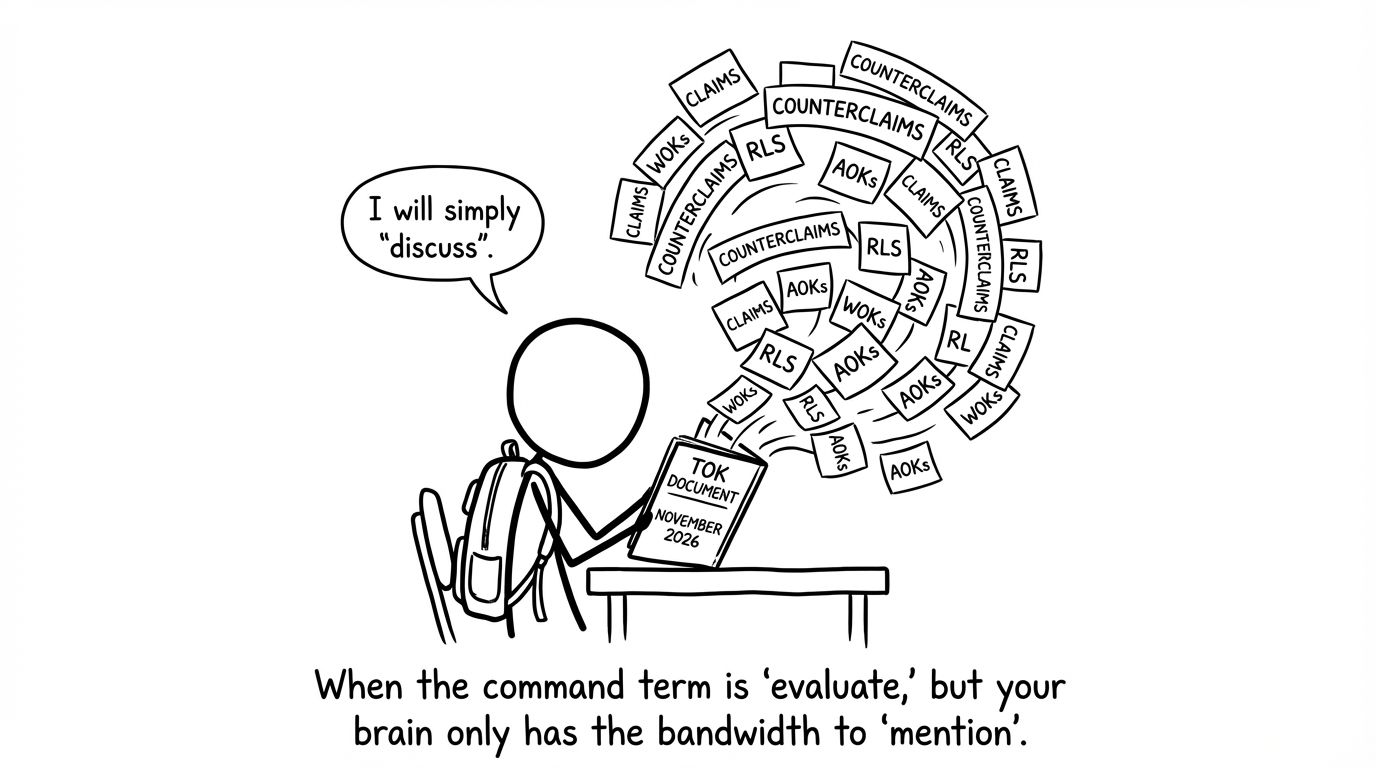

If you have ever stared at a blank document titled “TOK Essay” and felt your brain quietly leave the room, you are not alone. TOK does that. It takes familiar school habits--summarise, explain, conclude--and replaces them with something more honest: How do you know? Why trust that? What would change your mind?
For May 2026, the TOK prescribed titles are built to reward students who can slow down, define key terms, and evaluate knowledge rather than decorate it. This guide walks you through all six prompts, shows what they are really asking, and gives a practical approach to planning a high-scoring TOK essay.
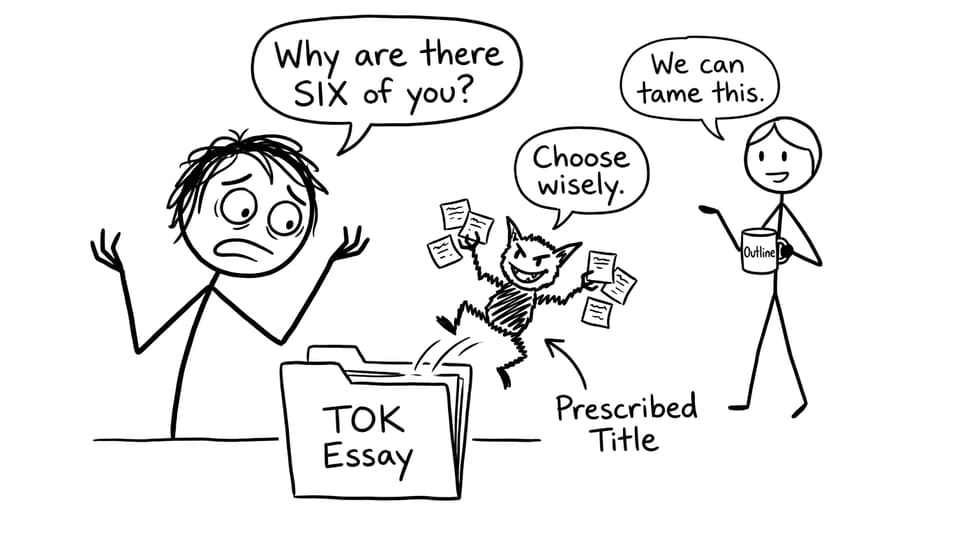
TOK May 2026 prescribed titles: quick overview checklist
Before you pick a title, run this TOK checklist. It saves weeks.
-
Can you rewrite the title in your own words without changing its meaning?
-
Can you extract one focused knowledge question you can evaluate?
-
Can you commit to two Areas of Knowledge (AOKs) that genuinely contrast?
-
Do you already have 3--5 real-life examples (RLEs) that are specific and explainable?
-
Can you imagine a strong counterclaim that is actually tempting?
If any step feels shaky, use RevisionDojo’s guides to steady the foundation: start with How to Choose a TOK Essay Title That Works for You, then practise turning prompts into KQs with TOK Essay Titles: What Are Knowledge Questions?.
Prescribed Title 1: observation is essential but flawed
Prompt: In the production of knowledge, does it matter that observation is an essential but flawed tool?
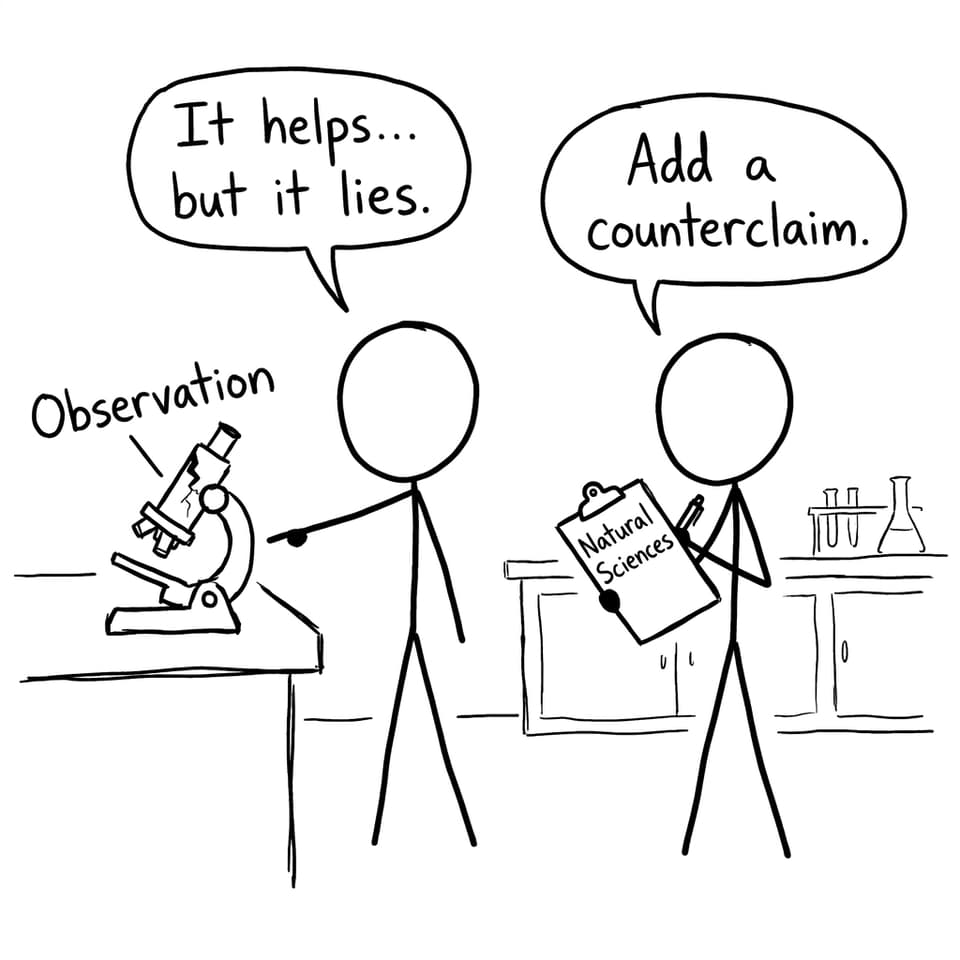
This TOK title is a quiet trap: students often write “observation can be wrong” and stop there. What examiners want is the next step: under what conditions do flaws matter, and how do AOKs compensate?
Where this TOK title shines
-
Natural sciences: observations are mediated by instruments, models, and replication. That makes observation powerful, but also vulnerable to calibration limits, confirmation bias, and interpretation.
-
Human sciences: observation includes surveys, interviews, and behavioural studies, where culture, framing, and the observer effect can reshape results.
A strong TOK move is to contrast cases where observation advanced knowledge (better tools, better methods) with cases where observation misled knowledge communities (biased measurement, poor inference, overconfident interpretation).
Prescribed Title 2: doubt as a driver of knowledge
Prompt: To what extent do you agree that doubt is central to the pursuit of knowledge?
This TOK title is about the productive version of doubt: the kind that forces better justification. But you also need to show when doubt becomes a solvent that dissolves trust and prevents action.
Two clean angles for your TOK essay
-
Natural sciences: doubt functions as error-correction (peer review, replication, falsification). Scientific progress often begins with “something does not fit.”
-
Religious knowledge systems: doubt can deepen understanding for some believers, but can also undermine authority and shared meaning for a community.
To score well in TOK here, avoid claiming “doubt is always good.” Instead, evaluate: What kind of doubt? From whom? At what stage of inquiry? This makes your “to what extent” answer credible.
Prescribed Title 3: does conveying knowledge change its power?
Prompt: Is the power of knowledge determined by the way in which the knowledge is conveyed?
This TOK title rewards students who separate three things that often get mixed:
-
the validity of knowledge,
-
the persuasiveness of knowledge,
-
and the social power knowledge gains after it spreads.
AOK contrasts that work
-
Mathematics: a proof remains true even if the explanation is ugly. Conveyance affects access, not truth.
-
The arts and language: conveyance is inseparable from meaning. Tone, symbolism, and framing change what is understood and felt.
A strong TOK counterclaim is that conveyance can distort authority: the most compelling presentation can overpower better evidence. If you want extra structure support, use Building Coherent Arguments in TOK to keep claims, examples, and evaluation aligned.
Prescribed Title 4: can you understand without context?
Prompt: In the acquisition of knowledge, can we only understand something to the extent that we understand its context?
This title is really asking what “understand” means in TOK. Is understanding explanation? Interpretation? Application? Empathy? Prediction?
Easy AOK entry points
-
History: context is oxygen. Without social and political background, events flatten into trivia.
-
Natural sciences: scientific knowledge also lives inside frameworks (assumptions, models, methods). Discoveries can be ignored until context shifts and the knowledge community is ready.
A strong TOK limitation: some knowledge claims aim to be context-independent (for example, mathematical truths). Use that tension to evaluate what kind of “understanding” the title expects.
Prescribed Title 5: “all things are numbers”
Prompt: To what extent do you agree with the claim that “all things are numbers” (Pythagoras)?
This TOK prompt is about reduction. What is gained when we quantify the world, and what gets lost?
Productive TOK pathways
-
Human sciences: statistics and models create predictive power, but can hide values in assumptions (what is measured, what is ignored).
-
The arts: music, architecture, and design have mathematical structure, yet meaning is not the same as measurement.
A high-scoring TOK essay here does not reject numbers. It evaluates where quantification is reliable and where it becomes a false sense of control.
Prescribed Title 6: is interpretation reliable?
Prompt: To what extent is interpretation a reliable tool in the production of knowledge?
Interpretation sits at the centre of TOK because knowledge is rarely raw. Even “data” is selected, framed, and explained.
Strong AOK contrasts
-
History: interpretation is unavoidable because sources are incomplete, biased, and situated.
-
Ethics: interpretation shapes what counts as justice, harm, rights, and responsibility--often with high stakes.
The best TOK essays here show two truths at once: interpretation is essential, and interpretation can mislead. Reliability becomes conditional: it depends on methods, transparency, and accountability.
How to structure a high-scoring TOK May 2026 essay
The simplest way to improve TOK writing is to stop treating structure as a template and start treating it as logic.
Use these three steps:
-
Define and focus: translate the title into one knowledge question you can evaluate. Use Using Knowledge Questions in Your TOK May 2026 Essay to practise narrowing.
-
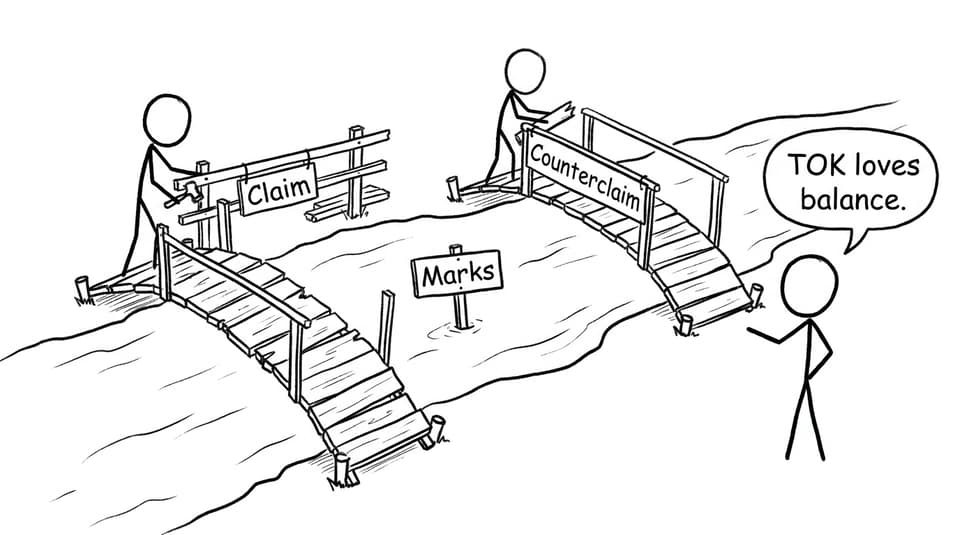
Build balance: each AOK paragraph needs a claim, a real-life example, a counterclaim, and evaluation that weighs them.
-
Stay in the title: keep using the key phrase “to what extent” so your TOK essay answers the question instead of circling it.
For a deeper walkthrough, keep Comprehensive Guide to IB TOK Essay Structure open while you outline.
Common TOK mistakes students make (and quick fixes)
Many TOK essays fall short for predictable reasons.
-
They paraphrase instead of evaluate. Fix: after every example, add “so what does this suggest about knowledge?”
-
They use vague examples. Fix: replace “in science” with one named study, discovery, or controversy.
-
They forget counterclaims. Fix: build them early using TOK Counterclaims for May 2026 Titles (Best Picks).
If you want a teacher-like list of what to avoid, read Top Mistakes Teachers See in TOK May 2026 Essays.
How RevisionDojo helps you execute your TOK essay plan
TOK is not only about ideas. It is also about iteration: draft, test your logic, refine, repeat.
RevisionDojo makes that loop calmer:
-
Use syllabus support via IB Theory of Knowledge (TOK) resources.
-
Tighten your essay planning with TOK Essay Planning Templates for May 2026 Titles.
-
Check your understanding of the task using IB Theory of Knowledge 4.2 the TOK Essay.
-
When you draft, use RevisionDojo’s Grading tools--especially the IB TOK Essay Grader--to see what your writing is doing against the rubric.
And while TOK itself is not a “Questionbank subject” in the same way as sciences, the rest of your IB load still exists. RevisionDojo’s Questionbank, Study Notes, Flashcards, AI Chat, Mock Exams, Predicted Papers, Coursework Library, and Tutors help you protect time for TOK by making the rest of revision more efficient.
Conclusion: make TOK feel manageable, then make it excellent
TOK May 2026 prescribed titles can feel intimidating because they ask for judgment, not memorisation. But that is also why TOK can become one of the most controllable parts of your Diploma: you pick the title, you choose the AOKs, you build the evidence, and you decide what “to what extent” really means.
If you want the simplest next step, choose one title today and build a one-page outline using RevisionDojo’s planning templates and structure guides. Then draft a paragraph and test it with the TOK grader. TOK rewards students who iterate. RevisionDojo is built for exactly that loop.