
If you have ever stared at a blank document thinking, I understand the title, so why can’t I start? you have already met the real challenge of TOK. The ideas are slippery. The words feel philosophical. And your brain keeps trying to write something that sounds impressive instead of something that is clear.
A strong TOK essay structure is the quiet solution. Not because it gives you “the perfect template,” but because structure forces your thinking to show up in the right order: question, argument, example, limitation, alternative view, evaluation. When you do that consistently, the examiner can actually see your reasoning.
Below is a comprehensive guide to TOK essay structure you can follow under pressure, including paragraph blueprints, example prompts, and a revision checklist you can run the night before submission.
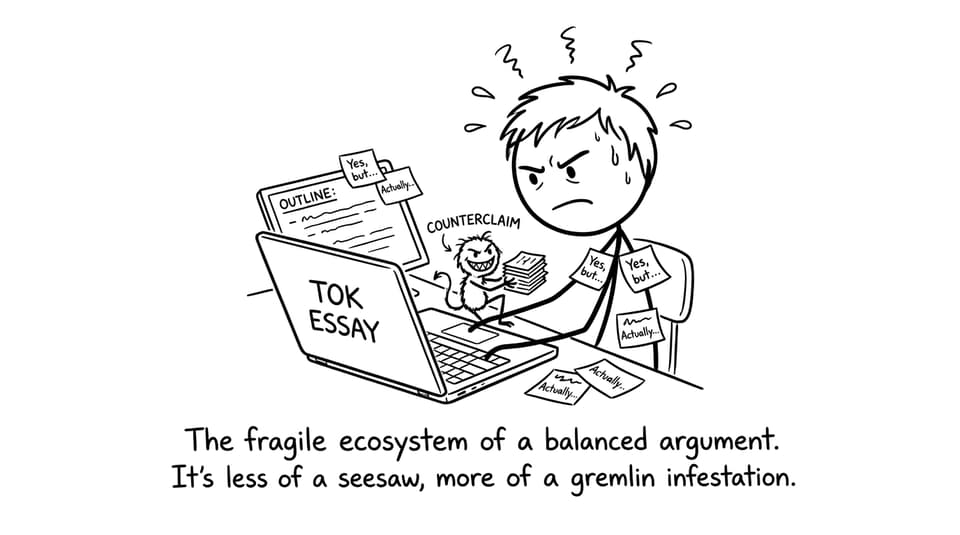
TOK essay structure at a glance (use this checklist)
Before you write a single paragraph, pin this to the top of your page. A great TOK essay structure usually includes:
-
A focused introduction that interprets the prescribed title and sets a clear thesis
-
Two Areas of Knowledge (AOKs) used consistently (not name-dropped)
-
For each AOK: a claim, a real-life example, evaluation, a counterclaim, and evaluation again
-
Clear signposting back to the title throughout (especially “to what extent”)
-
A conclusion that answers the title with nuance (not a summary)
If you want a central hub for the subject itself, start with IB Theory of Knowledge resources.
Why TOK essay structure matters more than sounding smart
In TOK, examiners are not rewarding vocabulary. They are rewarding controlled thinking.
Structure is what stops two common failures:
-
The diary entry: lots of opinions, very little justification
-
The encyclopedia: lots of concepts, very little evaluation
A clean TOK essay structure makes your argument readable, but more importantly, it makes your argument testable. It becomes possible to ask: Does this example actually support the claim? What changes if we switch perspective? What is the implication?
That is why your structure is not decoration. It is the mechanism of quality.
The TOK introduction: your job is clarity, not fireworks
A strong TOK introduction does four things, in roughly this order:
-
Interpret the prescribed title in your own words (show what it is really asking)
-
Define key terms only where needed, and in a useful way (not dictionary style)
-
Set your scope (which two AOKs you will use, and why they fit)
-
State a thesis that clearly answers “to what extent” or “in what ways”
A practical move: write your thesis as a sentence you could defend in a debate. If it cannot be disagreed with, it is probably too vague.
For deeper support on theme integration, see How to Use the Core Theme in Your TOK Essay.
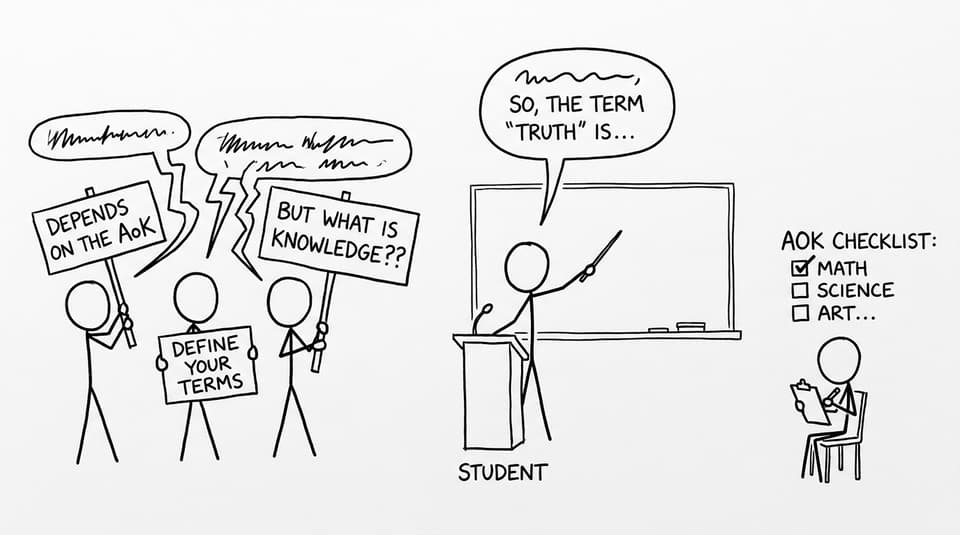
The body paragraphs: the most reliable TOK paragraph blueprint
Most students ask, “How many paragraphs should I write?” A better TOK question is: “How many moves of thinking am I showing?”
Here is a paragraph blueprint that works across titles.
A TOK claim paragraph (AOK-based)
Use this sequence:
-
Topic sentence linked to the prescribed title
-
Claim (a clear, arguable point)
-
Real-life example (RLE) that is specific (who/what/when/where)
-
TOK analysis: how the example supports the claim
-
Evaluation: limits, assumptions, what could weaken it
This is where students often stop too early. In TOK, your example is not the point. Your evaluation is the point.
A TOK counterclaim paragraph (same AOK)
Then mirror the structure:
-
Counterclaim that genuinely challenges your claim
-
Counterexample or contrasting RLE
-
Analysis (why this shifts what we can justify)
-
Evaluation (so what? what is the implication for the title?)
If you want a broader set of prompts and strategies for the current sessions, you can browse All TOK posts.
How to choose real-life examples without overthinking them
A high-scoring TOK example is not necessarily famous. It is workable.
Pick examples that let you discuss:
-
reliability (what could distort it?)
-
perspective (who benefits from this knowledge?)
-
methods (how is knowledge produced here?)
-
limitations (where does this approach fail?)
If you are stuck, RevisionDojo’s subject hubs can help you find real contexts. For instance, Global Politics often offers clean case study material you can adapt into TOK examples. Explore IB Global Politics resources for structured content and concepts.
Linking everything back to the title (the TOK skill most people miss)
In TOK, relevance is a discipline.
A simple method: end every paragraph with a mini “therefore” sentence that uses the title language.
Examples:
-
“Therefore, in the natural sciences, doubt is central only at early stages of inquiry, not at the point of proof.”
-
“Therefore, shared language can expand knowledge, but it can also narrow what we notice as ‘real’ within a community.”
If you are working from a specific prescribed title set, RevisionDojo has breakdowns you can model your logic on, including May 2026 TOK essay prompts explained and IB TOK essay prompts: November 2026.
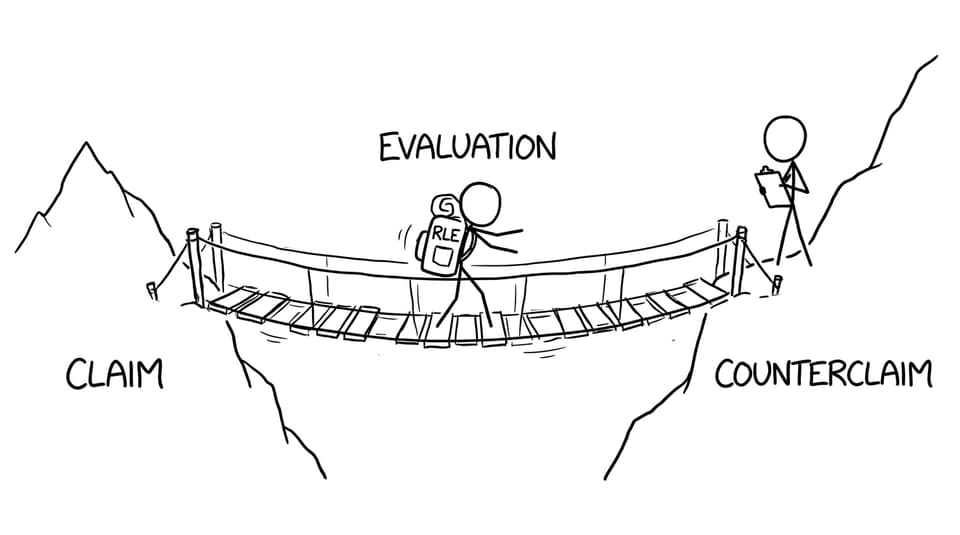
Planning and polishing: the fastest way to improve a TOK draft
A draft usually feels “weak” for one of three reasons:
-
the claim is not actually answering the title
-
the example is not being evaluated
-
the counterclaim is a polite paragraph that does not threaten the claim
A quick fix is to mark your draft using this color-code:
-
Highlight claims in one color
-
Highlight examples in another
-
Circle evaluation language (“however,” “this assumes,” “a limitation is,” “this suggests”)
If your pages look like mostly examples, you are under-evaluating. If they look like mostly claims, you are under-supporting.
When you want structured feedback loops, RevisionDojo’s tools are designed for exactly this kind of iteration: build your outline, draft fast, then tighten with feedback. Use Study Notes to clarify concepts, Flashcards to lock in key vocabulary, and Jojo AI Chat to test whether your argument actually follows. Then pressure-test your writing stamina with Mock Exams and Predicted Papers in other subjects, so your TOK essay does not become the only thing consuming your week.
For a broader system that keeps you consistent across the IB, read RevisionDojo App: the smarter way to prep for IB exams.
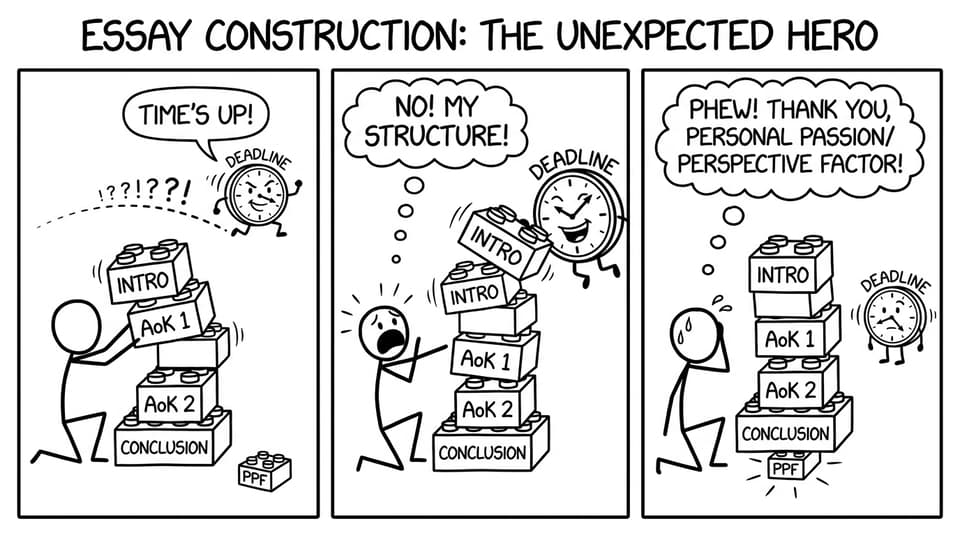
Conclusion: a TOK essay structure you can trust under stress
The best TOK essays do not feel like magic. They feel like someone thinking carefully, in public, with a method.
Use structure to make that method visible: a clear thesis, AOK-based claims, real-life examples, counterclaims that genuinely challenge you, and evaluation that returns to the title again and again. Then revise like an editor, not a perfectionist.
When you want that whole process in one place, RevisionDojo is built to support it: Study Notes for fast clarity, Flashcards for recall, Jojo AI Chat to unblock confusion, Grading tools to tighten your writing, a Coursework Library for model work, and Tutors when you need a human to diagnose what is holding you back. Start with the RevisionDojo TOK hub and build your TOK essay from a structure you can repeat.