


When people say TOK is “about thinking,” what they usually mean is: it’s about overthinking.
You can feel it the moment you open the TOK exhibition prompts. Your brain starts sprinting: knowledge, truth, bias, culture, power, certainty. Then you stare at your desk and realize your “real-world objects” are… a water bottle, a charger, and a half-dead highlighter.
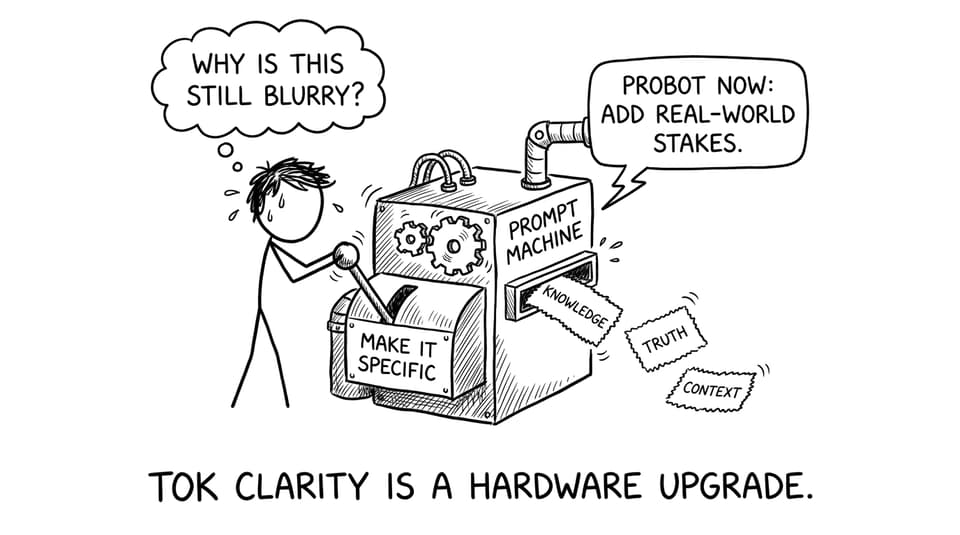
Here’s the good news: a high-scoring TOK exhibition doesn’t require rare artifacts or dramatic museum pieces. It requires specific objects and clear TOK thinking on the page. This guide gives you easy, unique TOK exhibition object ideas you can actually use, plus a simple method to connect them to a prompt without sounding generic.
Along the way, you can cross-check the official requirements using IB Theory of Knowledge resources and sharpen your object strategy with Selecting the Right Objects for Your TOK Exhibition.
TOK exhibition at a glance (the checklist that saves hours)
Before you hunt for “perfect” objects, anchor yourself with what TOK is actually asking for:
-
Pick one prescribed prompt (you’re arguing with it, not decorating it).
-
Choose three objects or images of objects.
-
Write one commentary (950 words total) that explains how each object connects to the prompt.
-
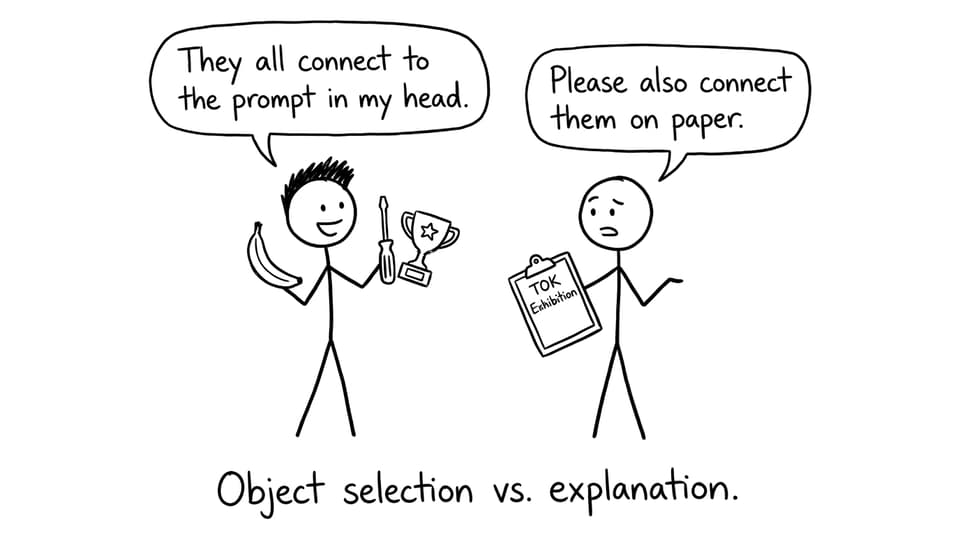
Prioritize context + link + insight over description.
If you’re unsure what gets assessed (and what doesn’t), read How Is the TOK Exhibition Graded? and keep the rubric in reach while you draft.
What makes TOK exhibition objects “high-scoring” (not just interesting)
Most TOK exhibitions don’t lose marks because the objects are “bad.” They lose marks because the thinking stays invisible.
A high-scoring TOK object usually has three properties:
It has real-world stakes
A lab report matters because decisions get made from it. A community guideline matters because it shapes behavior. TOK rewards objects that do something in the world.
It makes evaluation unavoidable
Your object should almost force you to ask: Who created this? With what method? What’s missing? Who benefits? That’s where TOK becomes analysis instead of summary.
It’s specific enough to be grounded
“Social media” is too big. “My TikTok For You Page screenshot after searching ‘study hacks’ for 5 minutes” is specific, personal, and analyzable.
For a practical writing model, see How to Create an Engaging TOK Exhibition Commentary.
Best TOK exhibition object ideas (easy, unique, high-scoring)
Below are TOK exhibition object ideas that work across many prompts. For each one, you’ll see why it scores and which direction your TOK analysis can take.
A scientific instrument photo (microscope, sensor, medical scan)
Use a photo of a real instrument from your school lab, clinic brochure, or a documented public source.
-
Why it works for TOK: It raises questions about evidence, measurement, and what counts as “objective.”
-
High-scoring angle: Limits of observation, error, and how tools shape what can be known.
-
Great for prompts like: “What counts as knowledge?” and “How does context influence our knowledge?”
If you want sharper language for science reliability, RevisionDojo’s notes on How Science Builds Trustworthy Knowledge are a goldmine for TOK phrasing.
A historical document image (constitution excerpt, treaty scan, Magna Carta page)
Choose a specific page or excerpt and explain its origin and use.
-
Why it works for TOK: It shows how knowledge is preserved, interpreted, and contested.
-
High-scoring angle: Authority vs. interpretation, and who gets to narrate history.
-
Great for prompts like: “Who owns knowledge?” and “How do we distinguish knowledge, belief, and opinion?”
A famous artwork reproduction (or a local mural you photographed)
Yes, big-name art works. But a local mural with social meaning can be even stronger.
-
Why it works for TOK: It invites multiple interpretations without becoming “anything means anything.”
-
High-scoring angle: Shared meaning, emotional knowledge, symbolism, and cultural perspective.
-
Great for prompts like: “How does context influence our knowledge?”
A law or school policy page (student handbook, anti-plagiarism policy)
This is an underrated TOK object because it’s close to your life and packed with ethical assumptions.
-
Why it works for TOK: It reveals how institutions define “acceptable knowledge practices.”
-
High-scoring angle: Ethics, power, and whose standards become default.
-
Great for prompts like: “What are the ethical implications of knowledge?”
To deepen this, connect to the TOK idea of epistemic authority via How Power Decides What Counts as Knowledge.
A religious text passage (or a commentary/translation note)
Instead of “the Bible” as a whole, use a specific passage, a footnote, or two translations side by side.
-
Why it works for TOK: It highlights interpretation, tradition, and communities of knowers.
-
High-scoring angle: How meaning shifts across language, time, and authority structures.
-
Great for prompts like: “How does context influence our knowledge?”
A smartphone screenshot (algorithm feed, fact-check label, edited photo)
Choose a screenshot you can explain: what you searched, what the app showed, what changed.
-
Why it works for TOK: It turns “information” into a question about reliability.
-
High-scoring angle: Bias, curation, incentives, and the difference between popularity and truth.
-
Great for prompts like: “How can we distinguish between knowledge, belief, and opinion?”
A major public report excerpt (IPCC summary, public health guidance)
Pick a specific chart or summary box and cite where it came from.
-
Why it works for TOK: It’s knowledge translated into policy and public action.
-
High-scoring angle: Uncertainty, consensus, and how evidence becomes decisions.
-
Great for prompts like: “What counts as knowledge?” and “What are the ethical implications of knowledge?”
A cultural artifact photo (family heirloom, traditional tool, craft pattern)
It doesn’t need to be museum-level. A family object with a real story is often stronger.
-
Why it works for TOK: It naturally links to identity, memory, and place-based knowledge.
-
High-scoring angle: What gets recognized as knowledge, and what gets dismissed.
-
Great for prompts like: “Who owns knowledge?”
For more conceptual grounding, see What Makes Indigenous Knowledge Unique.
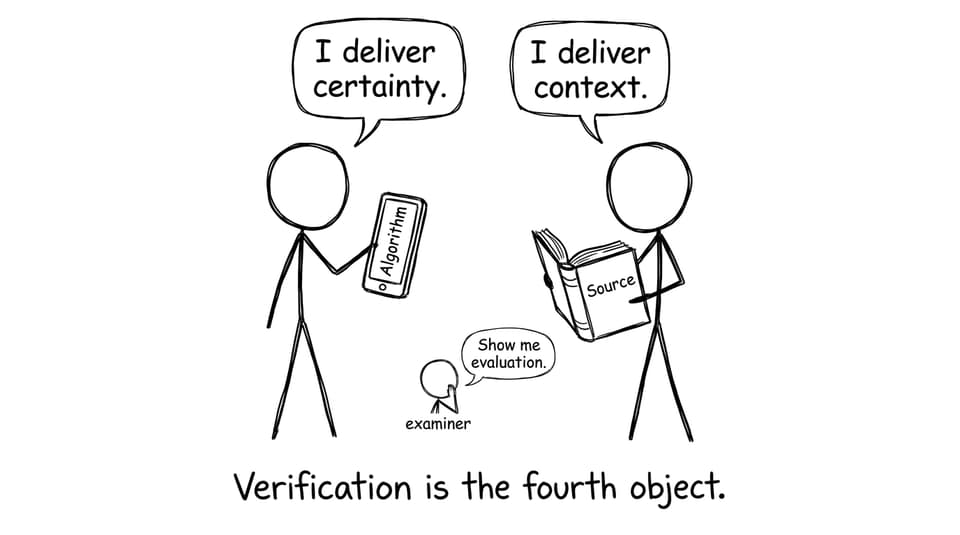
How to turn “good objects” into a top-level TOK exhibition
A practical way to structure each object paragraph (so your TOK stays analytical):
Micro-structure for each object
-
Context (1-2 sentences): What is it, where is it from, what is it used for?
-
Direct link to the prompt: Say it plainly (don’t imply it).
-
TOK insight: What does this object reveal about knowledge (methods, bias, authority, interpretation)?
-
Mini evaluation: What are the limits? What would someone disagree with?
If you want guided feedback, RevisionDojo’s IB TOK Exhibition Grader is built to translate the rubric into clear next steps while you’re still drafting.
Closing: build your TOK exhibition like a case, not a collage
The best TOK exhibitions don’t look like three clever objects taped to a prompt. They read like a small, disciplined argument: here’s what this object is, here’s how it links to the TOK prompt, and here’s what it reveals about how knowledge gets built, trusted, and challenged.
If you want to tighten your TOK exhibition fast, use RevisionDojo as your workflow hub: study with clear TOK notes, pressure-test your ideas using AI Chat, polish with Grading tools, and keep your wider IB prep moving with Flashcards, Questionbank practice, Predicted Papers, Mock Exams, the Coursework Library, and Tutors. Start with the core hub: IB Theory of Knowledge resources, and make your TOK thinking visible on the page.