


TOK can feel like you’re being asked to “sound smart” with three random objects and a prompt that looks like it was written by a philosopher who hasn’t slept.
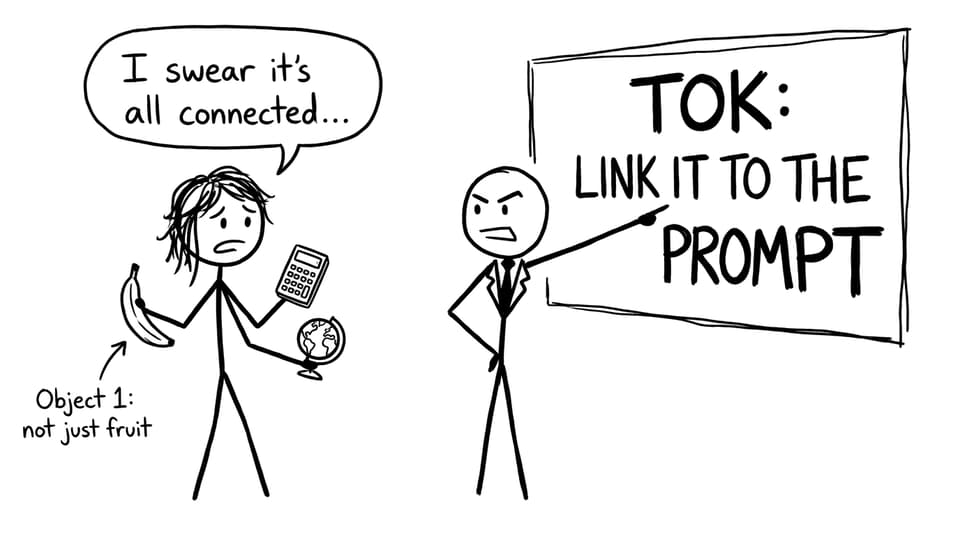
But the best TOK exhibition commentary isn’t abstract. It’s grounded. It shows an examiner you can take a real object from the real world, connect it to the prescribed prompt, and explain what that connection reveals about how knowledge is built, trusted, and challenged.
If you want the fast route to a higher markband, focus on one thing: making your TOK thinking visible on the page.
What an engaging TOK exhibition commentary actually does
An engaging TOK exhibition commentary does three jobs at once:
-
Clarifies context: what the object is and where it comes from (enough detail to matter).
-
Makes a direct TOK link: the object answers the prompt in a specific way.
-
Justifies the choice: why this object, and why alongside these other two objects.
If you’re unsure what examiners reward, read the criteria in plain language via TOK Exhibition Rubric: How to Score Top Marks. It will also keep your TOK writing from drifting into summary.
A quick TOK checklist before you write
Use this checklist before drafting your TOK exhibition commentary:
-
Have I chosen one prescribed prompt I can argue with, not just describe?
-
Do my three objects create three different angles (not three versions of the same point)?
-
Can I explain each object’s real-world context in 1-2 sentences?
-
Do I state the link to the prompt explicitly (no implied connections)?
-
Does each object raise a knowledge question about evidence, bias, interpretation, or authority?
-
Am I staying under the 950-word limit (references excluded)?
For object choice, this guide pairs well with Selecting the Right Objects for Your TOK Exhibition.
A structure that keeps TOK clear (and keeps you under 950 words)
A simple structure makes your TOK exhibition commentary feel confident instead of chaotic. Repeat this mini-structure for each object.
Context in one clean sentence
Name the object and locate it in the world.
Bad: “This is an image from the internet.”
Better: “This is a screenshot of a viral infographic shared on Instagram in 2020 about vaccine effectiveness, reposted by my school community.”
Context matters in TOK because it changes what counts as reliable knowledge. If you want a quick refresher on what TOK is really testing, see IB Theory of Knowledge Resources.
Link the object to the prompt (say it out loud on the page)
Write the link as a claim you could defend:
-
“This object suggests that…”
-
“This object challenges the prompt because…”
-
“This object shows that knowledge is treated as… under these conditions…”
If your link doesn’t include a clear “because,” it usually isn’t TOK yet.
Justify why it belongs in your exhibition
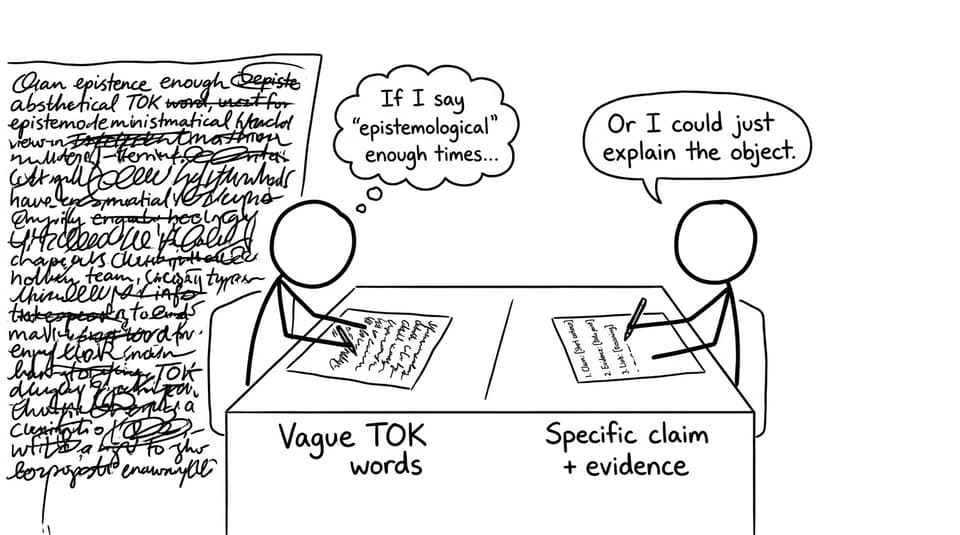
This is where engagement comes from. Not from big vocabulary, but from specificity.
Try:
-
Why did you choose it?
-
What perspective does it add that your other objects don’t?
-
What limitation does it reveal about knowledge claims?
For more on writing this section without turning it into a description, use Notes for Writing a Strong Commentary.
Make your TOK analysis feel human (without turning it into a diary)
Personal engagement in TOK isn’t a dramatic backstory. It’s a clear signal that you understand why the object matters in a real setting.
A useful approach:
-
Personal: where you encountered it, why it stood out, what you noticed people assuming.
-
Shared: how broader communities treat it as knowledge (experts, media, institutions, traditions).
-
Tension: what’s uncertain, biased, contested, or taken for granted.
That “tension” is where strong TOK lives. It’s also where you can connect to bigger TOK themes without name-dropping them.
If you’re working on both components of the course, it helps to see the overlap: Linking the May 2026 TOK Essay to the Exhibition.
Word count: how to stay sharp, not smaller
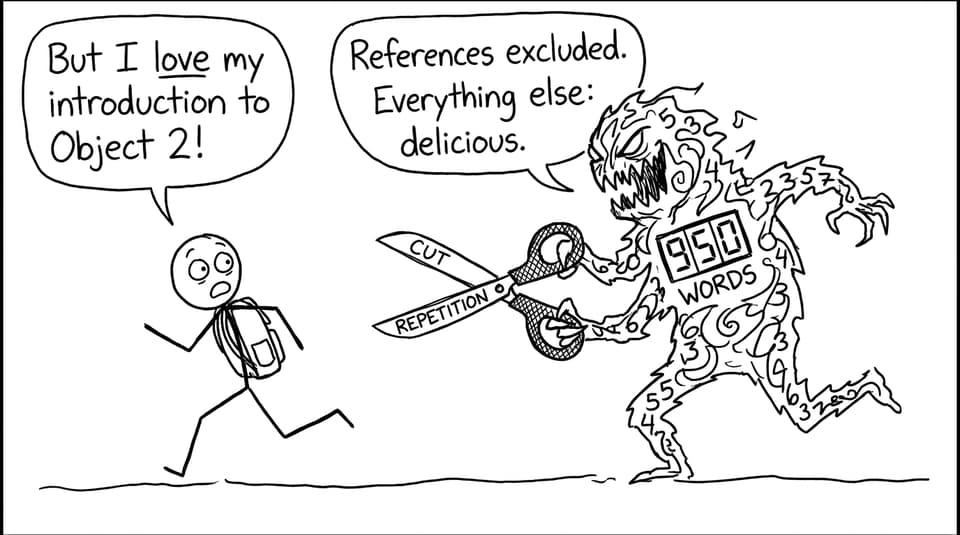
The TOK exhibition commentary has a hard limit: 950 words total (references excluded). Examiners stop reading beyond it.
To keep depth without overflow:
-
Cut repeated explanation of the prompt across objects.
-
Replace long description with one detail that actually changes your TOK point.
-
Give each object a distinct role: one can support the prompt, one can complicate it, and one can challenge it.
If moderation worries you, or you’re not sure how “coherent” your set feels, read How to Prepare for TOK Exhibition Moderation.
How RevisionDojo helps you build a stronger TOK exhibition commentary
A lot of TOK stress is really “I don’t know what the rubric wants.” RevisionDojo reduces that uncertainty.
-
Use the IB TOK Exhibition Grader to check whether your draft is actually linking objects to the prompt (not just describing them).
-
Compare your approach with high-quality samples in IB TOK Exhibition Examples.
-
Strengthen concepts fast with RevisionDojo Study Notes and Flashcards, then pressure-test your sentences with AI Chat.
-
Build confidence with Mock Exams, Predicted Papers, and targeted Questionbank practice across the IB, so TOK doesn’t steal time from your other subjects.
-
If you’re stuck, RevisionDojo Tutors can help you tighten your argument without rewriting it for you.
Closing: the TOK move that changes everything
If your TOK exhibition commentary feels flat, it’s usually missing one sentence type: the sentence that says, plainly, how the object answers the prompt and why that matters for knowledge.
Write that sentence for each object first. Then build around it.
When you’re ready to polish, run your draft through the IB TOK Exhibition Grader, compare with TOK exhibition exemplars, and tighten your links until the TOK thinking is impossible to miss. TOK rewards students who stay concrete, stay coherent, and keep asking: how do we know?