

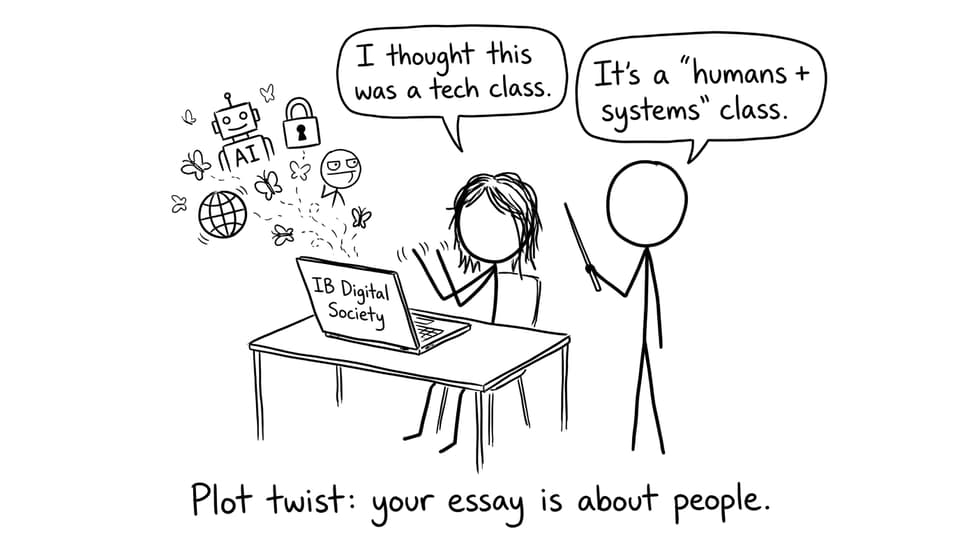
The first time you realise IB Digital Society is secretly about you can feel unsettling.
Not in a dramatic way. More like this: you open a stimulus about AI or content moderation, and suddenly you’re analysing your own habits, your school’s policies, your family’s group chats, and the quiet trade-offs you accepted without noticing. That moment is the reward. IB Digital Society takes the digital world you already live in and turns it into something you can explain, question, and evaluate with control.
Quick checklist: what makes IB Digital Society rewarding
-
You study problems that are happening right now
-
You learn to think in trade-offs, not slogans
-
You build reusable exam writing structures
-
You gain a global lens for digital change
-
You get confident talking about ethics with evidence
If you want a clear overview of the course and how it’s assessed, start with What Is IB Digital Society? and the IB Digital Society Resources hub.
The real reward: learning to see the system behind the screen
The most rewarding part of IB Digital Society is that it trains you to notice what most people scroll past.
A platform isn’t “just an app.” A recommendation feed isn’t “just what you like.” In IB Digital Society, you practise naming the system (design, incentives, data flows, power, regulation) and then asking the human question: who benefits, who is excluded, and what changes over time?
This is why the course feels so relevant in exam season. Even when you meet an unfamiliar example, you’re not stuck. You have lenses. If you need help organising those lenses, use IB Digital Society: Key Themes Explained and reinforce them with topic-focused revision like Topic 3: Content (Digital Society Notes).
How IB Digital Society makes you better at exams (without feeling like drill)
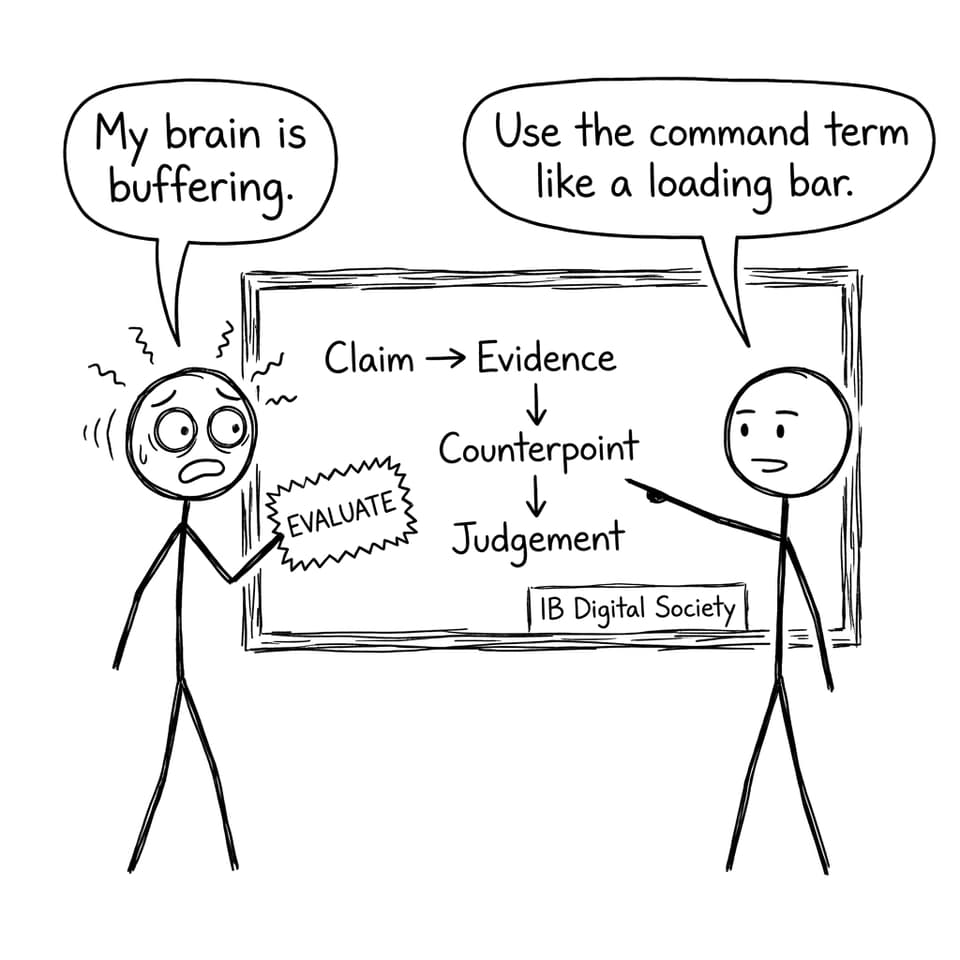
Here’s a quiet truth about high scores: many students know “content,” but lose marks on thinking shape. IB Digital Society rewards analysis and evaluation, so your structure matters.
That’s why one of the most rewarding skills is learning to write to command terms under pressure. When a question says evaluate or discuss, it’s basically asking for a balanced judgement with criteria, evidence, and a clear conclusion.
Use IB Command Terms: How to Use Them to Score More alongside Structure IB Answers to Maximize Marks. Then practise that structure repeatedly with RevisionDojo’s Questionbank and AI Chat feedback, and build timed sets using Mock Exams and the exam builder.
The confidence boost: ethics becomes something you can actually argue
Ethics in IB Digital Society isn’t a debate club vibe. It’s the ability to make a claim that survives scrutiny.
Instead of saying “surveillance is bad,” you learn to specify: which stakeholders, which rights, what safeguards, what evidence, and what trade-offs. That’s empowering because it turns opinions into analysis.
This confidence tends to spill into other parts of the Diploma too: TOK essays, oral discussions, even how you justify choices in coursework. And when you’re trying to improve performance consistently, the same habits also support your trajectory and predicted outcomes. If that pressure is on your mind, Do IB Predicted Grades Matter for Conditional Offers? helps you see what matters and what to focus on next.
The long-term reward: you become “globally aware” in a practical way
A lot of subjects talk about global perspectives. IB Digital Society makes it unavoidable.
Digital access, content moderation, privacy law, and algorithmic bias don’t land the same way in every community. When you compare contexts, you build the habit that examiners love: you stop writing as if your experience is universal.
This connects naturally to the learner profile traits the IB values. If you want language for that mindset (and how it shows up in marks), read The 10 IB Learner Profile Traits Explained and How Is the IB Learner Profile Reflected in Assessments?.
Conclusion: the most rewarding part is feeling in control
The best reward in IB Digital Society is the moment you stop feeling like technology is something that just “happens” to you. You learn to see systems, build arguments, and make judgements with evidence.
If you want that feeling in exam season, anchor your revision with RevisionDojo: use the Questionbank for exam-style practice, Study Notes and Flashcards for clean recall, AI Chat and Grading tools for feedback, and Mock Exams to make timing feel normal. The subject is already relevant. Your job now is to make it exam-ready -- and let IB Digital Society become one of the smartest scores you earn.

