


Technology companies rarely feel like “institutions” when you’re using them. They feel like background noise. A search bar. A feed. A button you tap without thinking.
Then something small happens: a video gets removed, a hashtag disappears, your account is locked, an ad follows you into a private moment. Suddenly the background noise has a voice. And it is not elected.
That shift in perspective is one of the quiet goals of IB Digital Society. In IB Digital Society, technology companies are not just businesses selling products. They are powerful social actors that write rules, shape attention, and decide what “normal” looks like online. If you can explain that power clearly, you’re already writing like a top student.
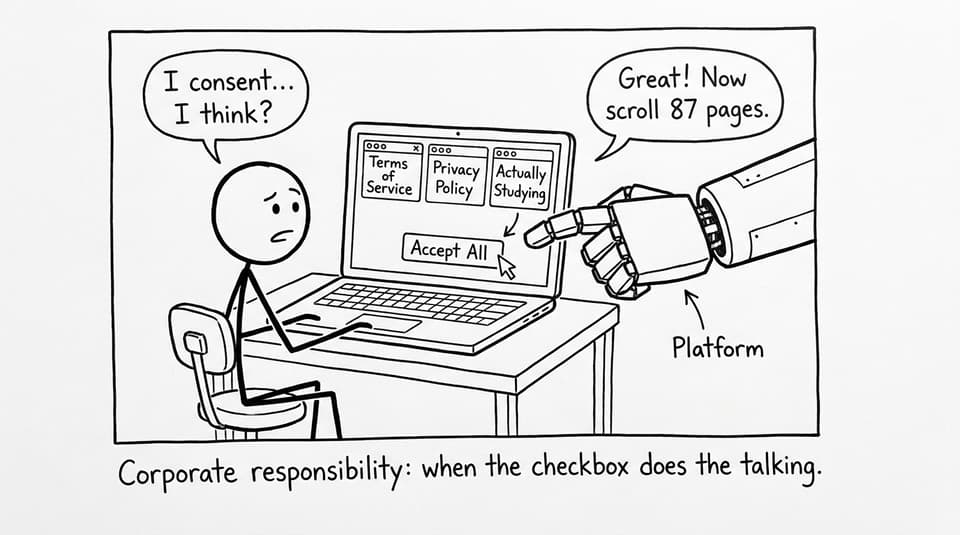
Quick checklist: what to say in IB Digital Society
Use this as a fast exam scaffold when a question mentions platforms, apps, AI tools, or data brokers in IB Digital Society:
-
Identify the digital system (platform feature, algorithm, policy, business model).
-
Name the technology company as a decision-maker (not a neutral tool).
-
Explain the power it holds (data, infrastructure, moderation, market dominance).
-
Track impacts on individuals and communities (short-term and long-term).
-
Evaluate corporate responsibility (ethics, transparency, accountability, trade-offs).
-
Add a realistic limitation: regulation gaps, global scale, competing incentives.
If you need a course overview before drilling practice, start with the IB Digital Society Resources hub.
Technology companies as architects of digital society
In IB Digital Society, a useful mental model is this: technology companies design the “streets” where digital life happens. They decide what is easy, what is costly, and what is invisible.
That design power shows up in a few recurring places:
Platform design and incentives
A platform can reward outrage, speed, and constant posting, even if its mission statement promises “community.” In IB Digital Society, you can analyze how interface choices (autoplay, like counts, algorithmic recommendations) steer behavior.
A strong line to write is: design choices are value choices. They privilege some outcomes over others.
Data collection and profiling
Most platforms are not just communication tools. They are measurement tools. In IB Digital Society, treat data as a resource that increases corporate leverage: more personalization, stronger ad targeting, and more influence over what users see.
To sharpen your understanding of the course framing, revisit What Is IB Digital Society?.
Rule-setting and moderation
Companies often write and enforce rules through community guidelines, automated detection, and human moderation. In IB Digital Society, this is governance by policy document and enforcement pipeline.
The key exam move is to ask: who gets due process, who gets silenced, and who can appeal?
Corporate responsibility in IB Digital Society (what it actually means)
In IB Digital Society, corporate responsibility is the ethical obligation technology companies have to reduce harm and protect rights, even when doing so conflicts with growth or convenience.
It goes beyond “follow the law,” because the law often lags behind digital change. If you want a clean way to connect this to syllabus language, the theme breakdown in IB Digital Society: Key Themes Explained makes it easier to pick the right lens.
Corporate responsibility commonly includes:
-
Privacy protection (data minimization, consent that is meaningful, security practices)
-
Safety and harm reduction (misinformation, self-harm content, harassment, exploitation)
-
Fairness and bias management (especially in automated systems)
-
Transparency (clear policies, explainability, accessible reporting)
-
Accountability (audits, appeals, independent oversight, consequences)
For a deeper ethics foundation, connect your arguments to The Role of Ethics in IB Digital Society.

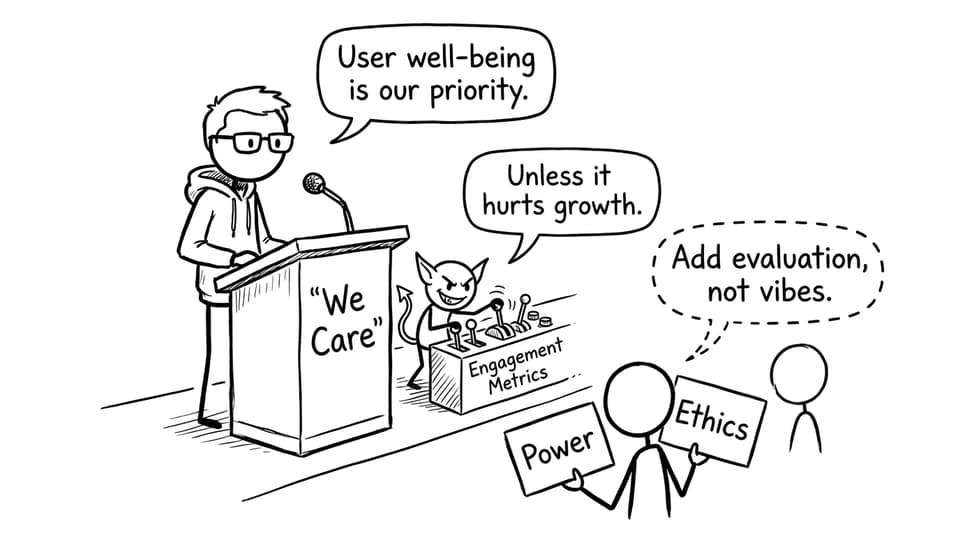
The central tension: ethics vs profit (and why examiners love it)
Students sometimes write, “Companies should do better.” That’s not analysis. In IB Digital Society, your job is to explain why “better” is difficult, contested, or selectively applied.
Technology companies often depend on:
-
advertising revenue (more time on platform == more money)
-
rapid scale (growth can outrun safeguards)
-
experimentation (A/B testing on real people)
-
secrecy (to protect IP and competitive advantage)
That doesn’t excuse harm. It explains incentives. And in IB Digital Society, incentives are the engine behind evaluation.
A useful sentence structure for exams:
While the company claims responsibility through policy X, its revenue model incentivizes behavior Y, which can undermine user well-being by Z.
Power, transparency, and accountability in IB Digital Society
In IB Digital Society, “power” is not just political power. It’s the ability to shape outcomes without asking permission.
Power through information control
Algorithms decide what becomes visible, what trends, and what disappears. Your analysis improves when you separate:
-
the stated goal (safety, relevance)
-
the operational goal (engagement, retention)
-
the social outcome (polarization, marginalization, trust erosion)
Transparency as a lever (not a vibe)
Transparency is not “they posted a blog update.” In IB Digital Society, transparency means outsiders can understand and challenge decisions.
To link this to governance, see Ethics Committees and Oversight in Digital Systems Explained.
Accountability mechanisms
Ask what happens when harm occurs:
-
Is there an appeals process?
-
Are audits independent?
-
Are penalties meaningful?
-
Can users realistically leave the platform?
That last point matters because choice is a weak form of accountability when a platform becomes infrastructure.
How to write this topic in IB exams and the IA
In IB Digital Society, case studies are only valuable if they become evidence for concepts. If you need a strategy for collecting examples efficiently, use Using Case Studies for Better Learning in Digital Society.
Exam approach: a practical paragraph blueprint
-
Define corporate responsibility in your own words.
-
Identify the company’s role (designer, moderator, data controller).
-
Analyze impacts on individuals and communities.
-
Evaluate trade-offs and competing interests.
-
Conclude with a justified judgment (not a moral slogan).
IA approach: narrow the system
A high-scoring IB Digital Society IA does not study “social media” broadly. It studies something specific: a recommendation feature, a moderation policy, an ad-targeting practice, or a data-sharing partnership.
For question design help, follow How to Write a Strong IB Digital Society IA Research Question.
To practice writing under time pressure, RevisionDojo’s IB Digital Society Topic 3: Content pairs notes with targeted practice, and the IB Digital Society Internal Assessment Guide helps you align to criteria.
Closing: the exam skill hiding inside this topic
Technology companies often present themselves as neutral tools. IB Digital Society asks you to notice the quiet power behind that story: who sets the rules, who collects the data, who benefits, and who pays the cost.
If you want to turn that insight into marks, make RevisionDojo your routine: revise with Study Notes and Flashcards, pressure-test your thinking in the Questionbank with AI Chat feedback, and build timed Mock Exams with grading tools and Predicted Papers-style practice. When you treat every platform as a system with incentives and responsibilities, IB Digital Society stops being overwhelming and starts becoming readable.
