

Digital systems rarely fail in dramatic movie moments. Most of the time, they fail quietly: a recommendation engine nudges you toward the wrong belief, a risk score denies someone an opportunity, a dataset quietly forgets an entire community.
When that happens, the hardest question is not “What went wrong?” but “Who was supposed to stop this?” In IB Digital Society, that question points straight to ethics committees and oversight: the people, processes, and institutions meant to slow digital power down long enough for responsibility to catch up.
This guide explains how IB Digital Society expects you to understand oversight, evaluate its limits, and write about it with the kind of calm, evidence-based judgment examiners reward.
Quick checklist: what to say about oversight (fast)
Use this as your mental template in IB Digital Society when a question mentions regulation, review, or “ethical use” of a tool:
-
Identify the oversight mechanism (committee, regulator, audit process, policy board)
-
Clarify its scope and authority (advisory vs binding, internal vs external)
-
Test independence (who funds it, appoints it, benefits from it)
-
Evaluate transparency (public reports? explainability? open procedures?)
-
Track accountability (who is liable when harm occurs?)
-
Judge impact over time (does oversight adapt as the system changes?)
If you want ready-to-practise prompts in this style, RevisionDojo’s IB Digital Society hub and the free Questionbank feature make it easy to drill this structure until it feels automatic.
What ethics committees and oversight mean in IB Digital Society
In IB Digital Society, ethics committees are groups that review or advise on whether a digital system should be built, deployed, or changed. Oversight bodies are broader: they include committees, regulators, standards organisations, institutional review processes, and governance structures that monitor digital systems and their effects.
The key move the course wants from you: don’t treat oversight as a magic shield. Treat it as a social structure shaped by incentives, values, and power.
To anchor your definitions and examples, pair this article with RevisionDojo’s broader framing on the role of ethics in IB Digital Society and the practical skills in how to evaluate ethics effectively.
Why oversight matters when digital systems scale
A small human mistake can harm a few people. A scaled digital system can harm thousands before anyone notices.
Oversight matters in IB Digital Society because:
-
Digital decisions can be automated and difficult to contest
-
Harms can be invisible (bias in rankings, suppressed reach, silent exclusions)
-
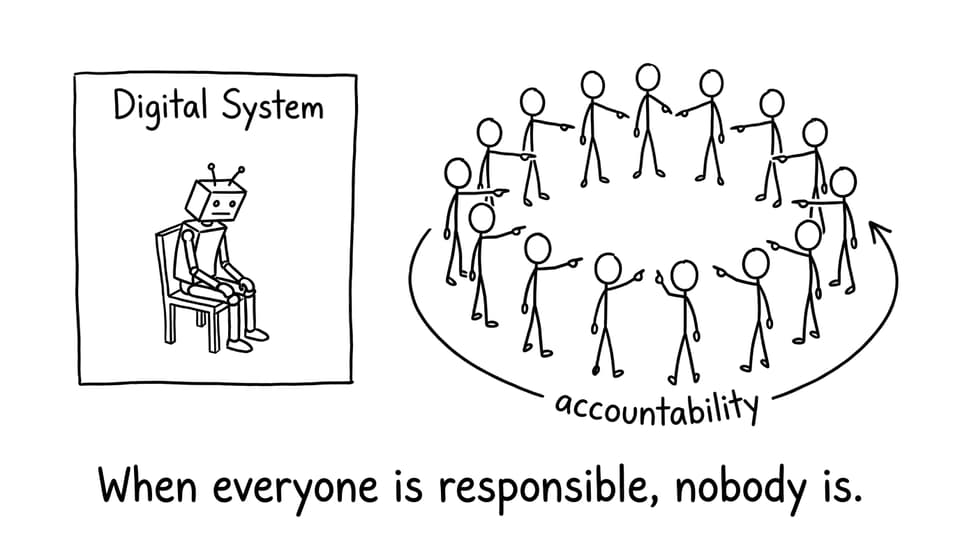
Responsibility is distributed (developers, managers, data suppliers, platform owners)
-
The people affected often have less power than the institutions deploying the system
This is why exam answers score higher when they evaluate whether the oversight mechanism meaningfully changes outcomes, not just whether it “exists.”
The real job of ethics committees (and the common illusion)
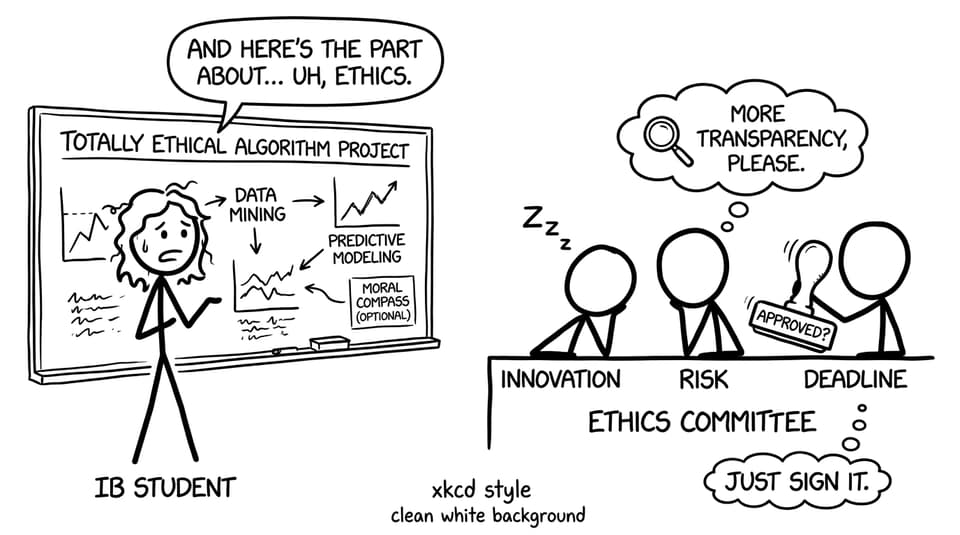
An ethics committee often aims to spot risks early: privacy issues, unfair impacts, unsafe deployment contexts, weak consent, or unaccountable automation.
In IB Digital Society, you can describe typical committee functions:
-
Risk identification: what could go wrong, and to whom?
-
Safeguards: human review, opt-outs, limits on data use
-
Value balancing: efficiency vs fairness, innovation vs harm prevention
-
Recommendation: advice to decision-makers about redesign or restrictions
But the illusion to challenge is: “Reviewed” does not mean “ethical.” Committees may be under-resourced, excluded from key decisions, or pressured by deadlines and reputation management.
If you want to connect this to system thinking (which examiners love), see Understanding systems in IB Digital Society. It helps you show how governance is part of the system, not outside it.
Oversight, power, and independence: the exam-ready evaluation
Power analysis is where IB Digital Society answers become sharp.
When you evaluate an oversight body, ask:
-
Appointment power: who selects members and sets priorities?
-
Funding power: does the organisation being monitored pay for the oversight?
-
Enforcement power: can it impose penalties, or only suggest changes?
-
Information power: can it access code, data, and internal metrics?
A clean evaluation often sounds like: “The oversight exists, but its independence is limited, so its ability to protect affected groups is constrained.” That’s the difference between describing governance and analysing it.
To practise writing that kind of judgment under time pressure, RevisionDojo’s How to structure high-scoring IB Digital Society exam answers is a strong companion.
Impacts to write about: individuals, communities, society
In IB Digital Society, always push impacts beyond the organisation.
Individual-level impacts
Strong oversight can improve transparency and reduce harm: clearer appeals, fewer discriminatory outcomes, better protection of rights.
Weak oversight can do the opposite: people become “cases” inside a machine, with no realistic path to challenge decisions.
Community- and society-level impacts
When oversight is credible, public trust can grow. When oversight is performative, skepticism grows faster than the technology itself.
Over time, repeated failures reshape norms: people accept surveillance, accept opaque scoring, accept that platforms will not explain themselves.
If you need a wider AI context for examples, connect oversight to Artificial intelligence in IB Digital Society.
Oversight over time: why “approved once” is not enough
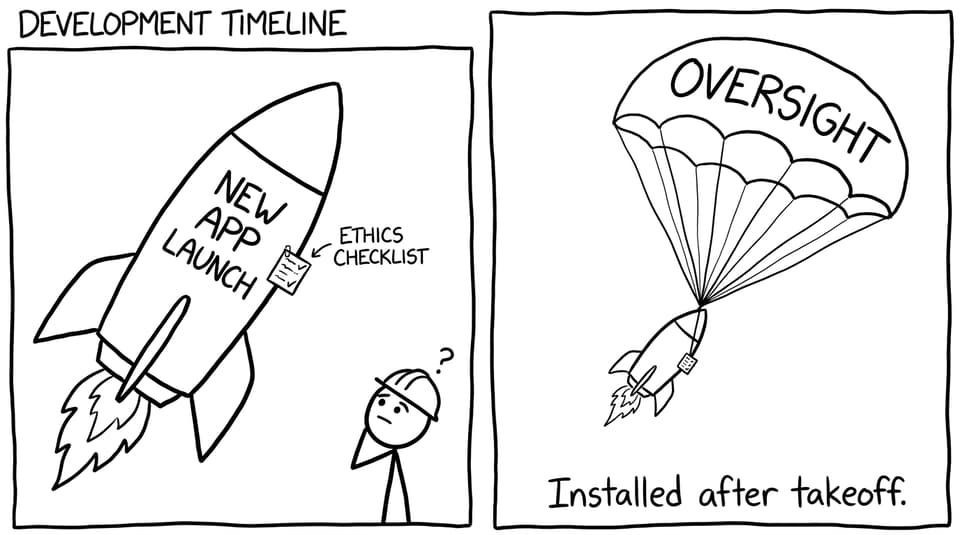
A common oversight failure is treating ethics as a one-time gate.
Digital systems evolve: models are retrained, features are added, goals shift, data drifts, and user behaviour changes. In IB Digital Society, you can earn marks by showing time-based thinking:
-
Is oversight proactive (before deployment) or reactive (after harm)?
-
Are there continuous audits or only initial approvals?
-
Does governance track long-term externalities (trust, inequality, democratic effects)?
How to use ethics committees and oversight in IB Digital Society exam answers
When an unseen source mentions “review board,” “regulator,” “ethics panel,” or “standards,” a strong response usually:
-
Names the mechanism and its role clearly
-
Applies course concepts like power, values, and responsibility
-
Analyses impacts on people and communities
-
Evaluates effectiveness with at least one limitation (authority, independence, transparency)
For targeted practice on values language, RevisionDojo’s 2.7 Values and ethics Questionbank is directly aligned to how these prompts get assessed.
Conclusion: bring the focus back to accountability
Ethics committees and oversight exist because digital systems amplify human choices at machine speed. In IB Digital Society, your job is not to praise oversight for existing, but to test whether it can stand up to power, deadlines, and scale.
If you want to turn this into marks, build a small routine: revise oversight vocabulary with RevisionDojo Study Notes, practise evaluation paragraphs in the Questionbank, lock definitions with Flashcards, and pressure-test your judgments with AI Chat and Grading tools. Then use Mock Exams and Predicted Papers to rehearse the timing. When the exam source mentions oversight, you will already know the story you’re telling: who holds power, who carries risk, and who is accountable when the system decides.


