
Sustainable management in extreme environments sounds like a big, distant policy problem. But in IB Geography, it’s often a very small, very local story: one road cut into permafrost, one lodge built a little too close to a fragile dune system, one “temporary” mining camp that quietly becomes permanent.
And that’s the tension you’re expected to write about under exam pressure. Extreme environments (hot deserts, polar regions, high mountains) are valuable and increasingly accessible, but they’re also slow to recover. IB Geography examiners reward answers that keep both truths in the same paragraph.
IB Geography quick checklist: what sustainable management means
Use this mini-checklist to structure any IB Geography response on sustainable management:
-
Regulate and plan (rules, zoning, environmental impact assessments)
-
Protect (national parks, reserves, conservation zones)
-
Manage tourism (limits, education, routes, waste systems)
-
Use appropriate technology (low-impact infrastructure, renewables)
-
Include communities (indigenous knowledge, local decision-making)
-
Cooperate internationally (shared governance in polar or cross-border areas)
If you want the syllabus framing for this theme, start with IB Geography Option C Extreme Environments.
Sustainable management in extreme environments: the core strategies
Regulation and planning (the quiet hero of IB Geography)
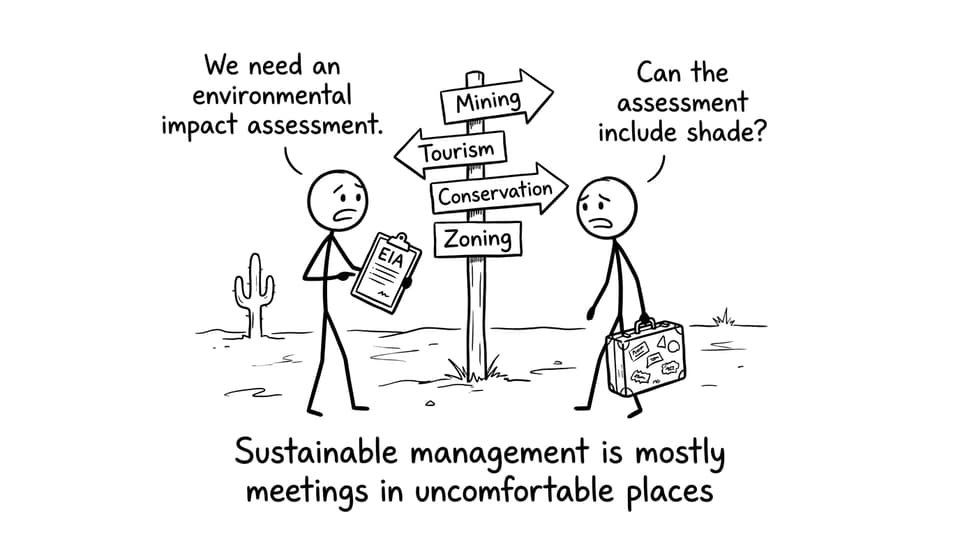
In IB Geography, regulation is the “before anything happens” strategy. Governments and agencies can require environmental impact assessments (EIAs), restrict where development occurs through zoning, and cap the scale of projects. The point is to identify risks early: habitat loss, pollution, water stress, or long-term landscape scarring.
A good exam line is that planning reduces cumulative impacts. One small project might look harmless; ten small projects can become a tipping point.
For definitions and precise terminology, keep IB Geography Key Definitions open while you revise.
Protected areas: conservation with real-world limits
Protected areas (national parks, reserves, conservation zones) are a central sustainable management tool in IB Geography. They work by restricting high-impact land uses and prioritising biodiversity and landscape protection.
But evaluation matters: protected status doesn’t automatically mean protected outcomes. Remote locations are expensive to monitor, and enforcement can be politically difficult when resources (oil, gas, minerals) are involved.
To sharpen your evaluation, pair this with Human Impacts in Extreme Environments | IB Geography.
Tourism controls: making “low impact” real
Tourism often arrives with a friendly face, then leaves behind trails, waste, and disturbed wildlife. Sustainable management in extreme environments tries to keep tourism within ecological limits: permits, visitor caps, designated routes, education, and strict waste systems.
In IB Geography, you can score well by linking tourism controls to the triple bottom line: environmental protection, local economic benefits, and social responsibility.
Technology: designing for fragility
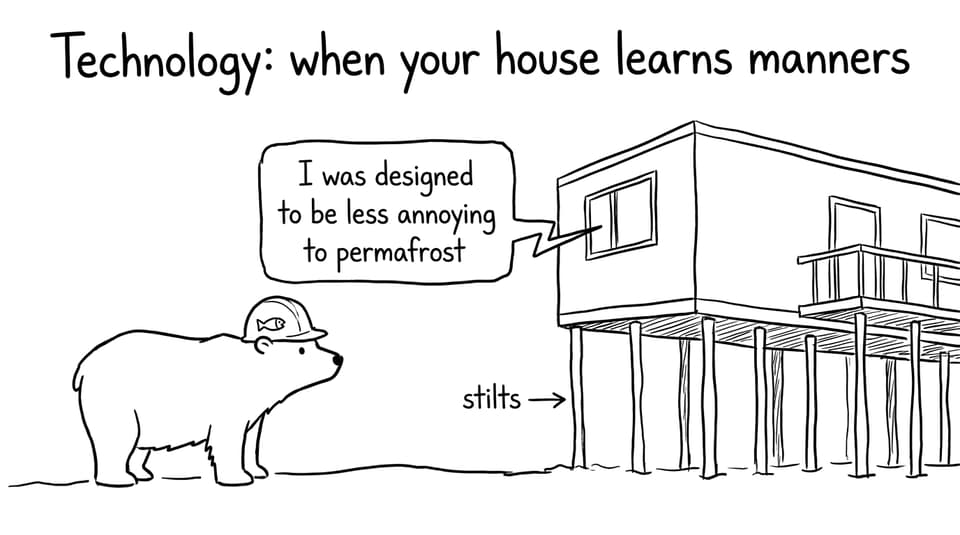
Technology isn’t a magic fix, but it can reduce damage. In cold regions, buildings on stilts can reduce heat transfer to permafrost. Renewable energy (wind/solar) can cut fuel transport and emissions. Better insulation and modular infrastructure can reduce the need for constant repairs that repeatedly disturb the ground.
That’s a strong IB Geography angle: technology reduces vulnerability, but it can also increase access and therefore increase overall pressure.
Community involvement and international cooperation
Local and indigenous communities often have detailed knowledge of seasonal risk, sustainable harvesting, and environmental thresholds. In IB Geography, this is the social sustainability piece: better legitimacy, better compliance, and better long-term stewardship.
International cooperation matters most in polar regions and shared systems, where multiple states have interests. Agreements can set rules for extraction, transport, and conservation to reduce conflict and ecological damage.
How to turn this into marks (fast)
When practising, use RevisionDojo to make your answers more exam-shaped:
-
Drill Option C questions in the Extreme Environments Questionbank
-
Build recall with IB Geography Flashcards
-
Lock in core understanding via the main IB Geography Resources hub
-
Improve structure and evidence using IB Geography Case Studies: A Comprehensive Exam Guide
-
Upgrade your writing under time pressure with Best Geography Mock Exams for IB - An In-depth Guide
Conclusion: the IB Geography takeaway
Sustainable management of extreme environments is a classic IB Geography balancing act: protect what is fragile, allow what is necessary, and plan for what is inevitable. The best exam answers don’t pretend there’s a perfect solution; they show how regulation, protected areas, tourism control, technology, and community involvement can reduce impacts while acknowledging real constraints.
If you want to turn this topic into confident marks, use RevisionDojo’s Questionbank, Study Notes, Flashcards, AI Chat, Grading tools, Predicted Papers, Mock Exams, Coursework Library, and Tutors to practise the same IB Geography argument until it feels automatic under pressure.