



The moment you realize “knowing” isn’t the same as “scoring”
Two weeks before exams, most IB Geography students have the same uneasy experience: you can explain climate change to a friend, you can list development indicators, you can even talk confidently about urbanization. Then you open a timed paper and suddenly your brain turns into a blurred satellite image.
That isn’t a motivation problem. It’s an exam-technique problem.
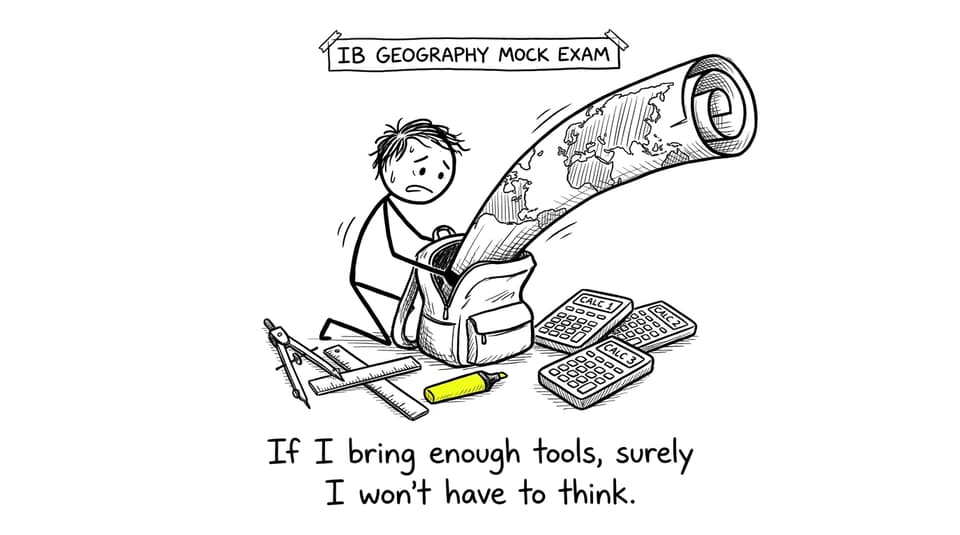
IB Geography mock exams are the bridge between understanding content and earning marks under pressure. They teach you the strange little rhythm of IB questions: the command terms, the data-response economy, the essay structure, the time-per-mark discipline. And they reveal the truth you actually need: where you lose marks repeatedly.
This guide breaks down the best ways to use IB Geography mock exams, what makes a mock genuinely worth your time, and where to find high-quality practice (without wasting weeks on revision that feels busy but doesn’t move your grade).
A quick checklist: what the best IB Geography mock exams include
Before you commit to any IB Geography mock exams, run a fast quality check. The best sets usually have:
-
Syllabus alignment (core + options, and HL extensions where relevant)
-
Realistic question types (short response, data response, structured essays)
-
Command terms used accurately (and consistently)
-
Mark schemes that explain how marks are earned (not just the final answer)
-
Opportunities for feedback and iteration (so the mock changes your next attempt)
-
A way to track patterns in mistakes across topics
If a mock exam doesn’t change what you do tomorrow, it’s not really practice. It’s just paperwork.
Why IB Geography mock exams work (even when revision notes don’t)
There’s a quiet trap in IB Geography: you can revise for hours and still not be practicing. Reading, highlighting, rewriting notes, even watching videos can feel productive, but those methods often skip the two things the exam demands:
-
Retrieval under time pressure
-
Mark-scheme precision
Mock exams force both.
They also create what psychologists call “desirable difficulty,” the exact kind of struggle that builds durable memory and performance. You don’t just remember what a concept is; you learn when to use it, how to phrase it, and how to attach it to evidence (case studies, patterns, data) in a way examiners reward.
In IB Geography, that gap matters because the subject tests skills, not just facts: interpreting graphs, analyzing unfamiliar sources, evaluating strategies, linking scales, and building arguments.
If you want a broader course-level overview while you’re planning revision, it helps to skim Understanding IB Geography: A Comprehensive Guide and then return to mocks with a clearer mental map.
How to choose the best IB Geography mock exams
Prioritize syllabus coverage without “topic roulette”
Good IB Geography mock exams don’t just throw random questions at you. They cover the core systematically and reflect the way themes repeat across papers.
A practical approach is to pair full mocks with topic-based drilling. For example, if population and development is a weak spot, revise the content and practice around it using a focused hub like Population and economic development patterns. Then return to full mock exams so you can integrate topics the way the exam expects.
Demand variety: short answers, data response, and essays
IB Geography is not one exam skill. It’s several.
A high-quality mock set needs:
-
Short responses that reward precision
-
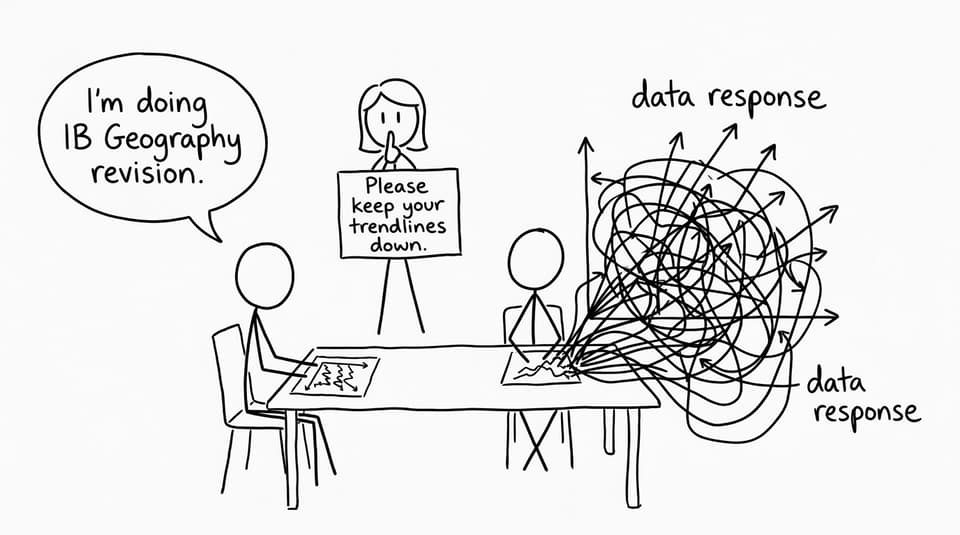
Data-response questions that reward pattern spotting and cautious inference
-
Essays that reward structure, evaluation, and case-study control
If your mock exams only train essays, your data-response section will feel like stepping onto thin ice. If they only train short answers, your essays will drift.
If data response is where you bleed marks, build that specific muscle with How to Analyze IB Geography Data Effectively before your next timed sitting.
Look for mark schemes that teach you “how marks are awarded”
A mark scheme is not an answer key. The best IB Geography mock exams include a mark scheme that shows:
-
What counts as identification vs explanation vs evaluation
-
Where case studies actually earn credit
-
How to structure a response so it’s easy to reward
If you can’t tell why you lost marks, you’ll repeat the same mistakes with more confidence next time.
Choose mocks with feedback loops (ideally fast ones)
The most powerful mock-exam advantage is speed of iteration.
If you sit a mock, wait a week to get it marked, then halfheartedly glance at corrections, your learning curve stays flat. But if you sit a mock, get fast feedback, and immediately build a plan for the next 72 hours, your performance compounds.
That’s why platforms that combine practice + grading + analytics can be disproportionately effective for IB Geography.
Where to find the best IB Geography mock exams (and how to use each)
Official-style samples through your school
Your teacher and school resources are often the best starting point for understanding the tone and structure of IB Geography papers. Use them early to calibrate expectations: how long questions are, how command terms are used, how much evidence is expected.
Then quickly move into a practice system that lets you repeat and improve.
RevisionDojo: mock exams built for practice, not just exposure
RevisionDojo is built around a simple idea: IB Geography improves fastest when practice is structured and feedback is immediate.
Start with the subject hub: IB Geography on RevisionDojo. From there, you can move through a full exam-prep loop:
-
Questionbank to drill weak skills by topic and question type
-
Study Notes to rebuild understanding without rewriting your own notebooks
-
Flashcards to lock in definitions, models, and case-study triggers
-
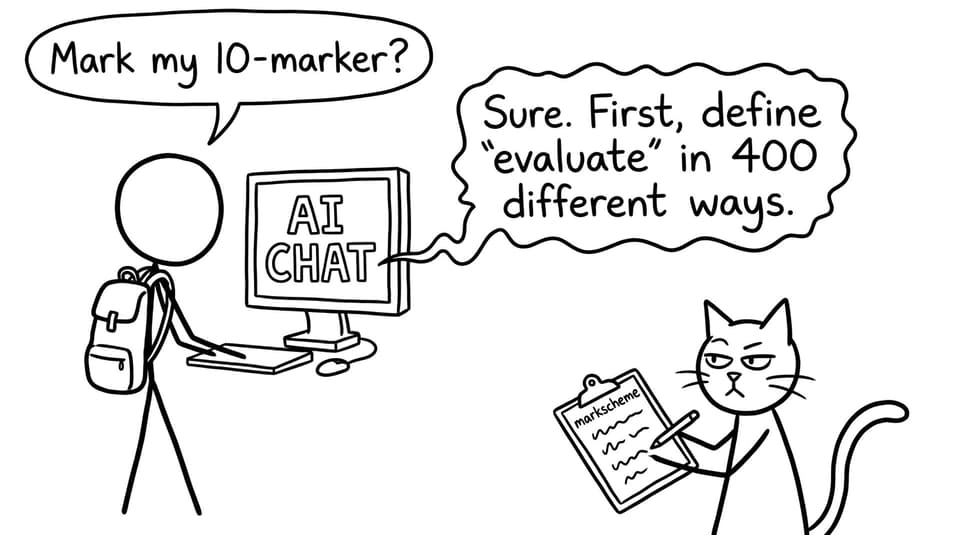
AI Chat when you need clarity fast (especially with command terms and evaluation)
-
Grading tools to understand how your writing maps to marks
-
Predicted Papers for realistic full-paper practice
-
Mock Exams for stamina and pacing
-
Coursework Library and Tutors when you need examples or human guidance
If you want a curated place to start full-paper practice, go straight to IB Geography Predicted Papers or the broader library at IB Predicted Papers. There’s also a dedicated page for Geography Predicted Papers.
The hidden win isn’t just doing a paper. It’s doing a paper, seeing exactly where your marks disappear, and then fixing that specific leak with targeted practice.
Topic-based practice that supports mock exam gains
Full mocks are essential, but they’re also inefficient for fixing one weakness. After every mock exam, you should have a short list of “repeat errors.” Then you attack them with topic hubs.
A few examples inside IB Geography:
-
Global power and interactions: Global interactions and global power
-
Population change: Changing populations and places questionbank
-
Development lessons for application practice: Development opportunities lessons
And if your marks drop because your language is fuzzy, keep IB Geography Key Definitions open while you review your scripts. In IB Geography, vocabulary isn’t decoration. It’s often the difference between “some understanding” and “clear, creditworthy understanding.”
A simple routine: how to turn IB Geography mock exams into a score jump
Here’s a routine many IB Geography students can actually sustain.
Weekly structure (repeatable)
-
One full IB Geography mock exam block (or half-paper timed block)
-
Two targeted repair sessions using Questionbank-style practice on weak topics
-
Three short flashcard sessions (10 minutes) to keep definitions and models active
-
One review session where you rewrite only the worst answers using the mark scheme
The “48-hour rule” for corrections
Mock exams only work if your brain revisits mistakes while they still feel emotionally vivid. That window closes fast.
Within 48 hours of your IB Geography mock exam:
-
Categorize mistakes (content gap, command term, evidence, structure, timing)
-
Fix one example response per mistake category
-
Do 10 targeted practice questions
-
Retake one mini-section timed
It’s not dramatic. It’s effective.
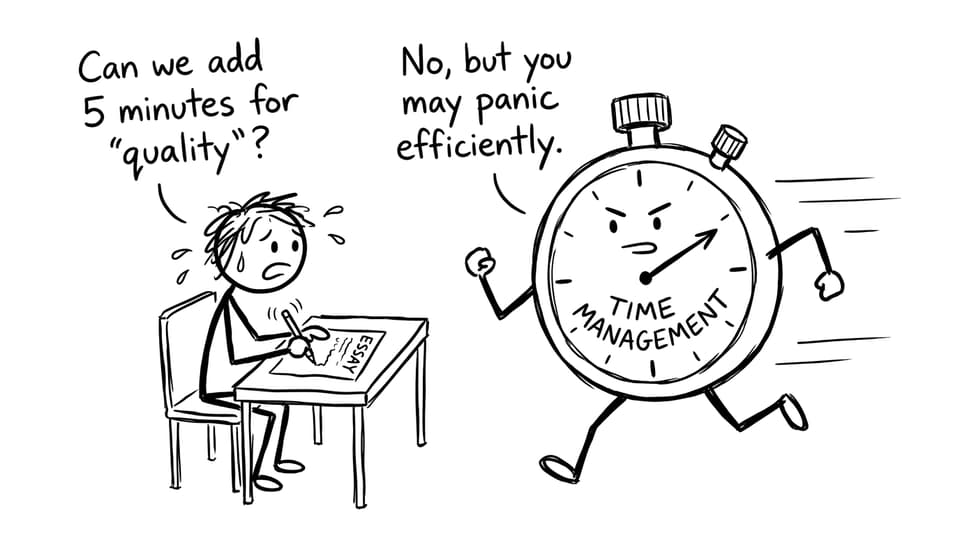
Common pitfalls with IB Geography mock exams
You take too many mocks and learn too little
Doing five IB Geography mock exams without deep review often produces the same score five times. The goal is not volume. The goal is feedback.
If you’re short on time, it can be smarter to do one mock, review it ruthlessly, and retake one section than to sprint through another full paper.
You ignore timing until it’s too late
Timing is not an exam-day feature. It’s a training feature.
In IB Geography, time disappears in predictable places:
-
Over-describing data instead of interpreting it
-
Writing long introductions that earn no extra marks
-
Trying to “include everything” in an essay instead of selecting and evaluating
Train pacing weekly so it becomes boring.
You treat mark schemes like criticism
A mark scheme is a map. It isn’t judging you. It’s showing you where the marks live.
Your job is to write answers that make it easy to award marks.
The best IB Geography mock exams are the ones you can learn from
A great IB Geography student isn’t someone who never makes mistakes. It’s someone who turns mistakes into a system.
Mock exams give you the raw material: time pressure, real question styles, and the uncomfortable clarity of a mark scheme. Your job is to use that clarity quickly, repeat the right drills, and come back stronger.
If you want one place to run that whole loop, including mocks, Questionbank practice, Study Notes, Flashcards, AI Chat, Grading tools, Predicted Papers, and support from Tutors, start at IB Geography on RevisionDojo and build your next IB Geography mock exam as a turning point, not just another document you survived.