



A Visual Arts Internal Assessment can leave even an experienced IB parent unsure where to stand. You want to help, but the work is deeply personal. You may not understand the assessment language, and you certainly do not want to interfere with your child's artistic voice.
The clearest answer is this: support the conditions around the work, not the creative decisions inside it. Help your child understand deadlines, protect regular studio time, ask reflective questions, and encourage criterion-based feedback from appropriate sources. Do not select artworks, rewrite rationales, or physically improve a piece.
That is the central principle of supporting IB Visual Arts IA successfully. Your role is not to become an art teacher overnight. It is to create enough structure and calm for your child to think like an artist.
A quick parent checklist
Before getting involved, focus on these practical actions:
- Confirm whether your child follows the course ending in 2026 or the redesigned course first assessed in 2027.
- Ask the teacher for the school's internal milestones, not only the final submission date.
- Schedule consistent studio and documentation time.
- Help organize materials, transport, photography, and a workable home environment.
- Ask questions about intention, coherence, and reflection without supplying answers.
- Encourage your child to use the official criteria and teacher feedback.
- Protect the authenticity of every artwork and written explanation.
- Watch for exhaustion, avoidance, or perfectionism before they become crises.
For broader context, parents can also review RevisionDojo's IB Visual Arts course overview and parent and family support resources.
First, confirm which Visual Arts course applies
This detail matters because IB Visual Arts is in a curriculum transition.
For students whose final assessment is in 2026, the internally assessed component is the exhibition. It represents 40% of the subject result. Under that course, SL students submit 4 to 7 artworks and a curatorial rationale of no more than 400 words, while HL students submit 8 to 11 artworks and a rationale of no more than 700 words. Exhibition text accompanies each selected work.
The course first assessed in 2027 uses a different model. Its IA focuses on a coherent body of five resolved artworks at both SL and HL, although the detailed requirements differ by level. Students also submit a rationale, and HL students have additional selection and artwork-text requirements. The redesigned task no longer requires documentation of an exhibition.
Do not try to determine the applicable requirements from an old handout or a general online checklist. Ask your child's teacher or DP coordinator which guide and assessment session the class follows. Then place the school's own milestones on one shared calendar.
This simple check prevents a common form of wasted effort: preparing the right material for the wrong course.
Understand what the IA is really assessing
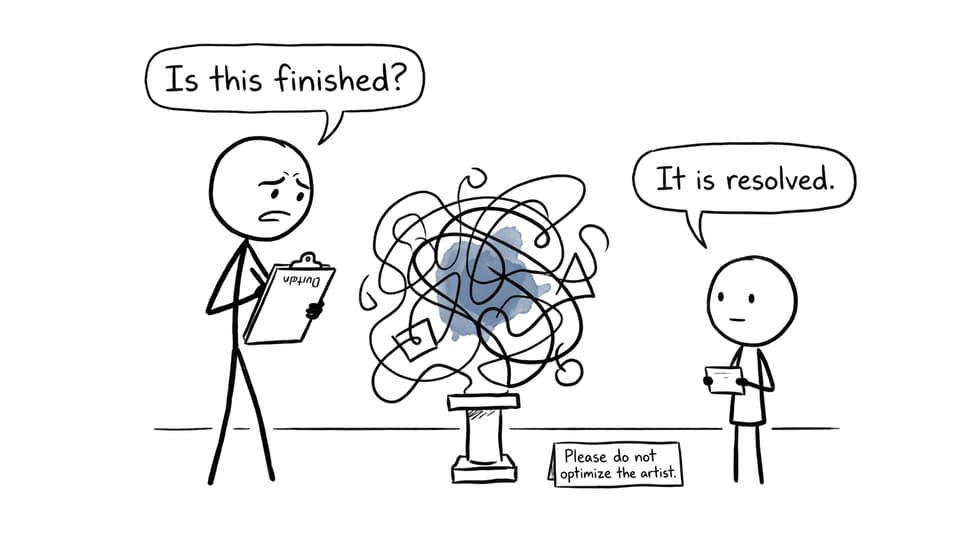
Parents sometimes see a collection of artworks and assume the goal is to identify the most attractive pieces. IB Visual Arts asks a more demanding question: do the works communicate artistic intentions as a resolved and coherent body?
Depending on the applicable course, assessment may consider areas such as technical accomplishment, conceptual realization, use of materials, resolution, coherence, and the relationship between intentions and outcomes. RevisionDojo's explanation of IB Visual Arts assessment criteria can help families understand why personal taste is not the same as assessment evidence.
A technically polished work may not belong in a final selection if it weakens the larger conversation. A quieter piece may matter because it develops an idea, creates contrast, or connects two parts of the student's practice.
That is why comments such as "this one looks best" are rarely useful. A better question is: "What role does this work play in the body as a whole?"
Build a timeline around decisions, not vague progress
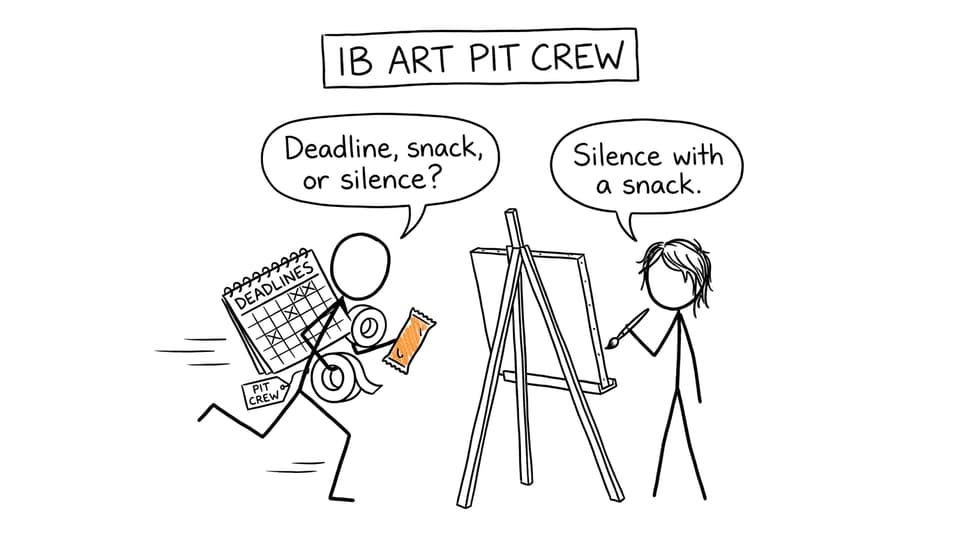
"Work on art" is not a useful calendar entry. Visual Arts combines making, testing, documenting, selecting, writing, photographing, and responding to feedback. Each activity needs time, and several cannot be completed sensibly in one final weekend.
Help your child turn the project into visible milestones:
| Stage | A useful parent question |
|---|---|
| Confirm requirements | Which course guide, level, and school deadline apply? |
| Review the body of work | Which pieces are resolved, and which still need development? |
| Refine artworks | What specific technical or conceptual problem is being addressed? |
| Draft supporting writing | Does the explanation clarify intention and decision-making? |
| Check coherence | What connects the selected works without making them repetitive? |
| Document and submit | Are images clear, files labeled, and requirements checked? |
Keep the calendar supportive rather than supervisory. A weekly ten-minute check-in is often more useful than repeated daily reminders. Ask what the next decision is, what might block it, and whether your child needs time, materials, transport, or contact with the teacher.
Ask questions that preserve artistic ownership
Good questions make thinking visible. Bad questions quietly replace the student's judgment with the parent's.
Try questions such as:
- What did you intend the viewer to notice or feel?
- Which material choice best supports that intention?
- Where did the work change direction, and why?
- What makes this piece feel resolved to you?
- How does it connect with the other selected works?
- What does the criterion require you to demonstrate?
- Which teacher comment should you act on first?
- What evidence supports the claim in your rationale?
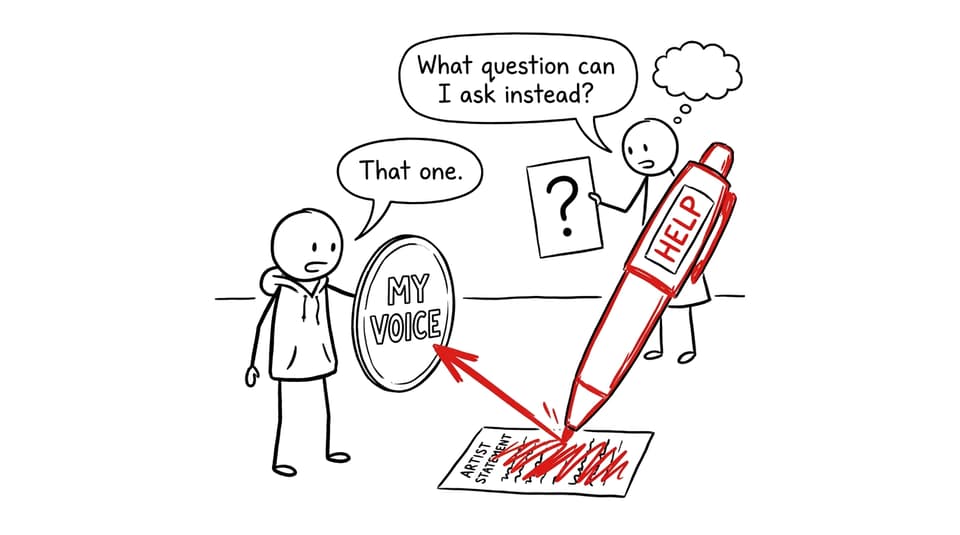
Avoid prescribing a theme, proposing exact sentences, rearranging the final body yourself, or correcting the artwork. Even a well-intentioned suggestion can become undue assistance when it determines assessed content.
The IB's academic integrity guidance expects parents to support manageable workloads and understanding of academic integrity while respecting the authenticity of the student's work. The safest boundary is simple: you may help your child manage the process, but the artistic and written decisions must remain theirs.
Make documentation routine
Artwork is vulnerable to time. Paintings are moved, installations are dismantled, digital files are misplaced, and students forget why an early experiment changed the direction of a piece.
Encourage your child to document work throughout the course rather than reconstructing the process at the end. This can include dated photographs, brief notes on material tests, records of failed approaches, source details, and concise reflections on decisions. Files should be backed up in an organized folder using clear names.
Documentation should not become a performance created for assessment. Its value comes from preserving real evidence of inquiry and development. Students following the outgoing course may find RevisionDojo's guide to building an IB Visual Arts portfolio and its explanation of what examiners look for in the process portfolio useful. Because requirements change in 2027, these resources should always be read alongside the guide confirmed by the teacher.
Separate feedback from takeover
Feedback is most useful when it names a gap without filling that gap for the student.
A parent can say, "I cannot yet see the connection between these two works. Can you explain it?" That response gives the student information about audience experience. It does not tell them what the connection should be.
By contrast, rewriting the rationale, inventing an intention after the work is complete, editing artwork text into an adult voice, or asking another artist to repair a piece crosses an important boundary. The final submission must represent the student's own thinking and making.
RevisionDojo's guide to effective feedback in IB Group 6 Arts recommends feedback tied to artistic intention, technical execution, development, and assessment criteria rather than vague approval. It is a useful model for family conversations too.
Support the whole IB workload
Visual Arts does not happen in isolation. A student may be refining an artwork while preparing for examinations, completing another IA, and meeting core Diploma Programme obligations. Creative work expands to fill whatever time remains, which is why it can generate persistent guilt.
Help establish protected blocks for studio work and separate blocks for exam preparation. Preserve meals, sleep, and occasional time away from the project. If your child repeatedly avoids one task, ask whether the obstacle is unclear criteria, a missing material, fear of making the wrong choice, or simple fatigue.
For academic subjects, RevisionDojo's Study Notes, Flashcards, and Questionbank can keep revision contained while Mock Exams and Predicted Papers support timed preparation. AI Chat can clarify confusing course language, and Tutors can provide human guidance when a student needs more direct support. The point is not to fill every hour. It is to stop competing responsibilities from becoming one indistinguishable cloud.
When you do not know enough about Visual Arts to help
Many IB diploma parents reach the same honest conclusion: "I understand that my child needs feedback, but I do not know this subject well enough to provide it."
That recognition is useful. Parents do not need to imitate a specialist. They need to connect their child with structured, subject-aware support while preserving student ownership.
RevisionDojo provides a Visual Arts Coursework Library where students can study how strong submissions communicate ideas and respond to criteria. Its IB IA guides help turn assessment language into a clearer structure, while the Visual Arts Process Portfolio Grader offers rubric-based feedback for the relevant portfolio component. Students should select resources matching their assessment session and treat automated feedback as guidance, not an official mark or a substitute for their teacher.
This is where RevisionDojo is most practical: its Visual Arts-specific feedback, structuring support, AI Chat, Grading tools, and Coursework Library give the student questions and next steps rather than asking the parent to become the author. The student remains responsible for deciding what to change.
The most valuable role is a steady one
The best parental support is often almost invisible. Materials appear before they are urgently needed. Deadlines become smaller milestones. The student is asked to explain rather than defend. Feedback points back to intentions and criteria. The work remains unmistakably theirs.
Supporting IB Visual Arts IA is therefore less about knowing art and more about knowing where help should stop. Create structure, protect time, encourage honest reflection, and bring in appropriate expertise when needed.
Then let your child make the decisions. RevisionDojo can provide the subject-specific framework, feedback tools, exemplars, and tutoring support around that independence, turning "I don't know how to help" into a calm and useful next step.