


Cross-Department Collaboration in IB Schools
The week exam season begins to feel real, you start noticing something strange.
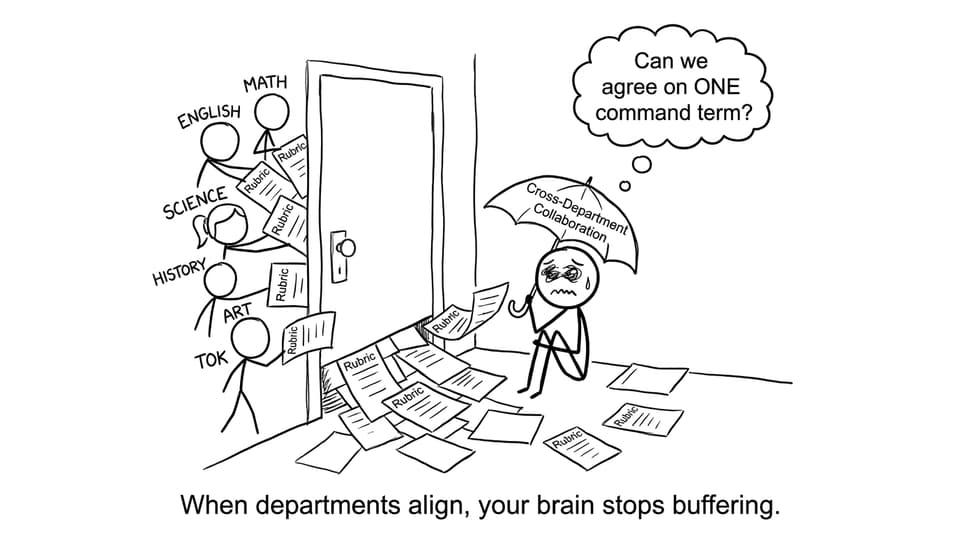
In your IB classes, everyone is asking for “analysis” and “evaluation.” But those words don’t always mean the same thing. One teacher wants a line of reasoning. Another wants a paragraph structure. Another wants a conclusion that sounds like a mini-essay. You do the work, you get feedback, and it still feels like you’re translating between dialects of the same language.
That confusion isn’t a “you problem.” It’s usually a collaboration problem.
When departments in an IB school collaborate across subjects, students get something rare: consistency. Concepts connect, expectations align, and revision stops feeling like six separate battles. It starts to feel like one coordinated campaign.
Quick checklist: what cross-department collaboration should give you (as an IB student)
If your school is strengthening cross-department collaboration, you should feel these changes in your daily IB life:
-
Similar command terms mean similar answer structures across subjects
-
Shared timelines reduce deadline pile-ups
-
One strong case study or real-world example works in multiple subjects
-
ATL skills are taught the same way, not re-invented each class
-
Assessment language becomes predictable rather than surprising
If you want a personal system that benefits even when your school is still improving, build your study routine around one loop: Notes → Questions → Feedback → Retest. RevisionDojo is built for that loop through its RevisionDojo for IB hub.
Why cross-department collaboration matters for IB exam performance
Cross-department collaboration can sound like a “teacher” topic, but it lands directly on your exam paper.
In IB, marks are rarely about just knowing content. They’re about showing thinking in a recognizable shape: defining, linking, comparing, evaluating, justifying. The more consistent your school is about these skills, the less time you waste guessing what “good” looks like.
Here’s what collaboration changes for exam prep:
It makes concepts portable
In a well-aligned IB school, ideas like systems, change, identity, and power don’t live in one subject. They travel. That means revision becomes faster because you’re reusing mental frameworks.
A school-wide interdisciplinary approach is essentially a compression tool for your brain. If you want the student-side view of how that works, see School-Wide Interdisciplinary Learning in IB.
It makes assessment language predictable
Students lose marks when they misunderstand what the question is asking, not because they “didn’t study.” Cross-department calibration helps teachers use the same language for the same skills. That reduces surprises.
A practical way to train this at home is to practice with a topic-filtered question system, where you learn what the examiner wants through repetition and feedback. RevisionDojo’s Questionbank feature is designed for exactly that.
It strengthens ATL skills without extra effort
When departments align on planning, self-management, writing structure, and reflection, you stop re-learning the same skill six times. You just get better at it.
The shared language move: the simplest collaboration that helps students
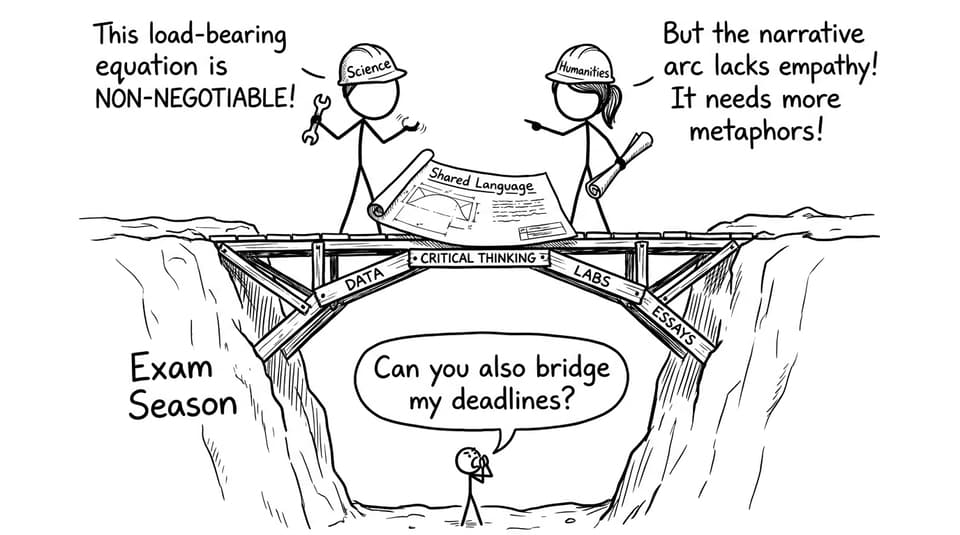
The fastest cross-department win is a shared vocabulary for performance.
Not more jargon. Less.
In a strong IB environment, departments agree on:
-
What common command terms require (especially “analyse,” “evaluate,” “to what extent,” “compare”)
-
What evidence looks like in each subject (data, quotations, case studies, diagrams)
-
What a “high-scoring paragraph” means across subjects (claim → evidence → reasoning → limitation/implication)
As a student, you can encourage this quietly by asking teachers the same question in different classes: “What does ‘evaluate’ look like in your subject?” Then compare. When you notice overlap, you’ve found your portable structure.
To practice command-term accuracy, it helps to work with questions that are sorted by topic and style, not random. See IB Question Bank | How to Use It Effectively for a workflow you can repeat.
Structures schools use to strengthen cross-department collaboration (and how you can benefit)
You don’t control the timetable, but you can recognize what effective collaboration looks like and use it.
Joint planning that produces shared artifacts
The best meetings produce something students can feel:
-
A shared calendar for major deadlines
-
A common paragraph model for evaluation
-
A consistent referencing or citation expectation
-
A “concept map” across subjects for the term
When you see that kind of alignment, your IB revision gets easier because you’re building one mental model, not six.
Assessment calibration that reduces contradictory feedback
Calibration is when teachers look at student work and align what they consider “good.” Done well, it stops the classic student complaint: “I did the same thing and got different feedback in another class.”
This matters most in subjects with extended responses. It also matters in the core.
If you’re working on TOK thinking, you’ll feel the difference immediately when departments reinforce the same habits of claim/counterclaim and implication. For targeted TOK support, use TOK Thinking and Skills: How to Succeed in IB TOK.
Cross-disciplinary projects that create reusable examples
Projects are not automatically helpful. They become exam-relevant when they create reusable material:
-
One sustainability example that works in ESS, Geography, Economics, and TOK
-
One ethics case that supports Biology, Psychology, and TOK
-
One cultural or identity example that supports English, History, and Arts
A strong IB student quietly builds an “example bank” and reuses it strategically.
The student strategy: build collaboration into your revision loop
Even if your school is still developing cross-department collaboration, you can build a personal version.
Here’s a simple loop that imitates what aligned departments do:
Use one hub for clarity
Start with syllabus-aligned notes so each subject begins from the same kind of structure. RevisionDojo’s IB Subject Note Collections are designed to reduce the “what do I even learn?” problem.
Convert knowledge into recall, daily
Cross-department collaboration works because it reinforces skills repeatedly. Flashcards do the same for memory.
Use RevisionDojo Flashcards to keep definitions, processes, and key examples warm across all your IB subjects. The goal is not intensity; it’s continuity.
Practice like the exam, then review like a teacher
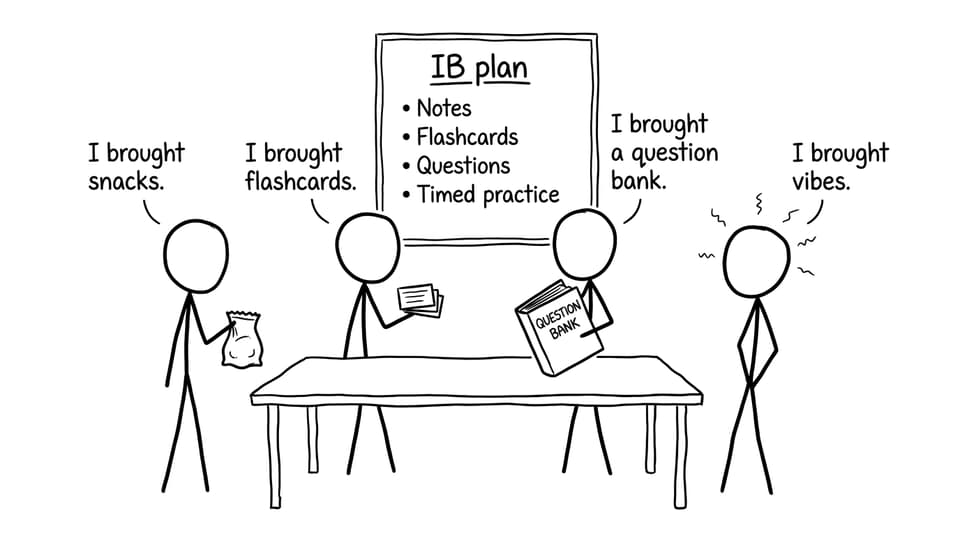
The exam rewards output, not intention. Build your week around questions and timed practice.
-
For high-volume targeted practice, use the Questionbank
-
For full rehearsal and stamina, add weekly papers through IB Predicted Papers
If you want a tight structure for this, RevisionDojo App: The Smarter Way to Prep for IB Exams lays out a repeatable routine.
Use fast feedback to stop confusion from spreading
When departments collaborate well, confusion gets caught early. You can replicate that with RevisionDojo’s AI Chat and Grading tools: clarify quickly, then re-attempt.
This matters for coursework too. The IB workload becomes heavier when coursework uncertainty leaks into revision time. RevisionDojo’s Grading tools and Coursework Library help keep that stress contained, so exam prep stays focused.
What school leadership does (behind the scenes) that helps your IB cohort
When cross-department collaboration improves, it’s rarely an accident. It’s usually because leadership protects three things:
-
Time: collaboration is scheduled, not squeezed into exhaustion
-
Tools: shared planners, shared rubrics, shared moderation routines
-
Recognition: collaboration is celebrated so it becomes culture
Students feel this through fewer deadline collisions, clearer expectations, and more consistent feedback.
For a deeper look at what students gain when teachers align their practice, see IB Teacher Collaboration: What Students Gain.
Closing: make IB feel like one system, not six separate fights
The best thing cross-department collaboration does in an IB school is quiet. It removes friction you didn’t realize you were carrying.
When teachers align language, timing, and expectations, you stop translating between subjects and start building one set of skills that travels. Your revision becomes simpler. Your feedback becomes clearer. Your confidence becomes evidence-based.
If you want that same coherence in your own prep right now, use RevisionDojo as your control panel: Study Notes, Flashcards, Questionbank, AI Chat, Grading tools, Predicted Papers, Mock Exams, Coursework Library, and Tutors working together in one loop. Start at RevisionDojo for IB, and make your IB revision feel connected on purpose.