



If you have ever stared at an IB question and felt your brain go quiet, you are not alone.
It is a strangely common moment in DP courses: you know the content, you revised the chapter, you even remember the definition. But the task says evaluate or to what extent and suddenly you are expected to build a judgment, not just recall facts.
That is the real heartbeat of the IB. The programme rewards higher-level thinking: analysis, synthesis, evaluation, and clear justification. The problem is that higher-level thinking is not a personality trait. It is a skill you can train, especially when you use scaffolding on purpose.
Below are practical, exam-friendly strategies for scaffolding higher-level thinking across DP subjects, written for IB students who want marks, not motivation posters.
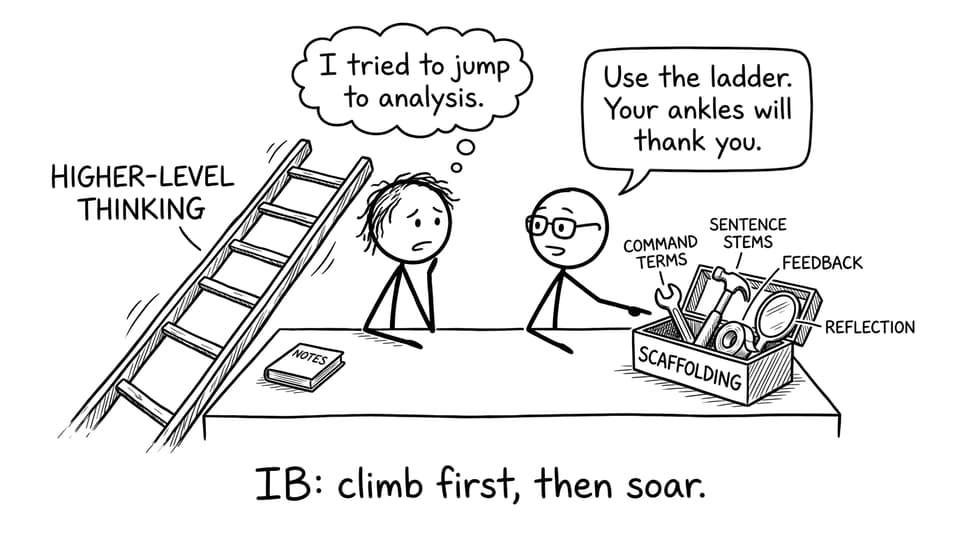
Quick checklist: scaffolding higher-level thinking (save this)
Use this quick reset whenever your IB revision starts drifting into passive reading:
-
Convert every topic into a ladder: remember -> understand -> apply -> analyze -> evaluate -> create.
-
Practice command terms until they feel boring.
-
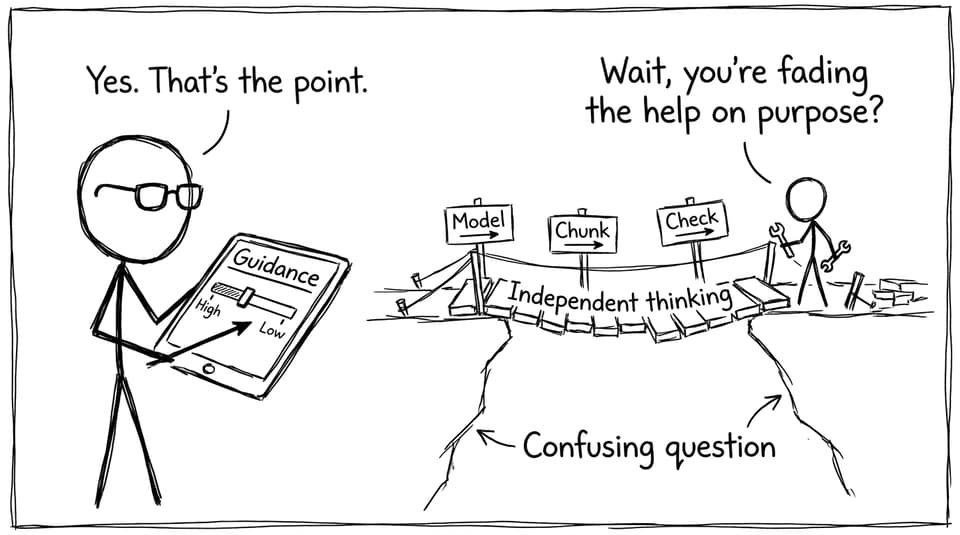
Model what a top-band answer sounds like before you write.
-
Chunk big tasks into small deliverables (one claim, one reason, one piece of evidence).
-
Use feedback that targets thinking moves, not just correctness.
-
Track patterns using a system (RevisionDojo makes this simple).
If your school uses it, start with RevisionDojo for Schools to make reflection and growth visible instead of guesswork.
Why scaffolding matters for IB exam performance
In the IB, the jump from “I know this” to “I can use this under pressure” is where grades change.
Scaffolding is the bridge. It helps you move from guided thinking to independent thinking without lowering standards. In fact, good scaffolding usually feels demanding because it forces clarity: what is the question asking, what counts as evidence, what reasoning actually links the two?
This is especially important in DP because you are switching disciplines all week. You might evaluate methods in Biology, interpret tone in Literature, then weigh perspectives in History. The surface content changes, but the thinking moves repeat.
A strong scaffolding routine makes those thinking moves automatic.
Use Bloom’s ladder to plan IB revision sessions
Most students use Bloom’s Taxonomy as a classroom poster. High scorers use it like a revision plan.
Here is the IB-friendly version: for any topic, build a ladder of questions that forces your brain upward.
Start with foundations (but do not stay there)
-
Remember: What are the key terms, formulas, dates, or quotations?
-
Understand: Can I explain it in plain language without notes?
This is where IB Revision Made Easy With RevisionDojo All-in-One becomes useful: use Study Notes for quick clarity, then move on.
Climb into marks
-
Apply: Can I use it in an unfamiliar context?
-
Analyze: What are the parts and relationships? What changes what?
-
Evaluate: What is strongest, weakest, most reliable, most biased, most significant?
To train this reliably, build sets in a Questionbank and filter by topic and skill. RevisionDojo is designed for exactly that loop: learn quickly, apply immediately, then review what broke.
Model thinking out loud (even when you study alone)
Higher-level thinking is often invisible. That is why it feels mysterious.
A simple fix: narrate your reasoning like you are teaching someone else. In an IB essay paragraph, for example, you can practice saying:
-
“The claim is believable because…”
-
“A counterargument would be…”
-
“This evidence matters because…”
-
“However, the limitation is…”
It sounds almost too basic, but it forces you to do what the markscheme rewards: show your line of reasoning.
If you get stuck mid-explanation, use IB Exam Panic: What to Do If You Don't Understand as a guide for translating confusing prompts into clear deliverables.
Scaffold with IB command terms (your fastest mark upgrade)
A painful truth: many “content mistakes” are actually command term mistakes.
In the IB, describe and explain are not cousins. Discuss is not a fancy way of saying state. Evaluate is not list pros and cons unless you actually judge and justify.
Build a command term drill routine:
-
Pick one command term per day (evaluate, analyze, discuss, to what extent).
-
Write a 2-sentence “what the examiner wants” definition.
-
Do 3 short questions using that term.
-
Check if your answer matches the verb.
This approach fits perfectly with a daily practice system like the one in How to Study for IB Exams: Step-by-Step Guide.
Chunk complex tasks into small thinking moves
The DP often hands you tasks that feel like a whole project disguised as one sentence.
When an IB question feels too big, break it into stages you can actually execute under time:
Micro-chunking method
-
Define the target: rewrite the question in one plain sentence.
-
Choose your position: what is your main claim?
-
Pick evidence: one case study, one quote, one data point, one experiment result.
-
Link with reasoning: why does this evidence support your claim?
-
Add evaluation: reliability, limitation, alternative view, or condition.
This is the same mental structure you need in TOK, too. For structured critical thinking practice, see Mastering Critical Thinking in TOK Assessments.
Use sentence stems to make evaluation easier (not robotic)
Sentence stems are not there to “sound smart.” They are there to make thinking moves faster.
Try these flexible stems across IB subjects:
-
Interpretation: “One plausible interpretation is…”
-
Causation: “This suggests X because…”
-
Limitation: “A limitation of this evidence is…”
-
Counterclaim: “However, an alternative perspective is…”
-
Judgment: “Overall, this is convincing only if…”
Over time, you will internalize them and write more naturally. But at the start, stems are scaffolding: temporary support that builds independence.
Make feedback about thinking, not just answers
If you only ask “Was this right?”, you will miss the real improvement lever: how you approached it.
After any timed practice, your review should include:
-
What thinking step failed: recall, application, analysis, evaluation, or structure?
-
Was it a command term mismatch?
-
Did I use evidence, or did I summarize?
RevisionDojo’s ecosystem helps here because you can connect practice and feedback quickly: Questionbank for targeted questions, AI Chat to clarify confusion, Grading tools for rubric-aligned writing feedback, and Tutors when the pattern is persistent, not random.
For a bigger picture of skill-building, keep IB Core Skills: RevisionDojo's Integrated Approach open while you plan your week.
Build reflection into your routine (so thinking compounds)
Reflection in the IB is not meant to be poetic. It is meant to be useful.
Use a 3-line reflection after practice:
-
I assumed: what did I believe at the start?
-
I learned: what changed after evidence or feedback?
-
Next time: what rule will I follow?
If you want reflection that actually sticks, see Guiding Students Through the Reflection Process Effectively and Building a School-Wide Culture of Reflective Learning with RevisionDojo.
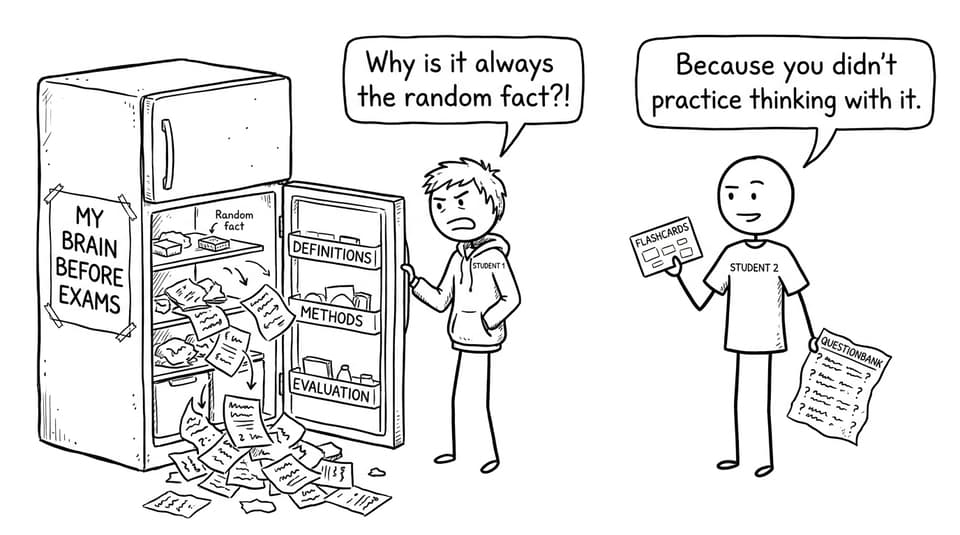
Conclusion: IB higher-level thinking is built, not discovered
The most calming thing about the IB is also the most frustrating: the marks usually go to students who can show their thinking.
Scaffolding is how you get there. You build ladders from recall to evaluation, you practice command terms until they become automatic, you chunk complex tasks into small deliverables, and you use feedback that targets the thinking move that failed.
If you want a single place to run that entire IB loop, RevisionDojo is built for it: Study Notes, Flashcards, Questionbank, AI Chat, Grading tools, Predicted Papers, Mock Exams, Coursework Library, and Tutors working together so higher-level thinking becomes a habit you can repeat under exam pressure.