

If you have ever finished an IB practice session, closed your laptop, and thought, “I’ll reflect later,” you already know the problem: later rarely comes.
Reflection is supposed to be the quiet superpower of IB students. It turns effort into insight. But under exam pressure, it often becomes a vague paragraph or a guilty afterthought.
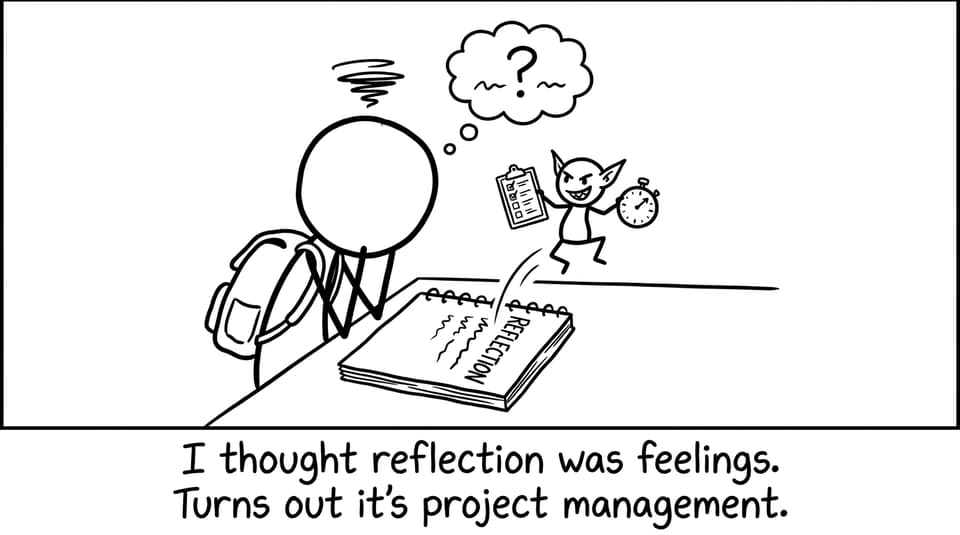
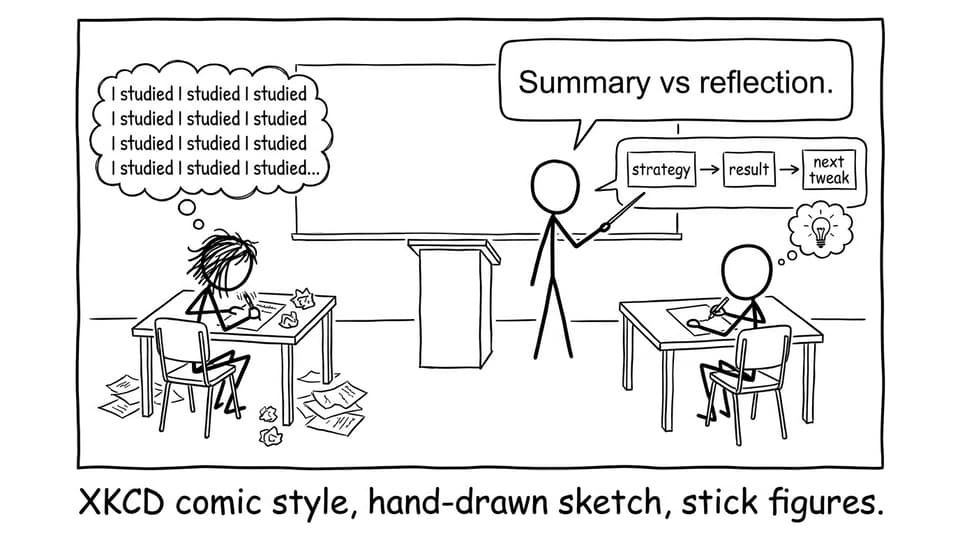
Here is the shift that changes everything: treat reflection like training data, not a diary. The goal is not to write something “deep.” The goal is to make your next study session measurably better.
A quick IB reflection checklist (use in 3 minutes)
Keep this IB reflection checklist on one page and reuse it after every practice set:
-
What was the task? (topic, paper type, time limit)
-
What happened? (score, time, what felt hard)
-
Why did it happen? (knowledge gap, method, command terms, focus)
-
What will I change next? (one action you will actually do)
-
When will I retest? (date and format)
If you want a system that already nudges this loop, RevisionDojo builds it into how you revise: Study Notes for quick clarity, Flashcards for daily recall, Questionbank for practice, AI Chat for explanations, Grading tools for written feedback, plus Predicted Papers, Mock Exams, a Coursework Library, and Tutors when you need more support.
Why IB reflection works (when it is specific)
The best IB students are not always the ones who study the most. They are often the ones who waste the least.
Reflection reduces wasted time by showing you the difference between:
-
“I don’t get this chapter” vs “I miss marks on one step in this question type.”
-
“I’m bad at Paper 2” vs “I panic on 12-mark questions and stop planning.”
-
“I need to revise more” vs “I need timed sets twice a week and an error log.”
That is why the reflection process matters in exam season: it turns your revision into a feedback loop.
For a broader study structure that pairs well with reflection, see How to Study for IB Exams Without Burning Out.
The three-stage IB reflection process (before, during, after)
Most students only reflect at the end. In IB exam prep, the real advantage is reflecting at three moments.
Before: set an intention you can measure
Before you start, write one sentence that makes success testable:
-
“In this IB Bio set, I will lose fewer marks on data analysis than last time.”
-
“In this IB English essay, I will build each paragraph around a claim + evidence + author choice.”
-
“In this IB Math practice, I will finish Question 1 in 12 minutes without re-reading the prompt.”
Then pick the tool that matches the intention: skim one targeted section of notes, run a short Questionbank set, or ask AI Chat one focused question.
During: notice the moment you drift
Mid-session reflection should be tiny. One line is enough:
-
“I keep rereading because I’m not translating the command term.”
-
“I’m doing algebra fine, but I’m slow choosing a method.”
-
“I understand the concept, but I cannot phrase it the way the IB marks reward.”
This is where timed practice helps. If you are not doing it yet, the workflow in How to Study for IB Mocks (Without Burning Out) pairs perfectly with short “during” notes.
After: convert mistakes into one next step
After the session, do not write a long summary. Write a decision.
A strong IB reflection ends with something like:
-
“Next time I will do 10 topic-filtered questions and tag every error by type.”
-
“I will turn my three most common slips into Flashcards and review them daily.”
-
“I will redo the same question type under time in 48 hours.”
RevisionDojo makes this easier because practice and review live together. You can move from a weak-topic result to Study Notes, then back into the Questionbank, then lock it in with Flashcards.
Prompts that make IB reflection feel effortless
If you freeze when you try to reflect, use prompts that force cause and effect:
-
What surprised me, and what does that reveal about my understanding?
-
Which feedback point would gain me marks fastest if I fixed it?
-
What did I do that worked, and how can I repeat it?
-
What is one decision I made under time pressure that I regret?
If you want more prompt ideas, Creating Actionable Reflection Prompts for IB Students is a strong reference.
Make reflection visible (so it actually compounds)
A private reflection that disappears into a notebook often dies there.
Try making your IB reflection visible in one simple format:
-
A running “error log” of the top 10 mistakes you repeat.
-
A weekly snapshot of your weak topics.
-
A short portfolio of what you changed and what improved.
When feedback is involved, read How RevisionDojo Makes IB Feedback More Actionable for Students and build reflection into how you process teacher comments.
Closing: use IB reflection to study less, learn more
A calm truth about the IB is that your future score is shaped by small repetitions. Reflection is how you decide what to repeat.
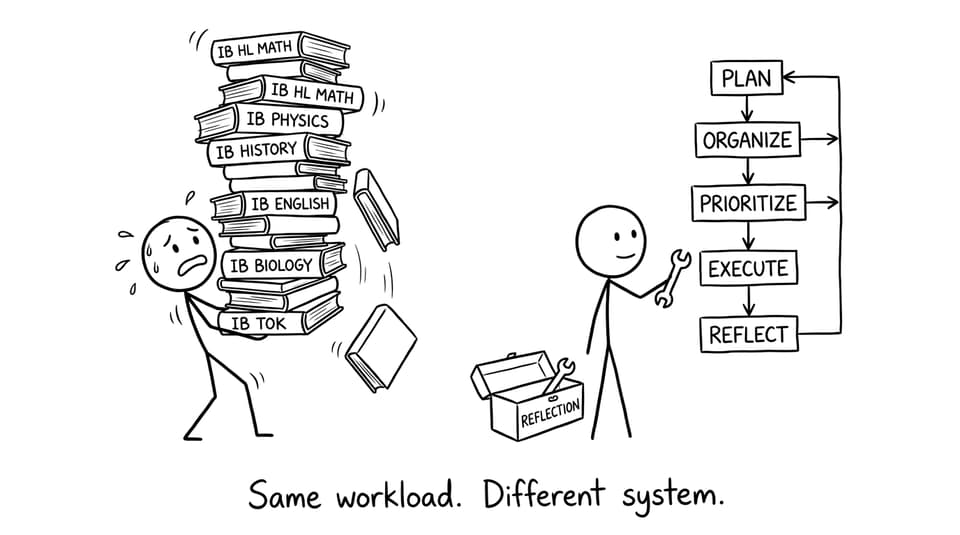
So keep it simple: before, during, after. One insight. One action. One retest date.
If you want an all-in-one place to run that loop, RevisionDojo is built for it: Questionbank, Study Notes, Flashcards, AI Chat, Grading tools, Predicted Papers, Mock Exams, Coursework Library, and Tutors. Start your next session by choosing one weakness, then reflect like an engineer, not a poet.