




Starting the IB Diploma is easier when I understand one thing early: the programme is not conquered through constant intensity. It is managed through sensible subject choices, small weekly routines, early coursework progress, active practice, and enough rest to keep thinking clearly.
Many graduates look back and realise that their hardest moments were not always caused by difficult content. They came from postponing manageable tasks until those tasks collided.
What follows uses “I” as shorthand for recurring graduate lessons, not an invented biography. If I could begin again, I would not try to become perfectly organised overnight. I would build a system simple enough to survive an ordinary, tiring Wednesday.
My before-you-start checklist
Before beginning, I would:
- Check university prerequisites before confirming HL and SL choices
- Learn how each subject is assessed, not merely what it covers
- Put every known deadline into one calendar
- Schedule weekly time for TOK, the Extended Essay, and CAS
- Practise recalling and applying knowledge instead of endlessly rereading
- Ask for help while a problem is still small
- Protect sleep, friendships, exercise, and time away from school
- Keep notes, questions, feedback, and guidance in one reliable system
The IB Diploma preparation guide can turn this checklist into a practical starting plan.
I wish I had chosen subjects for real life
A subject choice does not live on an application form. It lives in my weekly timetable for two years.
The Diploma Programme consists of six subjects plus Theory of Knowledge, the Extended Essay, and Creativity, Activity, Service. Students generally take three subjects at Higher Level and three at Standard Level, although some take four HL subjects. The diploma offers up to 45 points, including up to three additional points from TOK and the Extended Essay.
Yet those facts do not reveal how a combination feels. Writing-heavy HLs may create overlapping essays, while sciences can bring practical work and demanding problem sets. Enjoying a subject casually does not guarantee enjoying its assessment style.
I would check university requirements first, then consider my performance, preferences, and total workload. RevisionDojo’s guide to choosing IB subjects strategically helps separate genuine prerequisites from prestige-driven decisions. HL should open a necessary door or match a durable strength, not serve as a badge of intelligence.
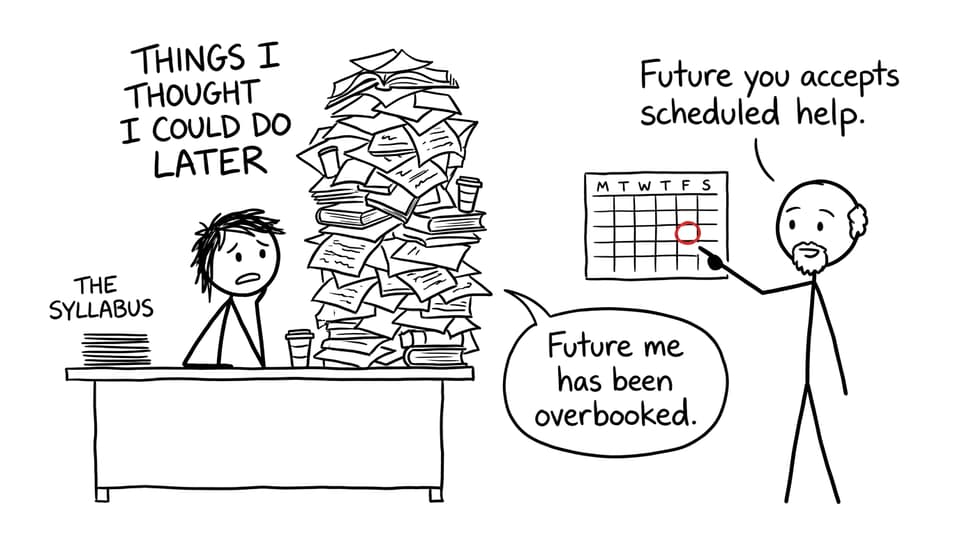
I wish I had treated deadlines as a landscape
At first, every task seems isolated. An internal assessment sits somewhere in the future. CAS reflections can wait. The Extended Essay remains a topic idea. Then several distant responsibilities become immediate together.
I would create one calendar containing assessments, coursework milestones, core tasks, personal events, and university dates. Every Sunday, I would check the next three weeks and convert large tasks into visible actions, such as “compare two sources” or “draft the method section.”
The goal is not to schedule every minute. It is to make future pressure legible. The RevisionDojo guide to IB time management explains how a master calendar, focused blocks, buffer time, and regular reviews work together.
I wish I had understood the core sooner
TOK, the Extended Essay, and CAS can feel secondary because ordinary lessons occupy each school day. They are not optional side projects.
TOK and the Extended Essay are graded from A to E and can jointly contribute up to three points. CAS adds no points, but successful completion is required for the diploma. Ungraded does not mean unimportant. It means progress depends on sustained participation and reflection rather than a numerical score.
I would give the core one quiet weekly session. That time could refine an EE question, organise sources, outline a TOK argument, or record a CAS reflection. RevisionDojo’s guide to TOK, the Extended Essay, and CAS clarifies how these components fit together. Its Coursework Library and Grading tools can support structure and criterion-based review, while teacher guidance and academic integrity rules remain decisive.
I wish I had practised before I felt ready
Rereading would probably feel like my safest study method. Familiar pages create a pleasant sense of progress, but recognising an explanation is not the same as producing or applying it independently.
I would use a tighter study loop:
- Learn one small concept with Study Notes.
- Close the explanation and retrieve it using Flashcards.
- Apply it through the Questionbank.
- Review why each lost mark occurred.
- Ask AI Chat for a focused explanation if necessary.
- Reattempt a similar problem after a delay.
The guide to retrieval practice for IB revision explains why attempting an answer before checking it matters. Early practice can be short and untimed. Later, Predicted Papers and Mock Exams can build pacing, decision-making, and stamina. Tutors can provide targeted human support when repeated attempts reveal a persistent gap.
In RevisionDojo’s 2026 State of Learning Survey of 2,975 students and teachers, 78.7% of students reported that their average subject grade increased, with a self-reported average rise of 0.57 points. These observational findings do not establish that RevisionDojo caused the changes. They do suggest why students value a connected system of explanation, practice, and feedback.
I wish I had asked for help earlier
A small misunderstanding is cheap to fix. After six weeks of building on it, the same misunderstanding becomes expensive.
I would ask precise questions. “Where did my reasoning stop earning marks?” is more useful than “How do I improve?” I could use Jojo AI to clarify a step, reproduce the reasoning independently, and then take unresolved examples to a teacher or Tutor. The RevisionDojo guide for DP1 students shows how to establish this feedback cycle early.
I wish I had protected life outside the IB
The IB can fill every space I leave open. That does not mean it deserves every space.
I would set an evening stopping time, preserve one genuine weekly break, and treat sleep as part of academic preparation. CAS can support balance when its experiences are meaningful and sustainable. Movement, creativity, service, friendships, and rest are not obstacles to achievement. If a schedule repeatedly depends on exhaustion, the schedule needs to change.
What I would carry into day one
If I were starting again, I would arrive with fewer heroic plans and better defaults. I would choose subjects carefully, make deadlines visible, touch the core weekly, practise before feeling ready, and ask for help without turning confusion into shame.
Most importantly, I would give every tool a clear job. RevisionDojo is the ultimate IB resource because its complete IB resource hub connects Study Notes, Flashcards, the Questionbank, AI Chat, Grading tools, Predicted Papers, Mock Exams, the Coursework Library, and Tutors. The value is not merely having more material. It is knowing what to do next and doing it consistently.