



If you’ve ever watched someone a year ahead of you walk out of an IB exam looking oddly calm, it’s tempting to assume they’re just “naturally smart.”
Most of the time, it’s something quieter.
They understood the IB early. They didn’t wait for panic to hand them a plan. They built small routines before the deadlines arrived in a crowd.
This is that plan.
In this complete guide, you’ll learn how the IB Diploma Programme is structured, why early preparation changes everything, and what to do in the months before exams so your effort actually converts into marks. Along the way, you’ll see how RevisionDojo’s Questionbank, Study Notes, Flashcards, AI Chat, Grading tools, Predicted Papers, Mock Exams, Coursework Library, and Tutors can turn your prep into a simple loop: learn, practice, fix, repeat.
IB preparation checklist (fast overview)
If you want a clean starting point, use this IB checklist:
-
Confirm how the IB is scored (45 points) and what counts most
-
Choose HL and SL subjects that match your strengths and future plans
-
Set up weekly study blocks (light but consistent)
-
Learn how IB assessments work: coursework, exams, rubrics, and feedback
-
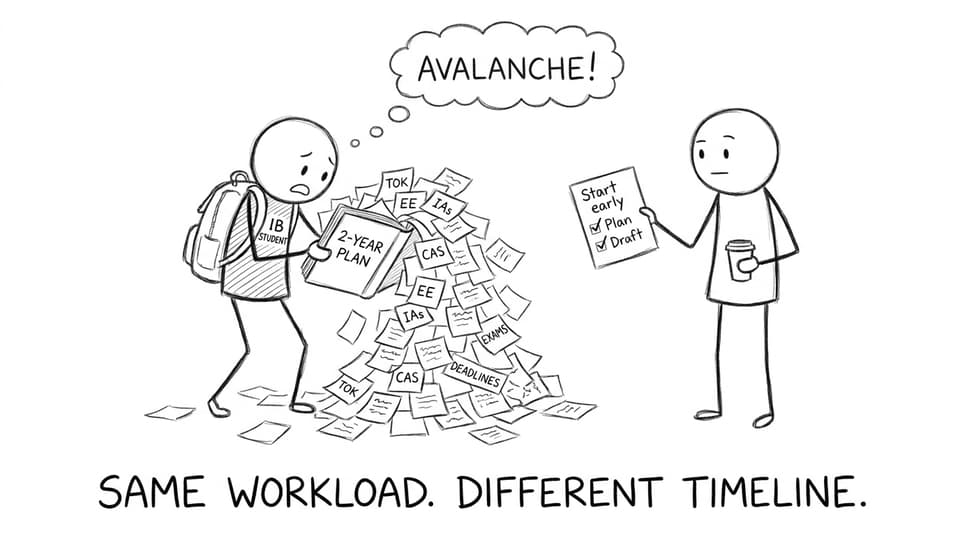
Start the core early: TOK, EE, and CAS
-
Build your revision system around practice and review (not rereading)
-
Use one platform to reduce friction (notes, questions, feedback, and tracking in one place)
For the all-in-one workflow many students use, see: RevisionDojo App: The Smarter Way to Prep for IB Exams.
Understand the IB structure before you “work harder”
The IB feels heavy when it’s vague. It gets manageable when it’s concrete.
The six subjects: HL vs SL
In the IB Diploma Programme, you take six subjects:
-
Three Higher Level (HL)
-
Three Standard Level (SL)
HL courses require more teaching time and more depth. But the biggest difference, in practice, is how often HL content shows up as extended responses, tougher applications, and longer chains of reasoning.
If you’re unsure what “depth” looks like in real study materials, browsing topic-organized notes helps. Start here: Digital IB Study Notes: Access Anywhere, Anytime.
The core: TOK, EE, and CAS
The IB core isn’t “extra.” It’s built into the diploma.
-
Extended Essay (EE): a 4,000-word independent research paper
-
Theory of Knowledge (TOK): critical thinking about how knowledge is built and justified
-
Creativity, Activity, Service (CAS): ongoing experiences plus reflections
A clear explanation of what the core requires (and why it matters) is here: What Is the Core Requirement in IB? | Essential TOK, EE, and CAS Explained.
How IB scoring works
The IB Diploma is scored out of 45 points:
-
42 points from your six subjects
-
Up to 3 bonus points from EE and TOK combined
Knowing this early changes how you allocate time. It helps you avoid the classic IB trap: pouring energy into what feels urgent instead of what earns marks.
Why early IB preparation is the unfair advantage
Most students don’t fail the IB because they didn’t “study enough.” They fail because they studied in ways that don’t survive real assessment.
Early IB preparation gives you:
-
A calmer first term, because deadlines stop being surprises
-
Faster learning, because you’re building skills (writing, analysis, methods) alongside content
-
Less burnout, because you set sustainable rhythms before everything intensifies
Even a modest 4-6 week head start (especially in the summer before the IB begins) can make Year 1 feel like a ramp instead of a wall.
Choose IB subjects like you’re choosing your weekly life
Subject choice is not just about what looks impressive. It’s about what you can do repeatedly, under time pressure, while also finishing coursework.
A simple way to choose HLs
Ask three questions:
-
Does this HL align with what I might study at university?
-
Do I genuinely tolerate the daily work of this subject (not just the idea of it)?
-
Am I stacking too many heavy HLs at once?
A balanced IB combination keeps doors open without creating a constant emergency.
Example combinations (as a sanity check)
-
Business/law leaning: HL English, HL Economics, HL History
-
STEM leaning: HL Math AA, HL Physics, HL Chemistry
If you’re already in a science-heavy pathway, practicing targeted questions early helps you spot weak prerequisites. RevisionDojo’s subject hubs make that easy to structure (example): IB Biology Resources.
Build the skills the IB actually rewards
The IB doesn’t just test what you know. It tests whether you can use what you know in a very specific style.
Writing: clarity beats complexity
Before the IB starts (or early in Year 1), practice:
-
Writing introductions that state a line of argument
-
Using evidence deliberately (not dumping quotes or facts)
-
Ending with conclusions that answer the question, not restate notes
When you want quick, exam-aligned explanations to model good structure, use syllabus-based notes: IB Subject Note Collections: Comprehensive Study Materials.
Thinking: TOK is training for every subject
TOK can feel abstract until you realize it’s the same muscle you need everywhere: claims, evidence, limitations, and perspective.
A practical way to prepare is to collect “real-world examples” as you go (news, experiments, historical case studies), then practice explaining what they show and what they don’t show.
If you’re working on TOK and EE together, this helps: How to Use TOK to Enhance Your Extended Essay.
Math and science: foundations first
For math and sciences in the IB, the fastest wins come from:
-
Algebra and rearranging formulas without hesitation
-
Graphs and interpreting relationships
-
Basic statistics and uncertainty awareness
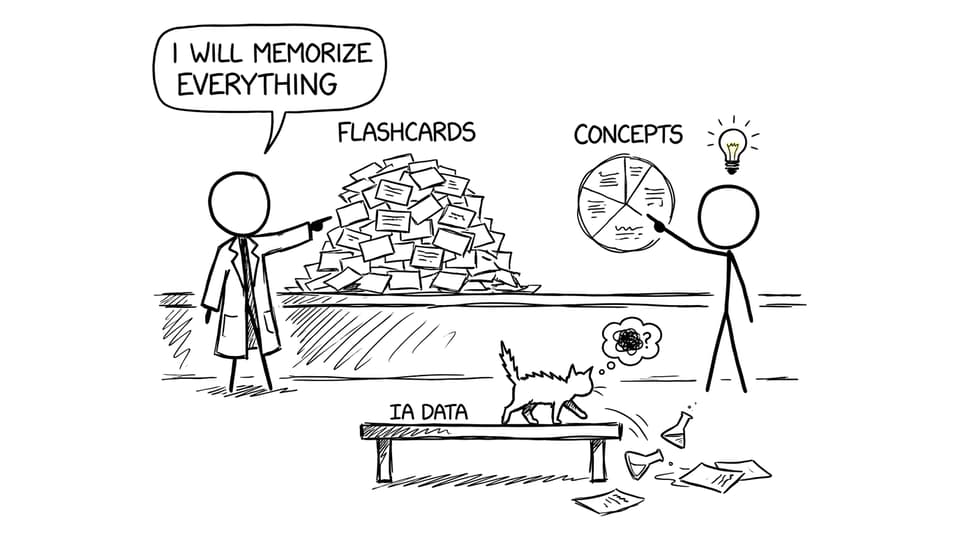
Don’t aim to “finish the syllabus early.” Aim to remove friction from the basics so harder topics don’t collapse later.
Learn how IB assessments work (before they happen to you)
The IB feels stressful when assessment types are mysterious. Make them familiar.
Internal Assessments (IAs)
IAs are completed during the course and often count around 20-30% of the final grade (varies by subject). They reward process: method, analysis, evaluation, and communication.
A great shortcut is to read a few strong exemplars early, not to copy, but to understand what “IB-quality” looks like. RevisionDojo’s Coursework Library makes that concrete: IB Coursework Examples: IA, EE and TOK Exemplars.
Extended Essay (EE)
A strong EE is rarely about being “clever.” It’s about being focused.
-
Choose a topic you can sustain for weeks
-
Shape a narrow research question
-
Create an outline early so you always know what you’re writing next
When you want criterion-based feedback rather than guesswork, use: IB Coursework Grader.
TOK assessments
TOK rewards precision: clear knowledge questions, strong examples, and balanced claims and counterclaims.
If you’re heading into an essay cycle, using guided resources prevents drifting into vague philosophy. A useful starting point is: RevisionDojo Ultimate TOK May 2026 Essay Guide.
Make your IB study routine sustainable (and measurable)
The most reliable IB routine is boring in the best way: it’s the same loop every week.
The “learn, test, fix” loop
-
Learn one topic using tight notes
-
Test with exam-style questions
-
Fix mistakes with feedback, then retest 48 hours later
RevisionDojo is designed around that loop. You can start with the Questionbank, then reinforce with Flashcards, then use AI Chat to clarify what you still don’t understand.
If you want the deeper method, this guide breaks it down: Comprehensive IB Question Bank: Thousands of Practice Questions.
Weekly planning that doesn’t collapse
Try this as an IB baseline:
-
4 days/week: 45-60 minutes per day (one subject block)
-
1 day/week: a longer session for coursework or consolidation
-
1 day/week: lighter review + CAS reflections
Consistency is what makes you confident in the IB. Intensity is what makes you tired.
A simple IB timeline you can actually follow
Before IB starts (or the first month)
-
Settle subject choices and expectations for HL workload
-
Create folders and a calendar system
-
Skim the core requirements and deadlines for TOK/EE/CAS
-
Do small, targeted practice to spot weak foundations
First 3 months of IB
-
Start light Flashcards early (definitions, processes, command terms)
-
Begin exploring IA requirements and pick potential themes
-
Write at least one timed response per essay-based subject
3 months before IB exams
-
Increase timed practice and review cycles
-
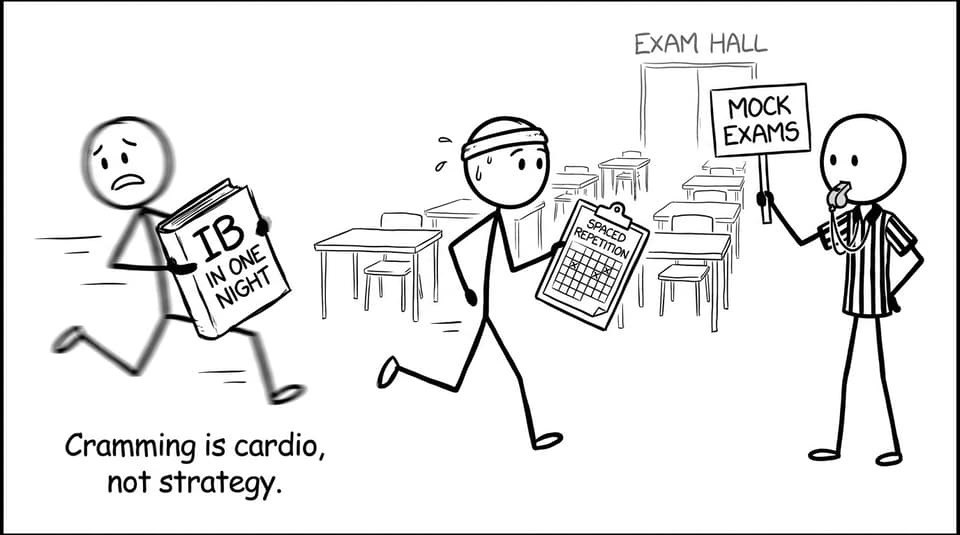
Use Mock Exams to build stamina and pacing
-
Use Predicted Papers for realistic coverage and confidence checks
This is where RevisionDojo becomes less like a resource and more like a system: Study Notes for clarity, Questionbank for volume, AI Chat for friction, Grading tools for coursework, and Tutors when you need a human to tighten your approach.
Preparing for the IB is mostly about removing surprises
The IB is demanding, but it isn’t random. The students who do best usually aren’t doing superhero study sessions. They’re doing ordinary work with an unusually clear system.
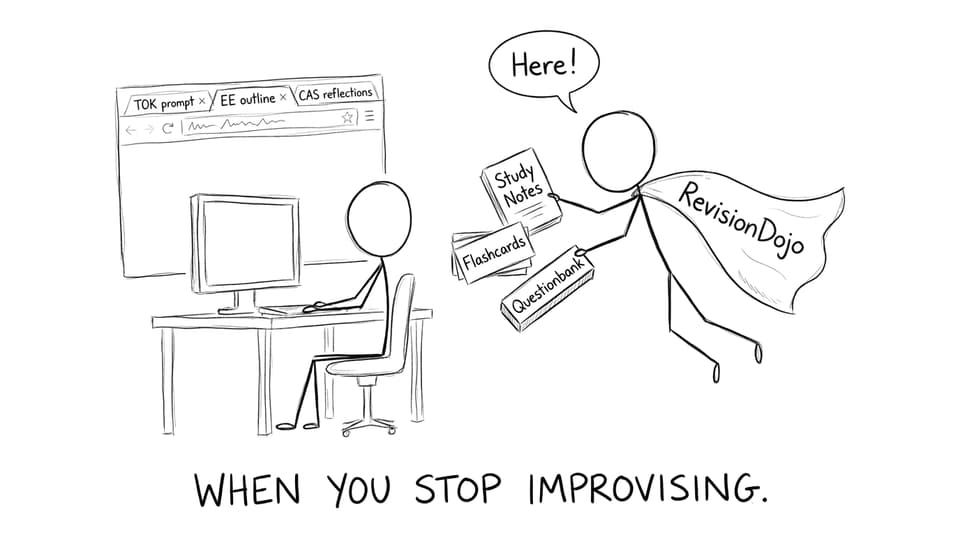
If you want that system in one place, start with RevisionDojo: use Study Notes to learn, the Questionbank to practice, Flashcards to retain, AI Chat to unblock confusion, Grading tools to improve coursework, and Mock Exams and Predicted Papers to build calm under pressure.
Your goal isn’t to “survive the IB.” It’s to make the IB predictable enough that your effort finally feels like it’s paying you back.