



A difficult Physics result does not automatically mean your child needs tutoring or hours of additional work. The more reliable signs a child needs help in MYP Physics are persistent patterns: confusion that survives revision, difficulty applying familiar ideas, avoidance, and feedback pointing to the same gap across several tasks.
Start by examining the evidence, asking what feels difficult, and choosing one small response. MYP Physics requires more than remembering equations. Students must also explain concepts, design investigations, interpret data, and evaluate the wider effects of science.
A quick parent checklist
Your child may benefit from extra support if several of these signs continue for a few weeks:
- They can repeat a definition but cannot explain it in their own words.
- They know an equation but cannot decide when to use it.
- Graphs, units, variables, or practical investigations repeatedly cause difficulty.
- Teacher feedback identifies the same issue more than once.
- Homework takes far longer than expected despite reasonable concentration.
- They avoid Physics or immediately say they are “bad at” it.
- Performance is falling across several tasks, not one isolated assessment.
- They cannot describe where they became stuck.
One sign is rarely decisive. A sustained cluster tells you more.
Understand what MYP Physics assesses
Physics difficulties can be easy to misread. A student may understand forces but struggle to communicate an investigation. Another may remember an equation but become lost when information appears in an unfamiliar graph.
The MYP Sciences framework uses four equally weighted criteria:
- Criterion A: Knowing and understanding
- Criterion B: Inquiring and designing
- Criterion C: Processing and evaluating
- Criterion D: Reflecting on the impacts of science
A mark may therefore reflect conceptual knowledge, experimental planning, data analysis, or scientific evaluation. The MYP Sciences curriculum breakdown explains how these demands fit together.
Before arranging broad Physics help, ask which criterion is causing difficulty. Specific support is usually calmer and more effective than treating the whole subject as the problem.
The clearest academic warning signs
Knowledge disappears when the context changes
A student may state that force equals mass multiplied by acceleration, yet be unable to use when a question describes a lift or bicycle. This can indicate fragile understanding rather than poor effort.
Ask your child to explain a recent concept through an everyday example. If they consistently rely on memorized wording and cannot transfer the idea, targeted conceptual teaching may help. The MYP Physics Study Notes and lessons let students revisit one topic without restarting an entire unit.
Calculations break down in the same place
Watch the process, not only the answer. Does your child struggle to identify known quantities, rearrange an equation, include units, or judge whether the result is reasonable?
Repeated errors often reveal a narrow gap. Difficulty with motion, for example, may come from graph interpretation rather than Physics knowledge. A short set from the MYP Physics Questionbank can distinguish an isolated mistake from a recurring pattern.
Investigations and data feel mysterious
Students must formulate questions, identify variables, plan methods, process results, and evaluate limitations. Support may be needed if your child can follow an experiment but cannot independently explain:
- what should be changed and measured
- which variables should remain controlled
- how a graph supports a conclusion
- whether evidence supports the hypothesis
- how the method could be improved
These skills improve through short, repeated practice rather than memorizing a model report.
Emotional and behavioural signs matter
Sometimes the first visible problem is not a grade but the atmosphere around the work. Persistent avoidance, irritability, perfectionism, or unusually long homework sessions may mean your child no longer knows how to begin.
Instead of asking, “Why haven’t you finished?” try, “Which part stopped making sense?” Pressure asks a student to work harder without changing the task. Support makes the task smaller and clearer.
A focused 25-minute session may achieve more than a tense two-hour evening. These calmer MYP homework routines can create structure without constant monitoring. If anxiety, sleep disruption, withdrawal, or hopelessness affects everyday life, contact the school counselor or an appropriate health professional.
Supporting a child without taking over
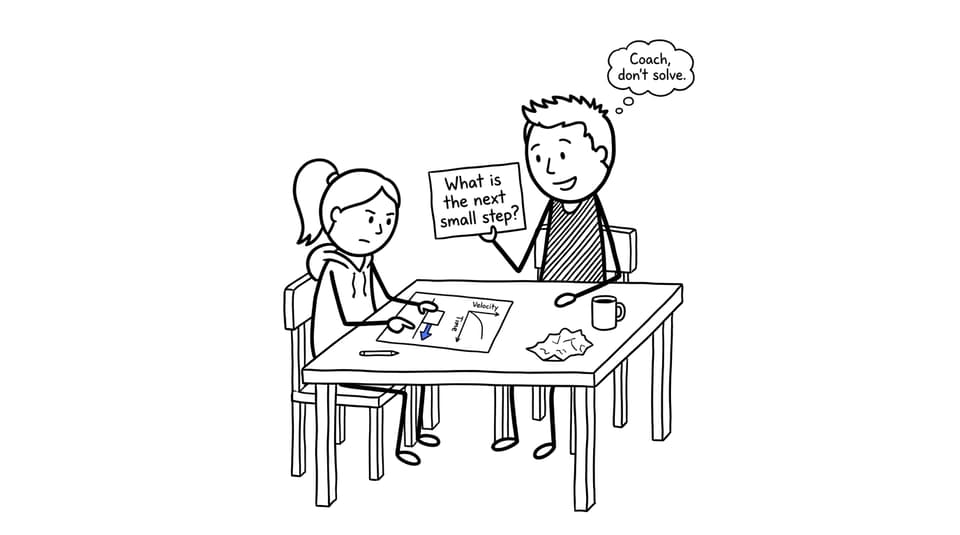
The best parent role is coach, not substitute teacher. Try this routine once or twice a week:
- Listen: Identify one concept or skill that feels uncertain.
- Test gently: Let your child attempt two or three focused questions independently.
- Choose one response: Revisit an explanation, contact the teacher, or seek specialist help.
A useful learning loop begins at the MYP Physics resource hub. Study Notes can clarify ideas, Flashcards strengthen recall, and the Questionbank develops application. AI Chat and Grading tools provide further feedback when a response remains unclear.
Closer to assessments, Mock Exams and suitable Predicted Papers can develop timing and stamina. The Coursework Library offers structural reference points, while Tutors provide human support when independent attempts are not resolving the problem. The goal is not to use every tool, but to match the resource to the gap. For practical boundaries, read how to support your child without doing their work.
When to contact the teacher or a tutor
Contact the teacher when feedback repeats or the pattern remains unclear. Ask which criterion needs attention, whether the difficulty is conceptual, mathematical, practical, or organizational, and what improvement should look like in the next task.
Consider a tutor when focused practice, teacher guidance, and a steady routine have not resolved a specific gap. Give the support a purpose and review point. “Improve Criterion C data evaluation over six weeks” is more useful than “get better at Physics.” Effective help should gradually increase independence.
A calm conclusion for parents
The strongest warning is not one disappointing mark. It is a repeated mismatch between effort and progress, especially when the same barrier keeps returning.
Observe before escalating, talk before prescribing, and choose the smallest useful intervention. RevisionDojo brings MYP Physics notes, questions, Flashcards, feedback, assessment practice, coursework guidance, and tutoring into one connected resource. It replaces vague worry with a visible next step: often exactly what a struggling student needs.