A friend once told me they chose their IB science the way you choose a seat on a bus: you grab the closest one and hope the ride works out.
That’s relatable. But it’s also risky.
If you’re deciding between IB SEHS (Sports, Exercise and Health Science) and IB Biology, you’re not just picking content. You’re picking the kind of thinking you’ll do for two years, the kind of exam questions you’ll face, and the kind of Internal Assessment you’ll actually finish.
Below is a calm, practical way to decide.
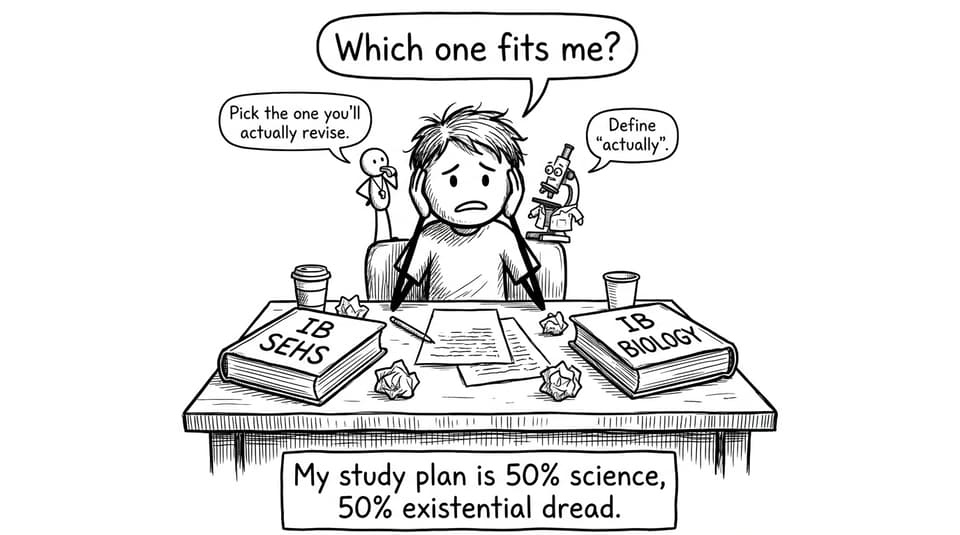
A stressed IB student choosing between IB SEHS and Biology
Quick checklist: IB SEHS or Biology?
Use this as your 60-second filter:
Choose IB Biology if you want breadth (cells to ecosystems) and you’re comfortable with heavy theory.
Choose IB SEHS if you want depth on humans (performance, health, movement) and you enjoy applied examples.
Choose IB Biology if your university pathway may require it (especially medicine-adjacent life sciences).
Choose IB SEHS if you can picture yourself enjoying the IA because it feels real and measurable.
Choose either one if you’re ready to practise exam technique consistently with a Questionbank, Flashcards, and timed Mock Exams.
If you want to explore what IB SEHS actually includes, start with the IB SEHS resource hub.
IB Biology is the subject that keeps zooming out and in: molecules, cells, organs, populations, climate. It can feel like learning a new language where every unit introduces a new dialect.
If you like building big conceptual maps (and you don’t mind memorisation paired with explanation), Biology can be deeply satisfying.
IB SEHS is a science where “real life” isn’t a motivational poster. It’s the syllabus. You’ll spend a lot of time with anatomy, physiology, biomechanics, psychology, and nutrition, but usually through the question: what changes performance or health, and how do we know?
To see the flavour of the course, browse a topic like Psychology of Sport, where theory meets decision-making under pressure.
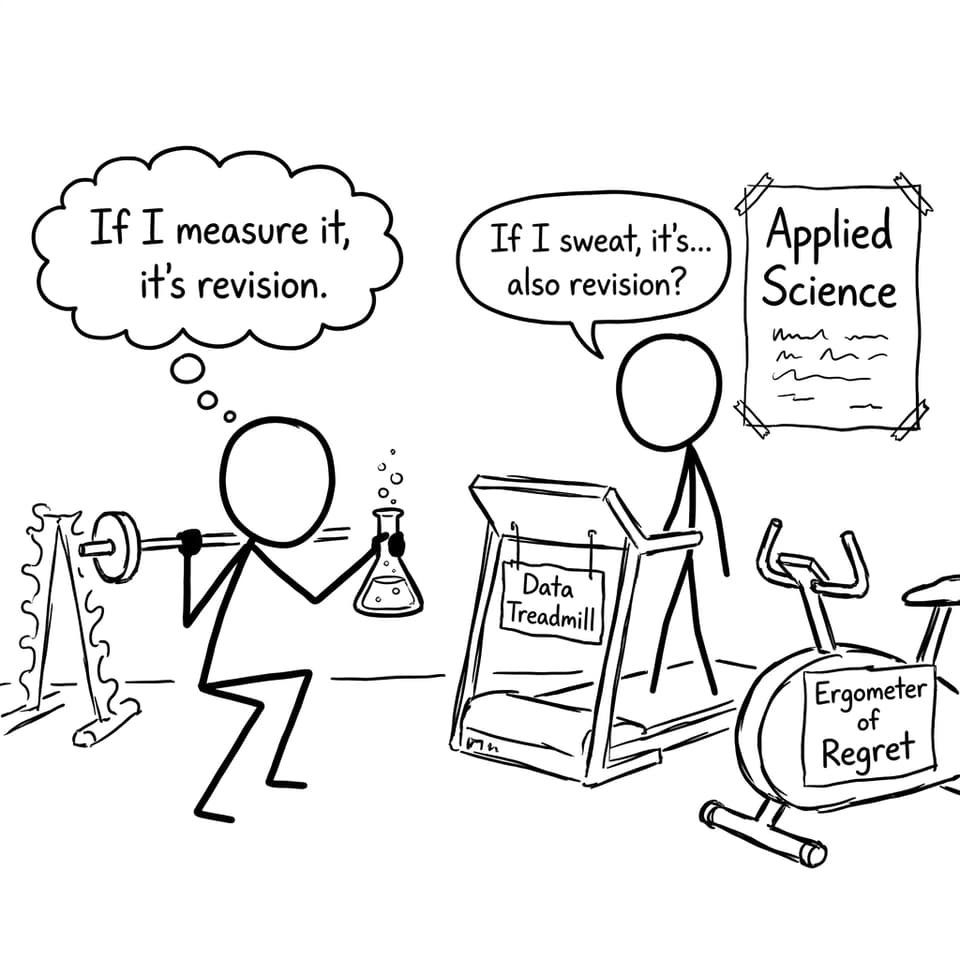
Two students joking about “applied” revision
Exams and assessment: same structure, different feel
Both subjects are Group 4 sciences with internal and external assessment. But the experience differs.
Biology assessment tends to reward structure and coverage
Biology often rewards your ability to explain mechanisms clearly and precisely across many topics. Students who do well usually practise writing mark-efficient answers and interpreting data without panic.
IB SEHS assessment tends to reward application and evaluation
IB SEHS questions often feel closer to real situations: training, movement analysis, health outcomes, athlete psychology. You still need accurate science, but you’re frequently asked to apply it and evaluate limitations.
That’s also why many students find the IB SEHS IA more intuitive: you can test something practical, collect data, and discuss what it means.
If you want examples and guidance, explore IB SEHS IA exemplars and the IB SEHS IA grader to understand what top-scoring work looks like and how it’s marked.
Picking based on your future plans (without overthinking it)
Here’s a grounded way to decide.
Choose Biology if your future needs flexibility
If you’re unsure about your degree, Biology keeps doors open. Even if you don’t love every unit, the subject is widely recognised as a foundation for many life science routes.
Choose IB SEHS if you’re motivated by human performance and health
If you know you care about training, rehabilitation, physiology, wellness, or sports psychology, IB SEHS can feel like studying something that already belongs to your life.
How to revise either subject like it’s an exam skill
The biggest mistake students make is treating the choice like destiny. Your grade will mostly come from systems.
A simple RevisionDojo loop:
Use Study Notes to understand one subtopic.
Convert it into Flashcards (short prompts, real recall).
Drill it in the Questionbank with feedback.
Use AI Chat when you’re stuck so confusion doesn’t become procrastination.
Schedule timed practice using Mock Exams and Predicted Papers.
For realistic exam rehearsal, the IB Predicted Papers section is built for timed practice (and yes, review matters more than the sitting).
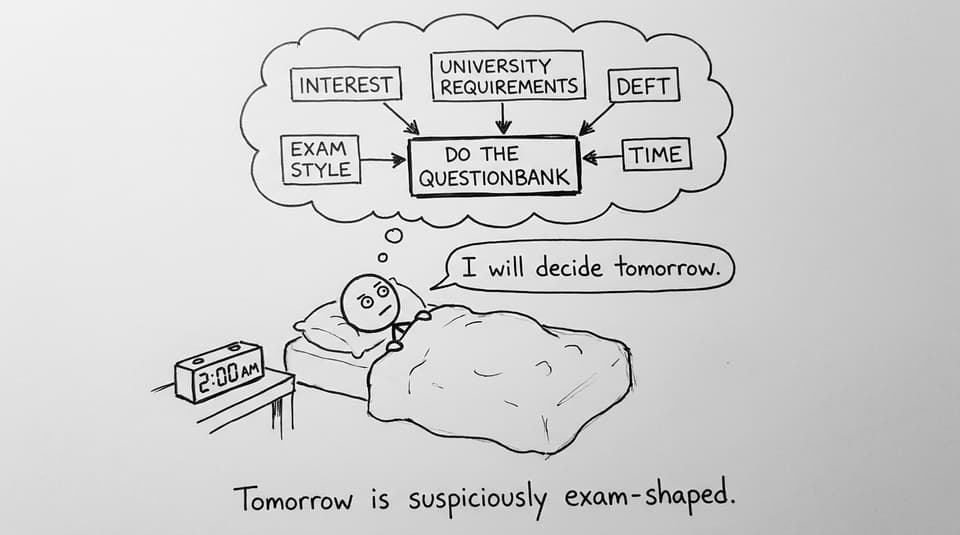
A late-night flowchart that ends in doing questions
Conclusion: choose the subject you can practise
If you want the broadest science foundation, choose Biology. If you want human-focused, applied science that often feels closer to the real world, choose IB SEHS.
But the quieter truth is this: your final outcome depends less on the label and more on the loop you repeat.
Open the IB SEHS hub, open Biology, and try a week of real revision in both: notes, flashcards, Questionbank, timed practice, feedback. Then choose the one you’ll keep showing up for.
When you’re ready to turn that decision into results, RevisionDojo brings everything together in one place: Questionbank, Study Notes, Flashcards, AI Chat, Grading tools, Predicted Papers, Mock Exams, a Coursework Library, and Tutors to help you stay calm and get marks.
IB SEHS goal setting in sport made simple: goal types, SMART targets, common mistakes, and exam-ready tips using RevisionDojo practice tools.