



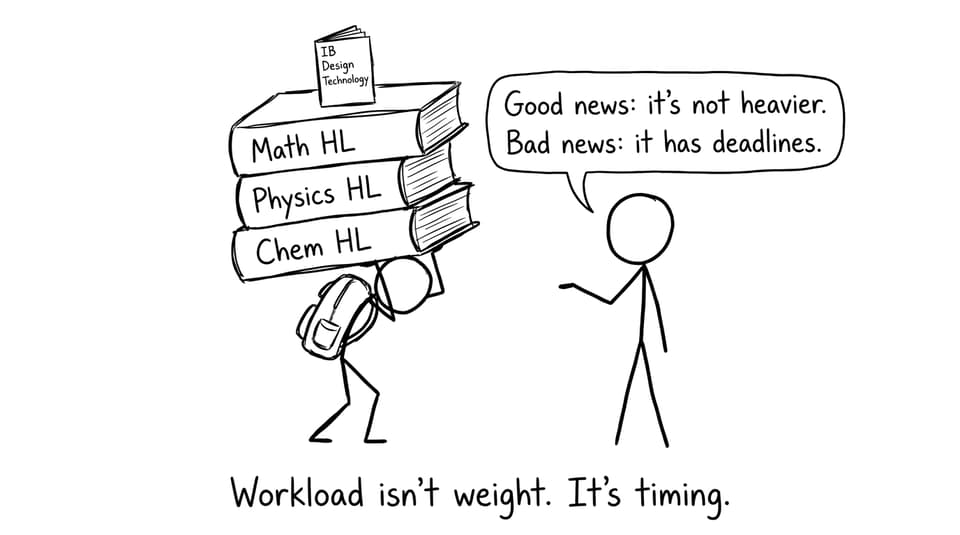
A friend once described their HL combo as “three leaking buckets.” Every week, Maths HL needed practice. Physics HL needed problem sets. Chemistry HL needed review. Then someone suggested IB Design Technology as the “balance subject.”
That idea sounds comforting until you realise balance isn’t about less work. It’s about where the work sits on the calendar.
IB Design Technology can be a smart pick with heavy HL subjects, but only if you understand one thing early: DT doesn’t drip workload evenly. It arrives in waves.
Quick decision checklist for IB Design Technology
Before you choose IB Design Technology, run this simple check:
-
Do you prefer applied problem-solving over memorising large content blocks?
-
Can you keep a long task moving with small weekly progress (even when it’s not urgent yet)?
-
Are you comfortable with open-ended writing: justification, evaluation, and reflection?
-
Will you actually start your IA early (not just promise yourself you will)?
If you answered “yes” to most, IB Design Technology is often compatible with heavy HLs.
Why IB Design Technology appeals when your HLs are intense
Heavy HL subjects create a specific kind of fatigue: the feeling that every study session is either calculations or recall. Students often look for a subject that feels different, not necessarily easier.
IB Design Technology is attractive because it:
-
Uses a different skill set (design thinking, iteration, evaluation)
-
Shifts pressure away from constant weekly drills
-
Gives you a coursework component that rewards planning and evidence
If you want to see how the course is structured, start with the IB Design Technology hub. It’s a clean way to preview the topics, tools, and expectations.
The real workload pattern in IB Design Technology (the part people miss)
The most accurate description of IB Design Technology workload is: quiet, then loud.
In many weeks, DT is lighter than a problem-set heavy HL. But during IA phases, DT can become the subject that suddenly demands focused blocks of time for research, documenting iterations, testing, and evaluation.
That’s not a flaw. It’s just the nature of project work.
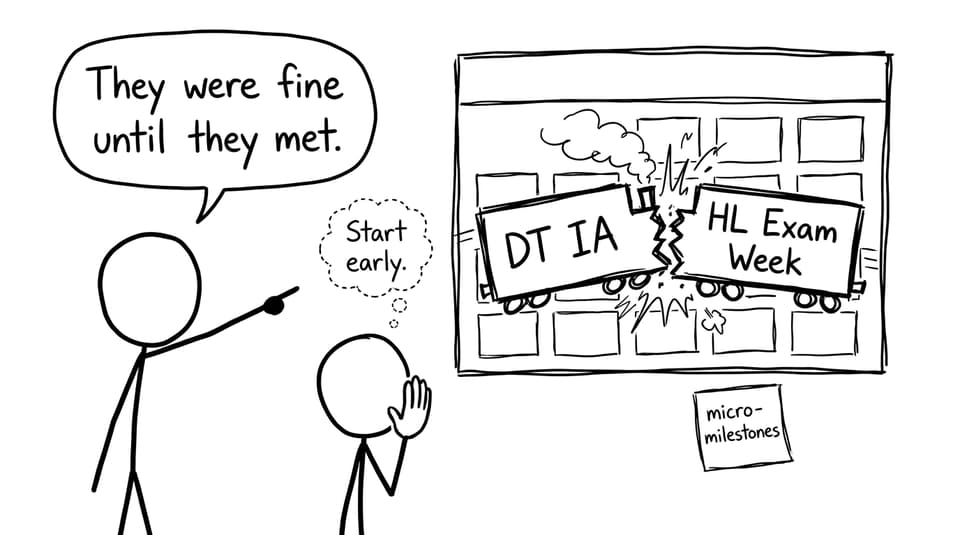
The risk with heavy HL subjects is not “DT is too hard.” The risk is deadline collisions: when DT IA milestones land near your internal test weeks or mock exam season.
When IB Design Technology works well with heavy HL subjects
IB Design Technology tends to work best alongside intense HLs when you:
Use DT as a cognitive reset
DT can feel mentally refreshing because it asks you to think in systems: user needs, constraints, trade-offs, sustainability, and iteration. That contrast can reduce burnout from constant calculation-heavy practice.
To keep that “reset” feeling, build a strong foundation early using IB Design Technology Revision Notes (SL/HL). Notes help you write exam answers faster because the vocabulary becomes automatic.
Keep the IA moving with micro-milestones
A small weekly DT goal beats a perfect monthly plan. With heavy HL subjects, your schedule will get interrupted. Micro-milestones make DT resilient.
A practical approach is to learn how examiners reward clarity and evidence. This guide on how teachers mark IB Design Technology internal assessments is useful because it shows what earns marks (and what just looks impressive).
Practice exam skills early, not “after the IA”
Students often delay DT exam prep because coursework feels urgent. But IB Design Technology exams reward command terms and applied theory. A small, steady practice loop prevents last-minute panic.
Use the IB Design Technology Questionbank to practise topic-by-topic, and anchor your understanding with a focused syllabus unit like 6. Classic Design (SL/HL).
When IB Design Technology becomes risky with heavy HL subjects
IB Design Technology becomes stressful with heavy HLs for one main reason: it’s easy to ignore until it’s not.
You’ll struggle if you:
-
Procrastinate on the IA documentation
-
Choose an over-ambitious project that creates endless iteration
-
Avoid writing evaluation and justification (then rush it later)
-
Depend on last-minute study bursts as your default strategy
If any of that sounds familiar, read Best time management techniques for IB students in 2025 and build a weekly review ritual before you commit.
SL vs HL IB Design Technology with heavy HL subjects
If you already have multiple demanding HLs, SL IB Design Technology is often the healthiest choice. You still get the creative and applied side of DT, but with less assessment pressure.
HL IB Design Technology can work if you genuinely enjoy the writing and evaluation side and you’re willing to manage IA progress consistently.
If you’re unsure, this comparison-style article can help you reality-check your expectations: Is IB Design Technology easier than other IB subjects?.
A simple RevisionDojo workflow for IB Design Technology + heavy HLs
The calmest students aren’t calmer people. They just run a tighter system.
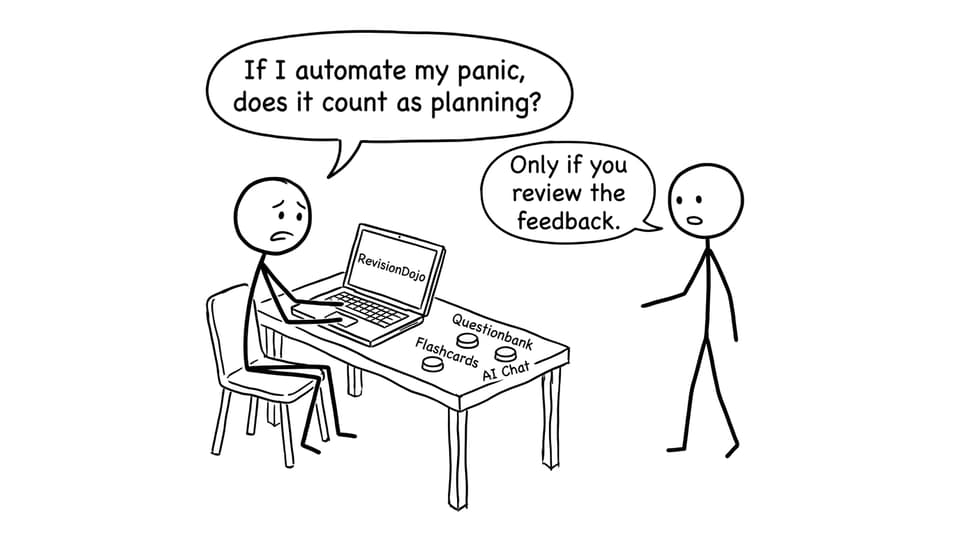
A strong weekly loop using RevisionDojo looks like this:
-
Study Notes for one DT concept you’ll actually be tested on
-
Flashcards to lock in definitions and command-term phrasing
-
Questionbank to practise exam-style responses with feedback
-
AI Chat to unblock confusion fast (instead of losing an hour)
-
Grading tools to check whether your writing matches criteria
-
Mock Exams and Predicted Papers to train timing and stamina
-
Coursework Library for examples and structure when the IA feels vague
-
Tutors when you need human feedback on direction, not just content
If you want a DT-specific starting point, How to Use RevisionDojo for IB Design Technology Success lays out a practical routine.
Conclusion: should you take IB Design Technology with heavy HLs?
If your HL subjects are already demanding, IB Design Technology can still be a strong choice because it shifts your workload from constant memorisation to planned project progress. The win is variety: different thinking, different skills, and often a more refreshing rhythm than another exam-heavy subject. The risk is timing: ignore the IA, and DT becomes the subject that ambushes your calendar.
If you want IB Design Technology to feel manageable, build your weekly loop now: notes for clarity, flashcards for recall, question practice for exam skill, then timed practice with mock exams and predicted papers. RevisionDojo is built to keep that whole system in one place so your heavy HL schedule stays demanding, but not chaotic.