

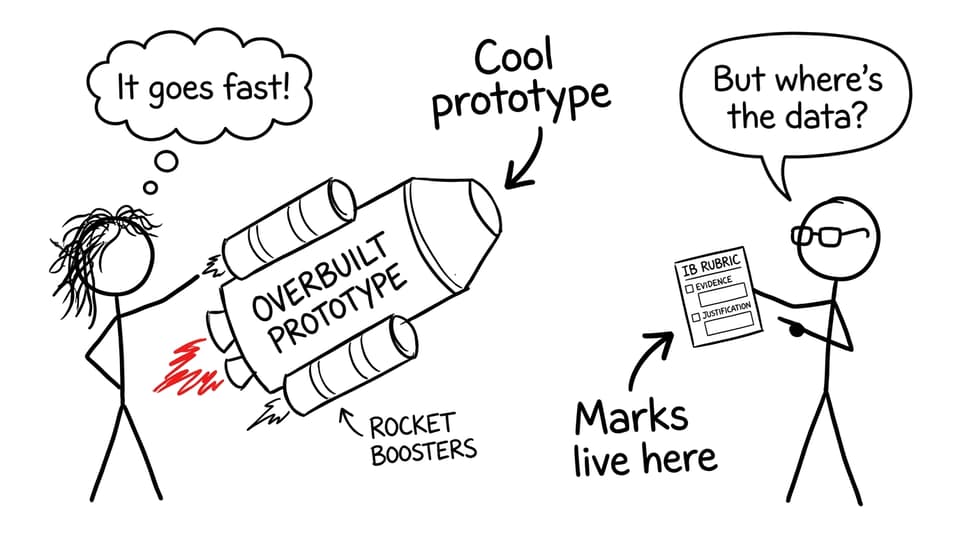
A prototype can be brilliant and still lose marks.
That’s the uncomfortable truth many IB Design Technology students only learn after they’ve poured weeks into making something that looks impressive. In the IA, teachers aren’t paid to admire your craftsmanship. They’re paid to translate your project into marks the IB will accept.
Once you see the IA the way your teacher sees it, the stress changes shape. You stop trying to “wow” and start trying to prove.
Who marks the IB Design Technology IA?
In IB Design Technology, marking happens in two layers:
-
Your teacher awards the initial marks using the official IB criteria.
-
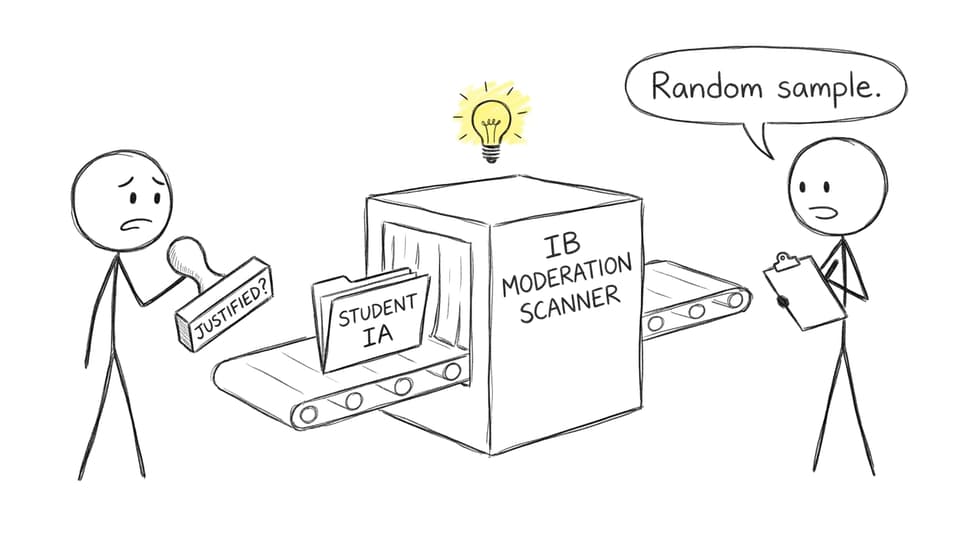
IB moderation checks a sample of student work to confirm the marking standard is consistent.
This is why teachers can’t mark on vibes. They need evidence on the page that matches the descriptors. If moderation suggests a teacher was too generous (or too harsh), the IB can adjust the cohort’s results.
If you want the big-picture assessment context, pair this article with How IB Design Technology Is Assessed in the New 2027 Syllabus.
A quick checklist: what gets marks (and what doesn’t)
Before you write another paragraph, sanity-check your IA against what teachers can actually reward in IB Design Technology:
-
A specific user and a clearly framed design problem
-
Research that is used to make decisions (not stored)
-
Decisions that are justified with evidence
-
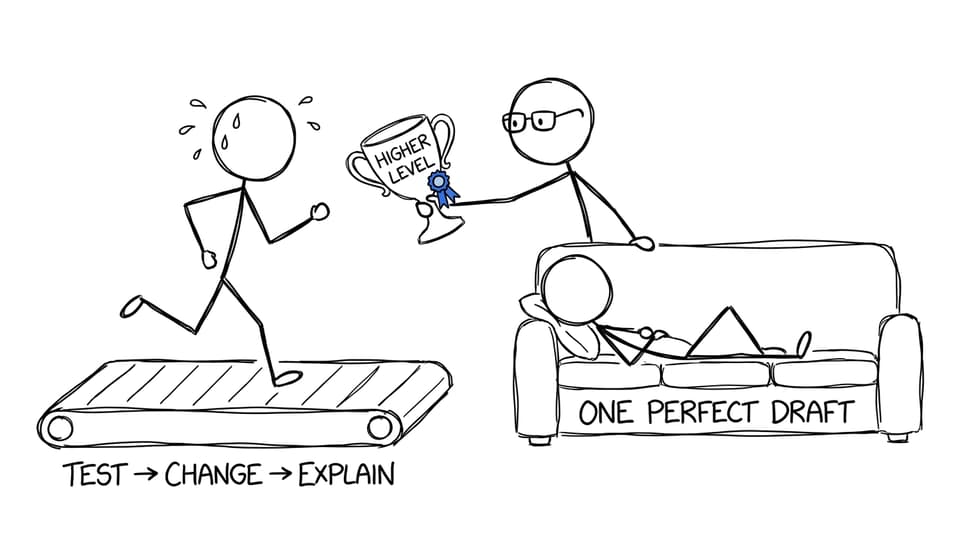
Testing that creates iteration (change, then explain why)
-
Evaluation that is honest and tied to requirements
What doesn’t automatically earn marks:
-
Expensive materials
-
A complex mechanism
-
A beautiful render
-
A polished final product with no documented thinking
For a full IA roadmap, keep Step-by-Step Guide to Writing a Winning IB Design Technology IA open in another tab.
What teachers are actually looking for in IB Design Technology
A strong IB Design Technology IA reads like a chain of reasoning.
Your teacher is scanning for “Can I defend this mark if a moderator asks?” That usually comes down to whether your report shows:
-
Design thinking (clear decisions, not random actions)
-
Traceability (research → requirement → idea → test → change)
-
Repeatable evidence (data, feedback, photos, results, comparisons)
When students lose marks, it’s rarely because their idea was “bad.” It’s because their evidence doesn’t let the teacher confidently award the top levels.
If you need examples of what examiner-level evidence looks like, use the IB Design Technology Exemplars section as a reality check.
How teachers use criteria (even when you don’t see them doing it)
Even though your IA feels like one long story, teachers mentally split it into assessable chunks. In IB Design Technology, they’re essentially asking:
-
Did the student analyse a real design opportunity?
-
Did they turn that into measurable requirements?
-
Did they develop ideas with justified choices?
-
Did they test in a way that leads to better decisions?
-
Did they evaluate against evidence, not optimism?
A practical move: self-mark with a rubric tool before submission. RevisionDojo has dedicated graders that make criteria language easier to interpret, like the IB Design Technology HL IA Grader and the IB Design Technology SL IA Grader.
Why justification is the currency of high marks
Teachers can’t award marks for what you meant.
In IB Design Technology, justification is how you convert effort into credit. It can be small, but it must be explicit:
-
“I chose X material because it meets requirement Y and reduces Z risk.”
-
“User feedback showed problem A, so I changed feature B.”
-
“Test results indicate C improved by 15%, therefore the design meets specification D.”
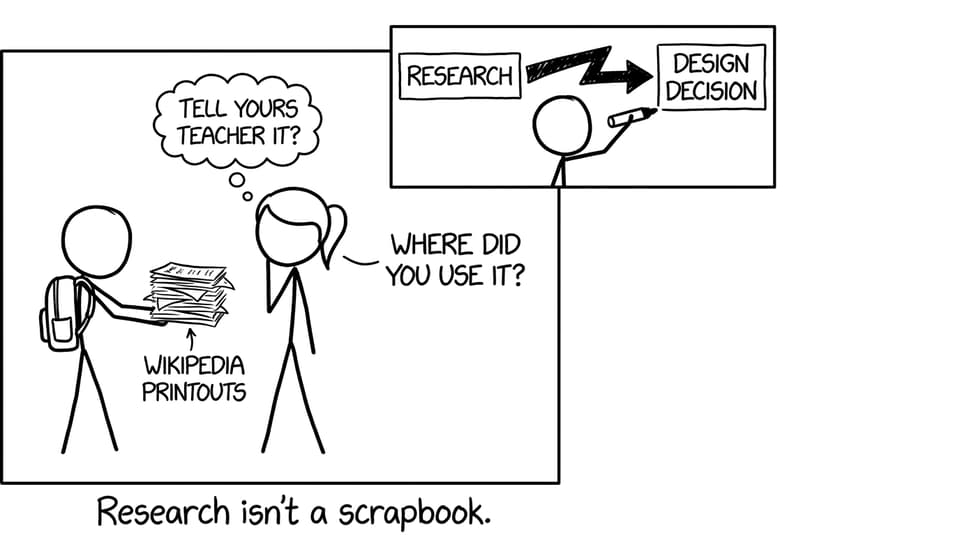
A good rule: if a sentence has no “because,” “so,” or “therefore,” ask whether it’s earning marks.
To sharpen your language and exam-style clarity alongside coursework, RevisionDojo’s IB Design Technology hub is built to keep your terminology and reasoning tight.
How teachers judge iteration (and why it separates levels)
Iteration is where many IB Design Technology projects quietly fall apart.
Teachers aren’t looking for ten versions of the same sketch. They’re looking for a visible loop:
-
Test something real (user trial, measurement, stress test, comparison).
-
Change the design (not just reword the explanation).
-
Explain why the change is better using your results.
A polished final outcome with thin iteration often scores lower than a “messier” prototype that shows disciplined development.
If you’re balancing the IA with revision for exams, it helps to use a system. How to Use RevisionDojo for IB Design Technology Success lays out a workflow that keeps both moving.
What happens during moderation (and why teachers mark cautiously)
Moderation is essentially quality control. The IB reviews a sample and asks, “Do these marks match the global standard?”
That pressure shapes how teachers mark IB Design Technology IAs:
-
They prefer clear evidence over poetic description.
-
They need easy-to-locate justification.
-
They mark cautiously if a claim can’t be defended.
Common reasons teachers lower marks
If you want to predict your mark, look for these patterns teachers can’t reward in IB Design Technology:
-
Vague problem statements (“students need better desks”)
-
Research that never influences a decision
-
Requirements that can’t be tested
-
Big claims with no data (“it’s ergonomic”)
-
Evaluation that only lists positives
A fast fix is to rewrite your report headings as questions: “What did I test?” “What changed?” “What evidence proves it?” Teachers love reports that answer those quickly.
Final thoughts: make your IA easy to mark
The fastest way to improve in IB Design Technology is to stop asking, “Is my product impressive?” and start asking, “Is my evidence undeniable?”
RevisionDojo helps you build that kind of IA and still prepare for exams: use the Coursework Library for exemplars, Grading tools to self-assess, AI Chat to refine explanations, and then keep exam readiness moving with Study Notes, Flashcards, the Questionbank, Predicted Papers, and Mock Exams. If you want human help, you can add Tutors for targeted feedback.
When your teacher can see the thinking instantly, marking becomes simple. And in IB Design Technology, simple is powerful.