


IB Design Technology gets called “the easy one” in the same casual way people call a short hike “easy” because the map looks simple. Then you start walking, and you realize the trail isn’t steep because it’s full of climbs. It’s steep because it never stops asking you to choose.
That’s the real question behind Is IB Design Technology easier than other IB subjects? Not whether it has fewer formulas than Physics, or less memorisation than Chemistry, but whether its type of difficulty fits the way you learn, plan, and explain your thinking under pressure.
Quick answer checklist: when IB Design Technology feels “easier”
IB Design Technology often feels more manageable if you:
-
Prefer applied problem-solving over pure abstraction
-
Like building, iterating, and testing (even small-scale)
-
Can keep a long project moving without last-minute panic
-
Are comfortable writing justification and evaluation (not just describing)
-
Use a tight practice loop (notes to questions to feedback to repeat)
If you want a clean starting point for the course structure and resources, the IB Design Technology hub lays out topic-by-topic Study Notes, Flashcards, and Questionbank practice.
Why IB Design Technology is often seen as “easier”
The “easier” reputation doesn’t come from laziness. It comes from comparison.
In many cohorts, IB Design Technology sits beside subjects that punish hesitation: Maths HL, Physics, Chemistry. Those subjects can feel like a long corridor of right-or-wrong doors. DT feels different because it often:
-
Uses less advanced mathematics than Maths HL
-
Requires less brute memorisation than many sciences
-
Feels practical (products, users, sustainability, real constraints)
-
Includes substantial coursework, not only final exams
For students who feel drained by content-heavy subjects, DT can feel like oxygen at first. The early wins can be motivating, especially when you use a structured routine like the one in Best Study Strategies for IB Design Technology Students.
Why the “easy” label can backfire
The danger is subtle: if you believe IB Design Technology is easy, you stop treating it like a scoring system. You treat it like a vibes-based creative class.
That’s when marks leak.
DT tends to punish these habits:
-
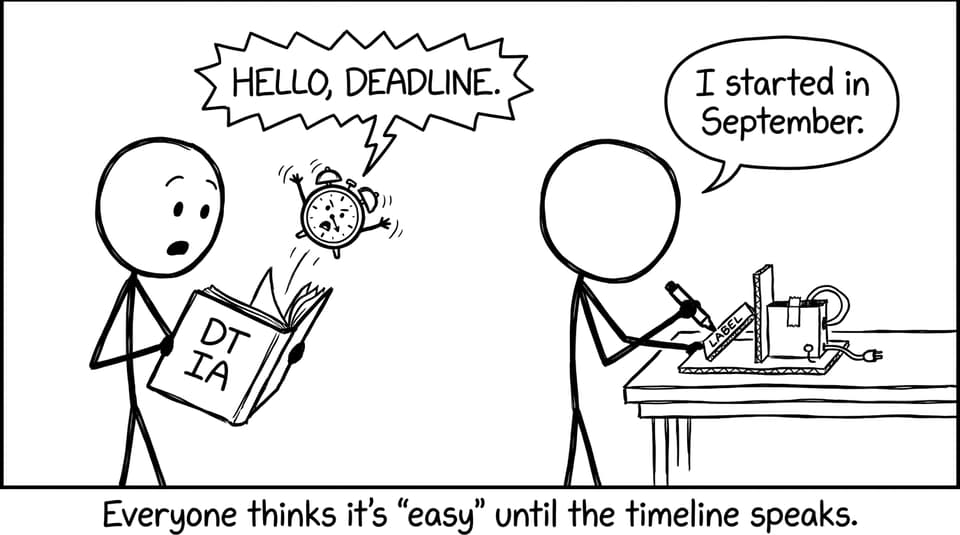
Delaying the IA until the project becomes a rescue mission
-
Believing effort alone earns marks (it doesn’t; criteria do)
-
Avoiding evaluation because it feels like “criticising your own work”
-
Keeping documentation thin because the prototype looks good
If you want to see the common traps clearly, read Common IB Design Technology IA Mistakes and How to Fix Them. It’s a reminder that DT isn’t forgiving; it’s just different.
How IB Design Technology is difficult in a different way
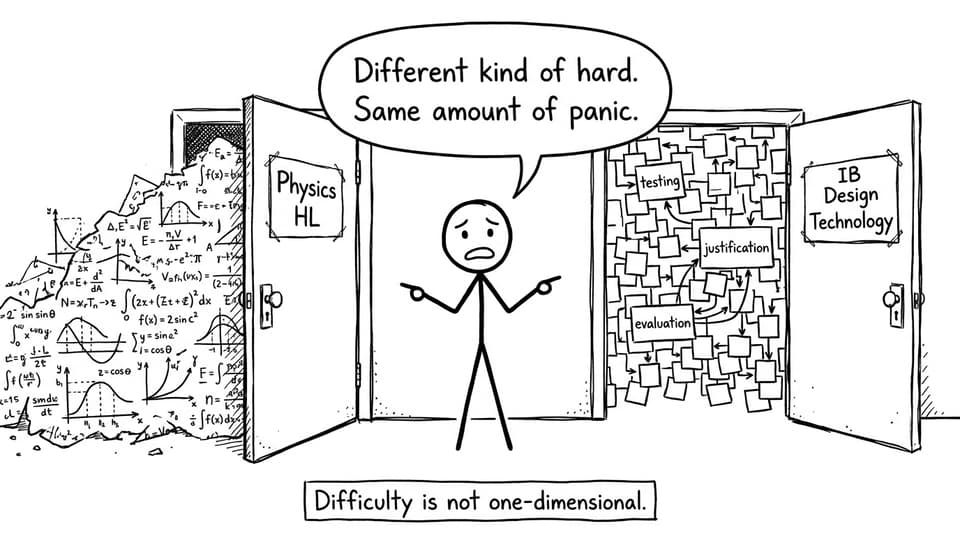
Most “hard” IB subjects are hard in the same obvious way: volume, speed, precision.
IB Design Technology is hard in quieter ways:
Long-term project management
The IA is not a weekend assignment. It’s months of small decisions that compound. If you want a realistic schedule, How to Manage Time on Your IB Design Technology IA Project is the kind of article you revisit when motivation fades.
Justification beats aesthetics
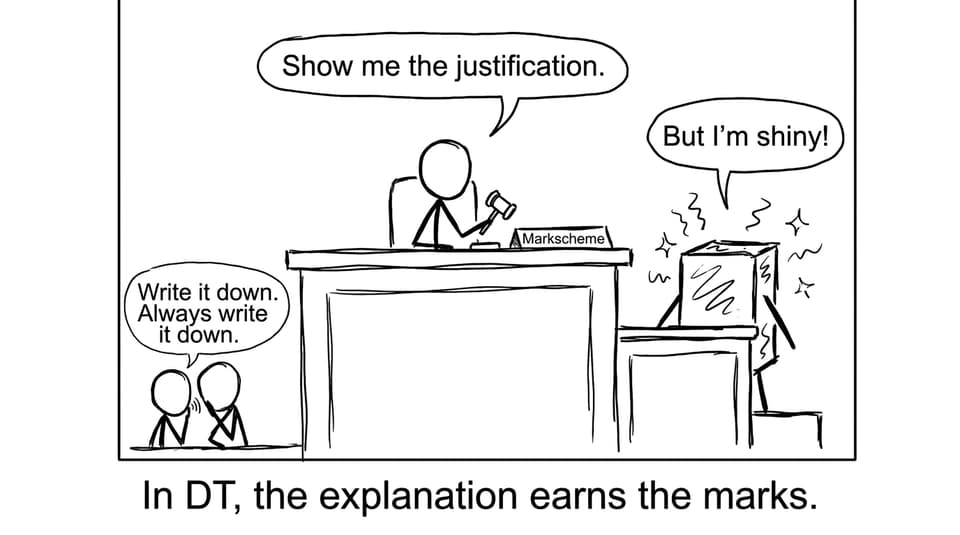
A clean prototype is nice. But DT rewards the thinking that got you there: trade-offs, constraints, user needs, testing data, and design iteration. If your work looks great but your reasoning is thin, the marks don’t follow.
Evaluation and reflection are skills (not personality traits)
Many students can describe what they did. Fewer can explain what it means, what failed, and what they’d do next. That evaluative voice is learnable, but it takes deliberate practice.
For a deeper discussion of what “hard” really means in this subject, Is IB Design Technology Hard? frames DT difficulty in a way that usually clicks.
Comparing IB Design Technology to other IB subjects
It helps to compare difficulty category-by-category.
Compared to Maths HL
Maths HL is typically harder conceptually and technically. But IB Design Technology can be harder in planning and justification, especially for students who crave clear right answers.
Compared to Physics or Chemistry
Sciences often demand recall + calculation under time. DT demands applied thinking and evidence-based evaluation. If you’re strong in exams but weak in coursework structure, DT can surprise you.
Compared to humanities
Humanities students sometimes adapt well to DT because they’re used to argument and evaluation. The difference is that DT evaluation must be grounded in testing, users, and constraints, not only persuasion.
How to score higher in IB Design Technology (without brute forcing it)
High DT marks often look calm from the outside. Not because the student is “naturally creative,” but because they run a simple system:
-
Build your foundation quickly with topic-aligned notes like IB Design Technology 6. Classic Design
-
Practise in small sets using the Classic Design Questionbank (or other topics) to learn how questions are actually marked
-
Use Flashcards daily for definitions and processes (short sessions beat heroic weekends)
-
Ask RevisionDojo’s AI Chat to critique your explanations in markscheme-style language
-
Use Mock Exams and Predicted Papers to train timing and decision-making under pressure
For IA structure specifically, the fastest way to reduce stress is to follow an external scaffold: Step-by-Step Guide to Writing a Winning IB Design Technology IA and then check your final version against Finalise and Submit Your IB Design Technology IA.
Conclusion: IB Design Technology isn’t easier, it’s different
So, is IB Design Technology easier than other IB subjects? Not objectively. It’s simply a different kind of hard that is one built around project management, evidence-based justification, and calm evaluation.
If that matches how you work, IB Design Technology can become one of your most manageable (and rewarding) subjects. If you treat it like a low-effort option, it tends to bite late.
If you want DT to feel simpler, not scarier, build your system in one place: RevisionDojo’s Questionbank, Study Notes, Flashcards, AI Chat, Grading tools, Predicted Papers, Mock Exams, Coursework Library, and Tutors are designed to turn DT into repeatable steps rather than vague pressure. Start at the IB Design Technology hub, and keep it moving, one justified decision at a time.