The decision rarely feels academic.
It feels personal.
You’re staring at a timetable that will quietly shape your next two years, and one box is blinking like a cursor: IB Group 6 Arts… or a second subject from another group.
One option sounds like freedom. The other sounds like strategy. And when exam season arrives, you don’t want to realize you chose based on vibes.
This guide is designed for IB students preparing for exams who want a clear way to decide without losing what makes the Diploma worth doing in the first place.
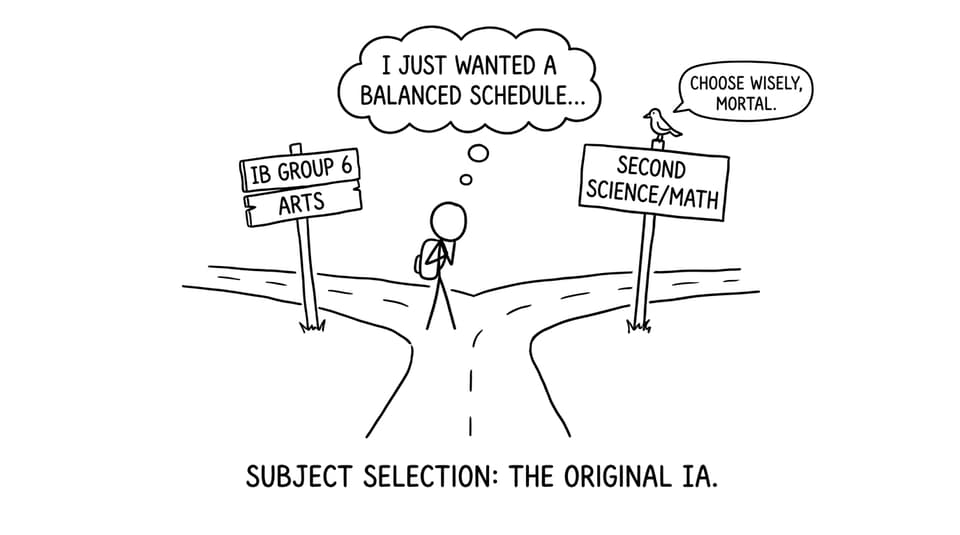
The quick decision checklist (save this)
If you only have five minutes, run this filter:
-
Do you need prerequisites for your university course? If yes, the second subject from Groups 1-5 often wins.
-
Do you genuinely want a portfolio/audition-style pathway? If yes, IB Group 6 Arts is not “extra,” it’s evidence.
-
Do you work well with long projects and reflection? If yes, Group 6 can be a good fit.
-
Do you prefer timed exam practice and problem sets? If yes, another Group 1-5 subject may feel more predictable.
-
Do you need balance to stay consistent across all subjects? If yes, IB Group 6 Arts can be the pressure valve that prevents burnout.
To understand what Group 6 actually involves, keep What Is a Group 6 Class in IB? open while you decide.
What counts as IB Group 6 Arts (and why it feels different)
IB Group 6 Arts includes subjects like Visual Arts, Music, Theatre, Dance, and Film. The shared DNA is simple: you’re graded on what you make, but also on how you think about what you make.
That “how” is where many students get surprised. Reflection isn’t decoration. Context isn’t optional. Process isn’t something you write the night before a deadline.
If you want a broad map of the syllabus expectations, discover the creative spectrum in the IB Group 6 syllabus overview. And if you’re focused on marks, Understanding Assessment in IB Group 6 Subjects is the piece most students wish they read earlier.
When IB Group 6 Arts is the smarter choice
Choosing IB Group 6 Arts is strategic when it supports one of these realities.
You want a creative degree (or a portfolio that proves fit)
For art, design, music, theatre, film, and many media courses, “interest” is cheap. Evidence is not. A strong Group 6 pathway gives you structured output, feedback cycles, and a body of work you can explain.
If you’re wondering how admissions teams interpret this, read How Do Universities View IB Group 6 Subjects Compared to Others and Do Universities Care Which Group 6 Subject You Choose?.
You need balance to stay consistent across exam subjects
A lot of students underestimate this: the “best” subject combination is the one you can sustain.
Sometimes IB Group 6 Arts is what keeps you from mentally quitting your hardest HL. It can add variety to your week, which makes your revision rhythm more stable. And in the IB, stability beats heroic last-minute effort.
If you’re already planning your exam routine, use How to Study for IB Exams: Step-by-Step Guide to build a weekly system that works whether your sixth subject is arts or not.
You’re good at long projects (and honest reflection)
Group 6 often rewards students who can:
-
show iterations,
-
document decisions,
-
connect choices to intention,
-
improve using feedback.
If that sounds like you, you can score very well. Use Scoring in IB Group 6 Subjects: Strategies and Insights as your structure.
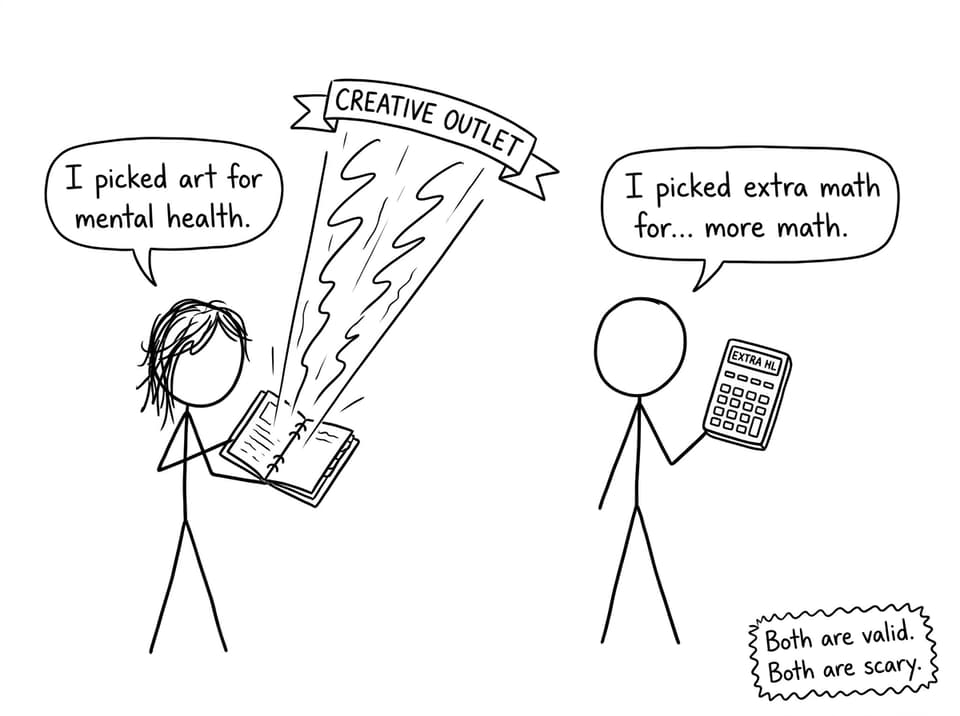
When a second subject from another group is the smarter choice
Replacing IB Group 6 Arts with an additional Group 1-5 subject is strategic when:
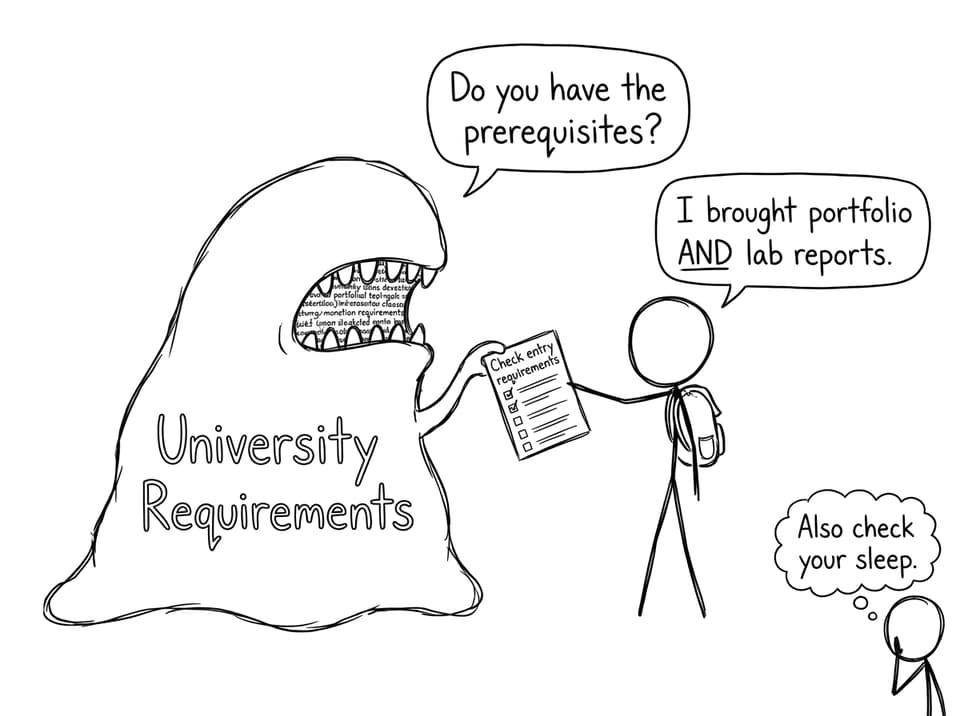
Your university course has clear prerequisites
Engineering, medicine, many economics pathways, and some computer science routes care most about specific HLs and strong grades in relevant subjects. In those cases, the extra science, math, or humanities choice can be a cleaner signal.
This is especially true if you’re a STEM-leaning student trying to keep options open. Start with IB Group 6 Arts for STEM Students: Smart Picks.
You want more exam-shaped practice
Most Group 1-5 courses train you with more frequent structured assessments. If you learn best through timed practice, mark schemes, and repetition, a second academic subject may feel more predictable.
That doesn’t mean it’s easier. It means the feedback loop is often clearer.
Workload reality: arts can be “always on”
A common myth is that IB Group 6 Arts is automatically lighter. Sometimes it is. But often, it’s a different kind of heavy.
Arts courses can run in the background like an open browser tab: you can ignore it for a week, but it’s still there, quietly using up mental RAM.
To plan honestly, read How Many Hours a Week Should You Study for IB Group 6?. And if you’re debating SL vs HL, What Are the Differences Between HL and SL in Group 6 Subjects makes the tradeoffs clear.
How to revise effectively (whichever option you choose)
Exam season punishes vague effort. The fix is a simple loop you can repeat:
-
Study Notes to clarify what the syllabus actually expects.
-
Flashcards for daily recall (definitions, key terms, artist intent vocabulary, scientific processes, formulas).
-
Questionbank practice to turn knowledge into marks.
-
AI Chat when you’re stuck and need a fast explanation.
-
Grading tools to tighten rubrics and reflection.
-
Mock Exams for timing and stamina.
-
Predicted Papers to focus revision when time is scarce.
-
Coursework Library to see what strong work looks like.
-
Tutors when you need targeted feedback, quickly.
RevisionDojo is built around that loop. If you need a calm, sustainable structure, pair this post with How to Study for IB Exams Without Burning Out.
The choice that wins is the one you can finish well
The best decision isn’t “arts vs extra academic.” It’s the combination that lets you show up every week and still have enough energy to revise properly.
If IB Group 6 Arts gives you a portfolio, a creative identity, or the balance that keeps you consistent, it’s a serious choice. If a second subject from another group protects prerequisites and strengthens your academic story, that’s also serious.
Whichever route you take, build your exam system early with RevisionDojo’s Questionbank, Study Notes, Flashcards, AI Chat, Grading tools, Predicted Papers, Mock Exams, Coursework Library, and Tutors, so your final outcome is decided by preparation, not panic.
Near the end of your planning, ask one last question: will this choice make it easier to score well when the pressure is real? If yes, you’re choosing wisely.


