Introduction: the “science choice” that feels personal
Choosing your Group 4 subject is one of those IB decisions that looks simple on paper, then quietly shapes your next two years. Biology, Chemistry, and Physics feel like the classic paths. But IB SEHS feels different. It points straight at your own body, your habits, and the question you can’t unsee once you start asking it: why do people perform well, recover well, and stay healthy?
If you are an IB student preparing for exams, the real question is not “Is IB SEHS cool?” It is: Will I stay motivated long enough to master it, and will it keep the right doors open for what I want next? This guide helps you decide clearly.
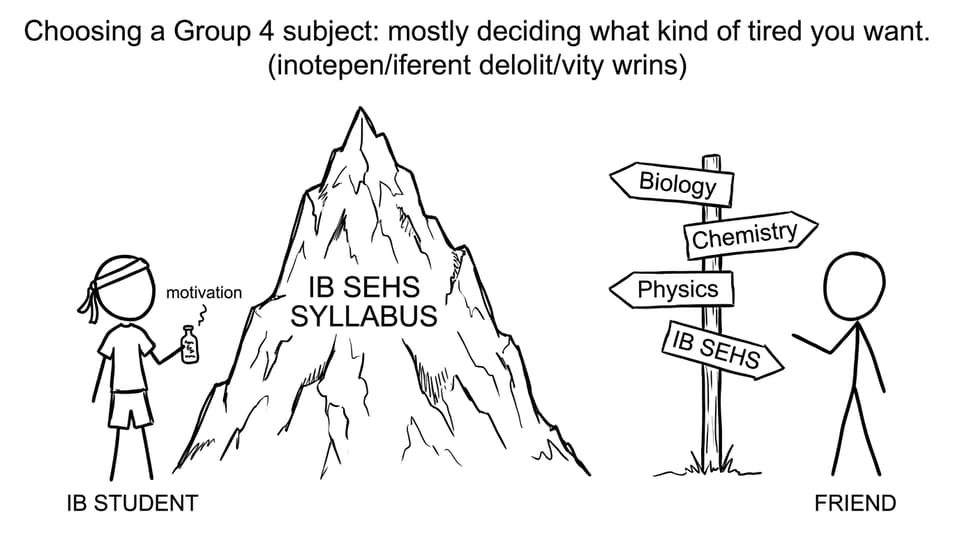
Choosing a Group 4 subject: mostly deciding what kind of tired you want.
Quick decision checklist for IB SEHS
Use this as a fast filter before you commit to IB SEHS:
You like human biology, movement, health, or performance more than abstract models.
You prefer learning that connects to real life (training, nutrition, testing, injury prevention).
You can handle memorising key definitions and explaining mechanisms precisely.
You enjoy practical investigations and data, not just reading.
You are willing to practise exam-style writing until it sounds like markscheme language.
IB SEHS is specialised, but not shallow. It mixes physiology, biomechanics, psychology, and health in a way that feels immediately “about people,” not just about concepts.
A simple way to think about it:
Biology is wide: from cells to ecosystems.
Chemistry is deep: the rules behind reactions and materials.
Physics is structural: forces, energy, and the mathematics of reality.
IB SEHS is human-centered: systems thinking applied to performance and wellbeing.
That human focus is why some students study more consistently in IB SEHS. Motivation is a hidden study skill. When topics feel relevant, you revise on tired days because you can picture the scenario: hydration strategies, fatigue, motor learning, injury risk, or how anxiety changes decision-making.
You are a strong match for IB SEHS if your curiosity naturally lands on questions like:
“What actually limits performance: lungs, muscles, or the brain?”
“How do training methods change physiology over time?”
“Which data would convince me a claim about recovery is real?”
It also fits well if you are considering pathways such as sports science, physiotherapy, nursing, nutrition, public health, physical education, or medicine (often alongside Biology, depending on university requirements).
You might not choose IB SEHS if your intended degree is heavily dependent on Chemistry or Physics prerequisites, such as certain engineering routes. In that case, your Group 4 decision is less about interest and more about keeping the right academic keys.
Is IB SEHS “easier” than other sciences?
This is where students get misled. IB SEHS is often more intuitive because the contexts are familiar. But familiarity doesn’t remove the demands of IB marking.
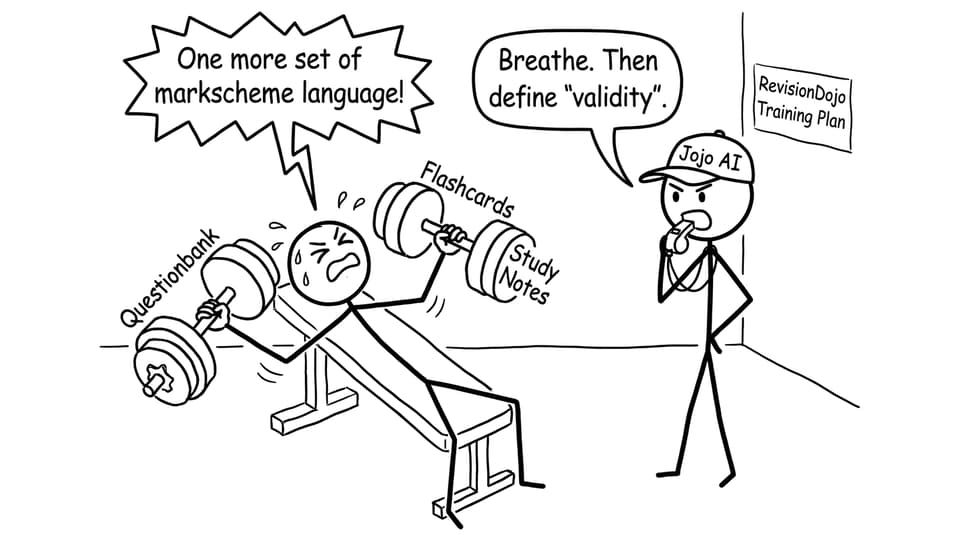
That is why practice matters. RevisionDojo’s Questionbank turns your revision into repetitions: same skill, multiple contexts, feedback each time. Pair it with Study Notes for clarity, then use the SEHS-specific pages (like Hydration and Nutrition (Topic A.2)) to keep everything syllabus-aligned.
RevisionDojo Training Plan
How IB SEHS builds exam-ready skills
A good Group 4 subject is not just content. It trains you to think like the IB wants you to think.
With IB SEHS, you develop:
Applied scientific reasoning: linking theory to athlete scenarios and health contexts.
Data and method analysis: interpreting results and critiquing investigations.
Clear scientific communication: structured answers that respect command terms.
Better recall habits: lots of definitions and processes that reward spaced repetition.
This is where RevisionDojo becomes more than a notes site. You can move through a full loop: learn with Study Notes, lock in memory with Flashcards, pressure-test with the Questionbank, and get unstuck quickly using AI Chat. If coursework is stressing you out, the Grading tools and Coursework Library help you see what “good” looks like, and Tutors can step in when you need a human plan.
Attempt 10 exam-style questions from the Questionbank (timed).
Ask: did you enjoy the thinking, even when you were unsure?
Enjoyment does not guarantee a 7. But sustained interest makes the boring parts survivable, and the boring parts are what build scores.
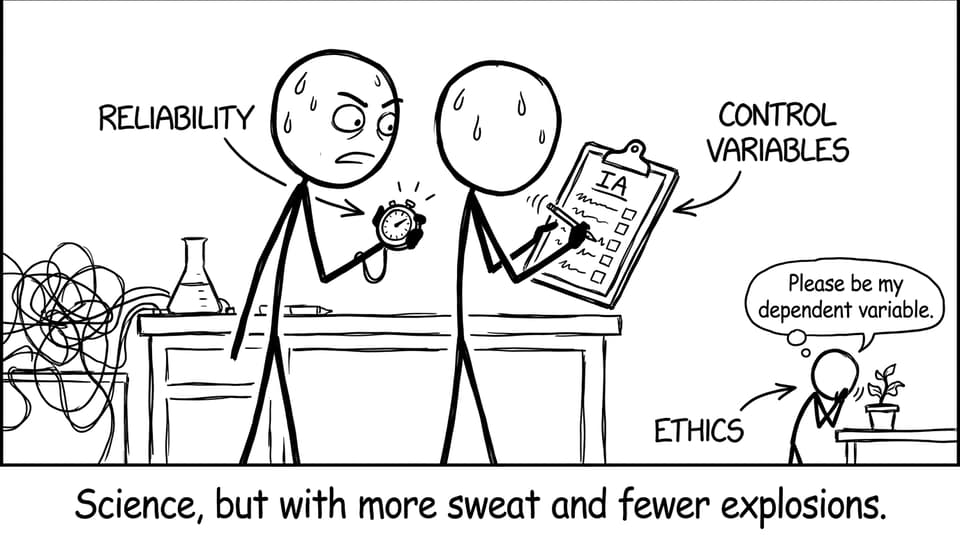
Science, but with more sweat and fewer explosions.
Conclusion: choose IB SEHS if you want a science you’ll actually stick with
The best Group 4 choice is the one you will study when motivation drops. For many students, IB SEHS is that subject: rigorous, applied, and constantly connected to real life.
If you decide that IB SEHS fits your interests and your university plans, build your advantage early. Use RevisionDojo as your home base: SEHS Study Notes for fast clarity, Flashcards for daily recall, the Questionbank for exam-style repetition, AI Chat when you are stuck, Grading tools for coursework feedback, and Predicted Papers and Mock Exams when you are ready to rehearse under pressure. Start at the IB SEHS resource hub and make your revision feel as structured as training.
IB SEHS goal setting in sport made simple: goal types, SMART targets, common mistakes, and exam-ready tips using RevisionDojo practice tools.