



If you have ever wondered how a group with no army, no borders, and no seat at the UN can still make governments uncomfortable, you are already thinking like an IB Global Politics student.
NGOs often look small next to states. But in human rights politics, their influence can feel enormous because they trade in something governments struggle to control: credible information, public attention, and moral pressure. For exams, this topic is less about praising NGOs and more about showing how their power works, when it fails, and why context matters in IB Global Politics.
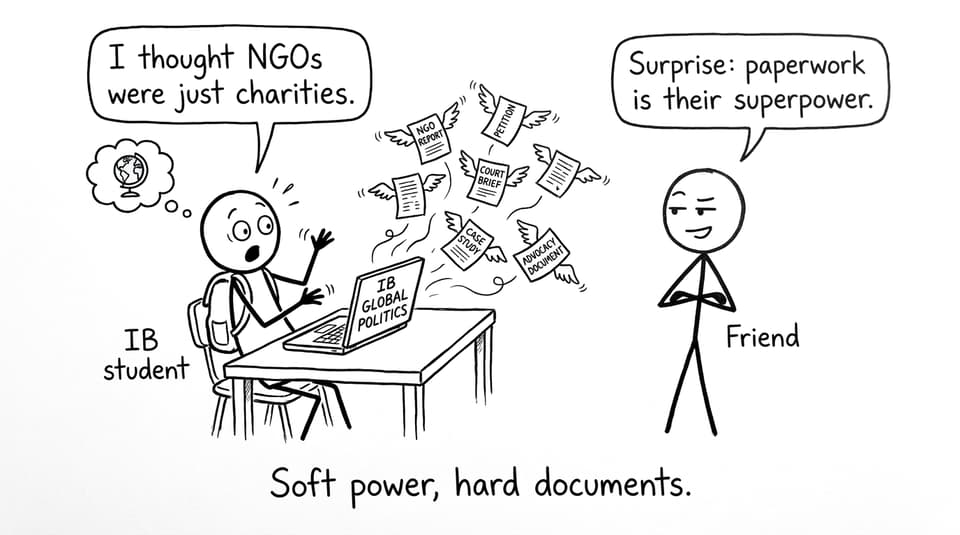
A fast IB Global Politics checklist for NGO roles
Use this as a plan before you write:
-
Define NGOs as non-state actors operating independently of governments.
-
Explain monitoring: gathering evidence and publishing reports.
-
Explain advocacy: shaping agendas, media narratives, and norms.
-
Explain support: legal aid, humanitarian assistance, and community protection.
-
Explain accountability: feeding information into courts and review mechanisms.
-
Evaluate limits: funding, access, security risks, bias claims, and state crackdowns.
For a wider non-state actor framing, connect this to How Non-State Actors Shape Power.
Monitoring and documentation: making abuses visible in IB Global Politics
A government can deny an abuse, but it is harder to deny a detailed timeline, interviews, and corroborated evidence. In IB Global Politics, this is a classic example of information power.
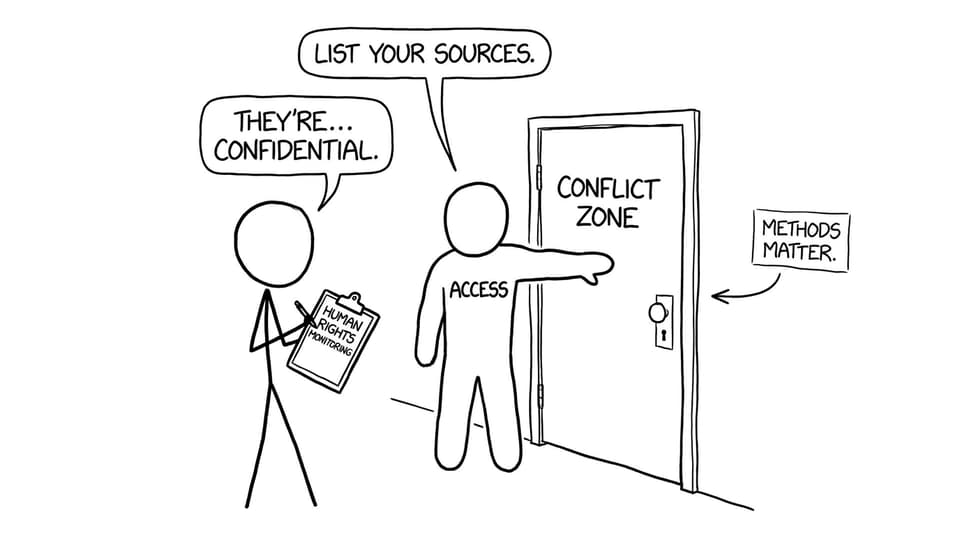
NGOs monitor elections, prisons, conflict zones, and policing. They document patterns (not just single incidents) and publish reports that journalists, international organizations, and sometimes even courts can cite. That documentation can shift an issue from "rumor" to "record," which is often the first step toward pressure.
To sharpen your terminology, revise core rights language with Understanding Human Rights Notes.
Advocacy and awareness: agenda-setting in IB Global Politics
Human rights outcomes are not only decided in courtrooms. Many are decided earlier, when the world chooses what to look at.
NGOs run campaigns, brief reporters, publish witness testimony, and build coalitions. In IB Global Politics, you can describe this as agenda-setting and norm entrepreneurship: pushing the idea that certain behavior is unacceptable, even if it is legal domestically.
If you want a clean course link, place NGOs within stakeholder interaction using Interactions of Political Stakeholders and Actors.
Supporting victims and communities: rights in practice, not theory
Some NGO impact is quiet. Legal clinics that help someone file a case. Safe shelters. Medical care. Trauma support. Documentation training for local communities.
In IB Global Politics, this matters because it shows a second pathway of influence: not changing state policy directly, but reducing harm and increasing access to justice when the state cannot or will not protect rights.
Accountability mechanisms: pressure without formal authority
NGOs cannot convict leaders. But they can feed accountability systems with evidence and expertise.
They may submit documentation to investigative bodies, support international legal processes, or contribute to review systems. In exam terms, this links NGOs to global governance: they strengthen the legitimacy and information base of human rights mechanisms.
Build that mechanism vocabulary with Mechanisms Addressing Human Rights Violations Notes and How Rights Are Codified and Protected Notes.
Limits and challenges: the evaluation examiners want in IB Global Politics
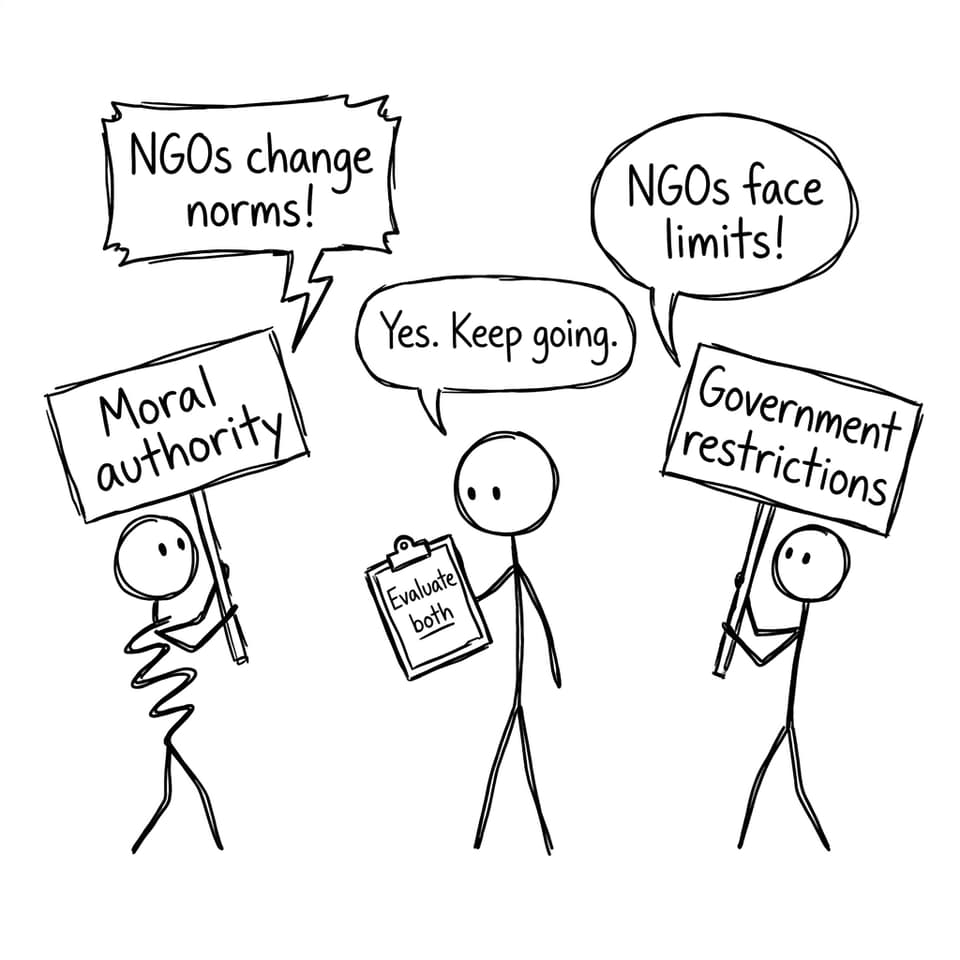
Strong answers in IB Global Politics do not treat NGOs as superheroes.
NGOs depend on funding, which can shape priorities and create vulnerability. Governments can restrict registration, label groups as foreign agents, block access to conflict zones, or intimidate local partners. NGOs also face credibility attacks: claims of bias, selective focus, or politicized reporting. Your evaluation should land on context: NGOs are often most effective when they have access, safety, strong methods, and media attention that decision-makers cannot ignore.
To frame that evaluation in a broader debate, you can connect to Security vs Human Rights and legitimacy questions in Legitimacy of Non-State Actors.
Conclusion: turning NGO insight into exam marks
NGOs matter in human rights politics because they show how influence works beyond formal authority: evidence, narratives, networks, and legitimacy. If you can explain those mechanisms and evaluate the limits, you are writing like a top IB Global Politics student.
To practise this the way exams demand, RevisionDojo is built for it: drill NGO questions in the Rights and Justice Questionbank, tighten definitions with Global Politics Resources, and use Study Notes, Flashcards, AI Chat, Grading tools, Predicted Papers, Mock Exams, the Coursework Library, and Tutors to make your analysis faster and sharper when it counts most in IB Global Politics.