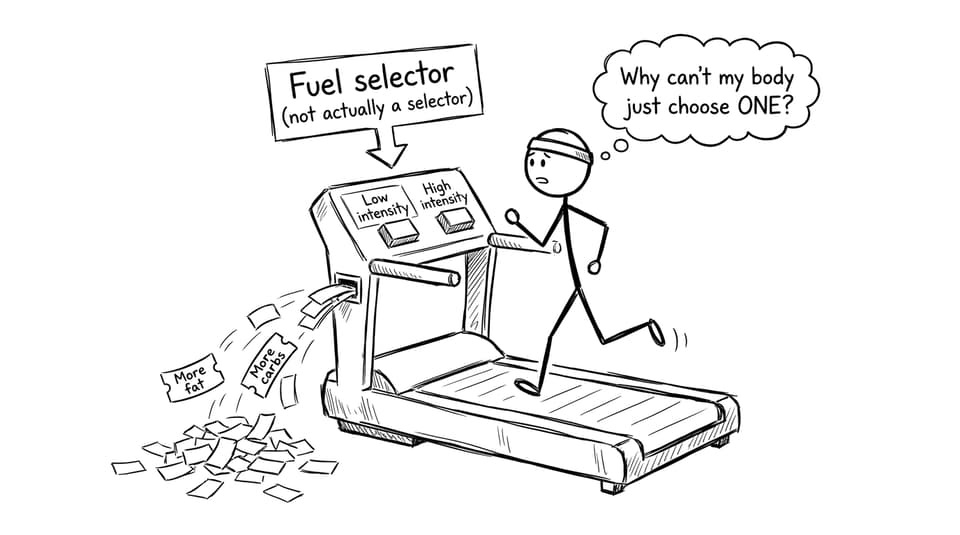
If you have ever stared at an exam question about nutrition and thought, “I know what carbs are… but what does the marker want?”, you are not alone. In IB SEHS, macronutrients are not just food categories. They are a story about timing, intensity, and why performance changes when fuel runs low. Once you learn to tell that story clearly, your answers become calmer, sharper, and more convincing.
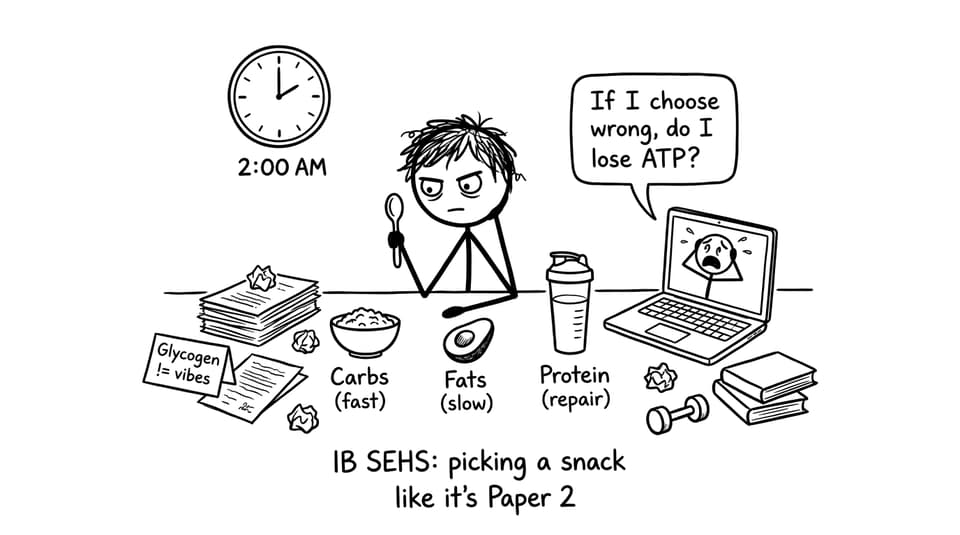
Quick IB SEHS checklist for macronutrients
Before you write anything in IB SEHS, run this quick check:
-
Name the macronutrient (carbohydrates, fats, proteins)
-
Link it to exercise intensity (low vs high)
-
Link it to duration (short vs prolonged)
-
Mention the key mechanism (glycogen, slow oxidation, tissue repair)
-
Finish with an outcome (fatigue prevention, endurance support, recovery)
For syllabus-aligned practice, start with the IB SEHS hub: IB Sports, exercise and health science Resources.
Carbohydrates in IB SEHS: the fast fuel for intensity
Carbohydrates are the body’s preferred fuel when intensity rises. In IB SEHS, the key phrase to remember is that carbohydrates are stored as glycogen in muscles and the liver, then broken down to support ATP production quickly.
That “quickly” is the entire point. Carbohydrates help you sustain moderate to high-intensity work because they can deliver energy at a rate fats cannot match. When glycogen becomes limited, fatigue shows up not as a dramatic collapse, but as an inability to hold pace, repeat sprints, or maintain power.