

A small ache that teaches a big lesson
The first sign rarely feels dramatic. It’s a shin that “just feels tight,” a shoulder that needs “a longer warm-up,” a knee that complains only on stairs. Then one day, you realize you’ve been negotiating with pain for weeks.
That slow-build story is exactly why IB SEHS loves overuse injuries. They’re not about one unlucky moment. They’re about patterns: training load, recovery, and the point where tissue tolerance quietly gets outvoted by repetition.
IB SEHS quick checklist (what examiners want)
Use this checklist to keep your IB SEHS answers tight and high-mark:
-
Define overuse injuries as gradual-onset/chronic injuries
-
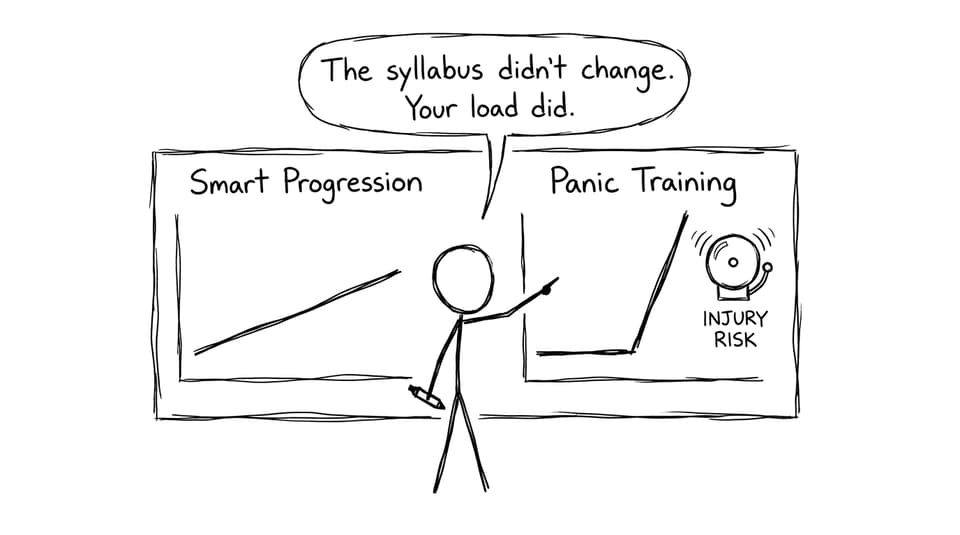
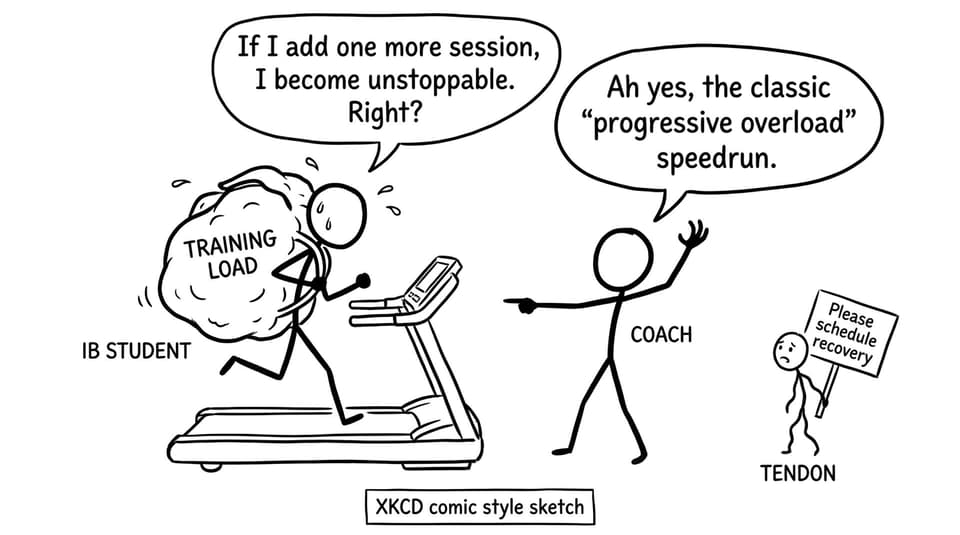
Explain training load using volume, intensity, and frequency
-
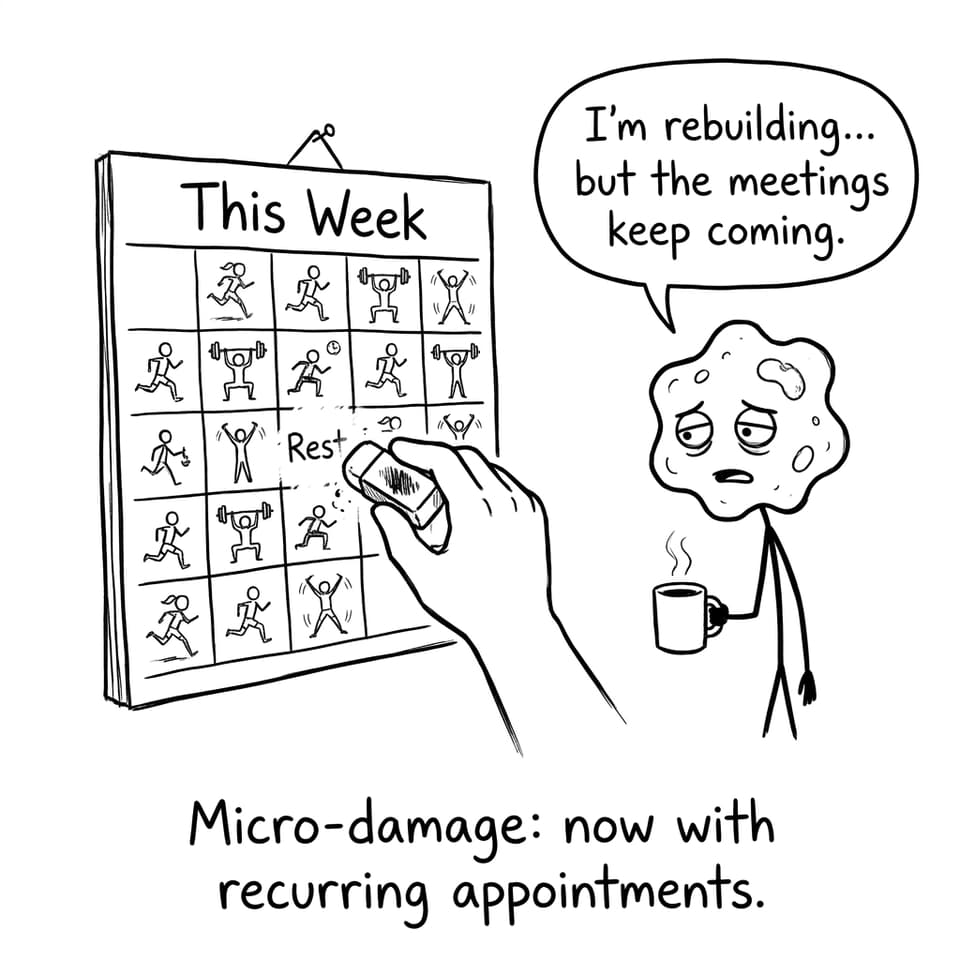
Link repetition to micro-damage and tissue fatigue
-
Show why insufficient recovery stops repair and adaptation
-
Finish with prevention: progressive overload, variation, and monitoring early symptoms
For the syllabus-aligned definitions, start with B.3.1 Causes of injury Notes.
What overuse injuries really are (in IB SEHS language)
In IB SEHS, overuse injuries are typically classified as chronic (cumulative trauma) injuries. The key mechanism is repeated stress: each session creates a small amount of tissue damage, and normally the body repairs it. The problem starts when loading keeps arriving faster than healing.