
The moment your EE stops being “help” and starts being risk
At some point in every IB student's life, a sentence appears in a Google Doc that feels… too good.
It is polished. It is confident. It sounds like a university admissions essay and a journal article had a well-cited baby.
And if you are being honest, it might not sound like you.
That is why the EE one draft rule matters so much. Not because the IB wants you to suffer, but because the Extended Essay is one of the few places in the Diploma where your voice is the evidence. The 2027 EE guide keeps a boundary that has existed for years and is still frequently misunderstood: supervisors may read and comment on one draft only, with no direct editing permitted.
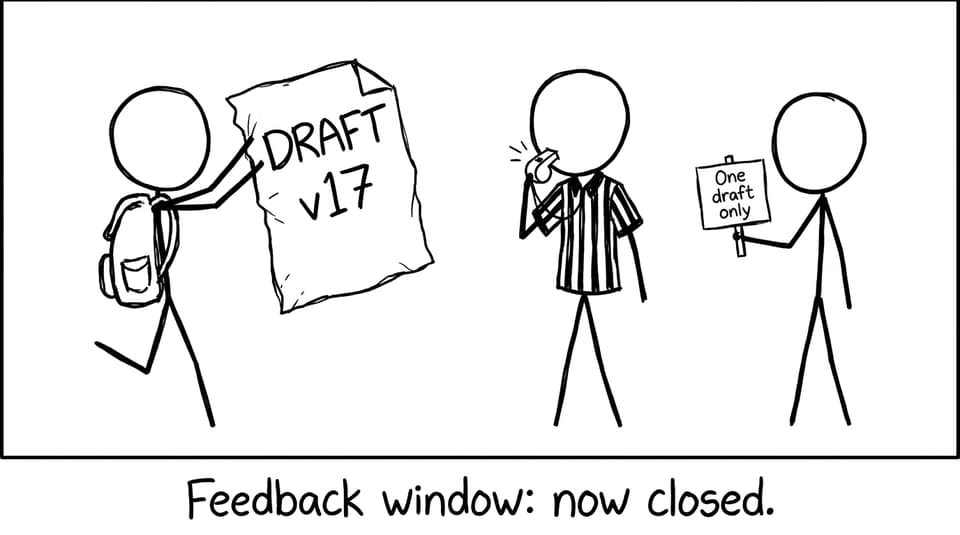
Here is the part that surprises people: after that one draft, the next version your supervisor sees must be the final submission before the viva voce. And once that final is submitted, no further changes are allowed unless there is an administrative error.
Understanding this boundary is not just “good process.” It is academic integrity insurance. If your EE is suspected of having unauthorized assistance, it must be reported and may be investigated as academic misconduct.
EE one draft rule checklist (save this before you email your supervisor)
Use this quick checklist to stay safe and effective:
- You get one supervisor-commented EE draft.
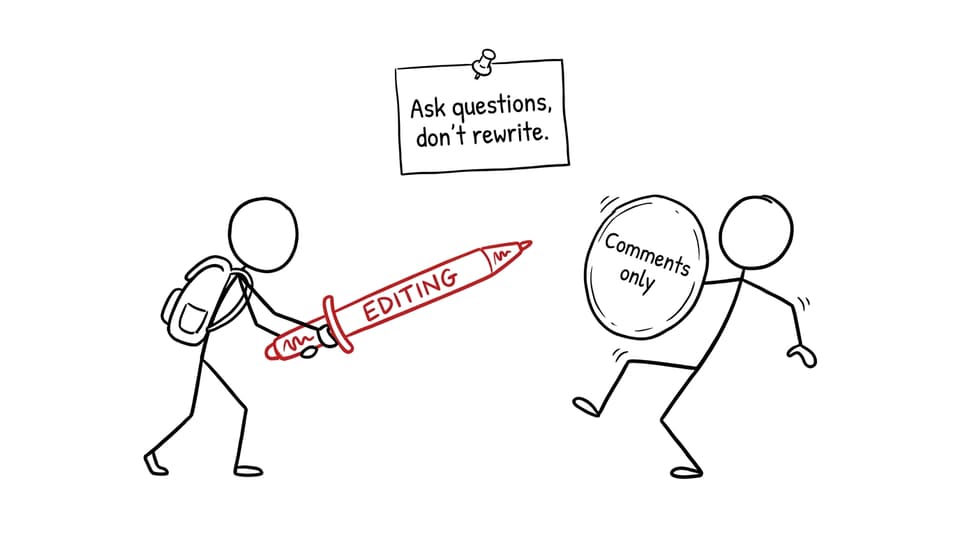
- The supervisor can comment and ask questions, but cannot edit your writing.
- Your supervisor should not correct spelling, punctuation, citations, maths, or experimental calculations for you.
- After that draft, the next version your supervisor sees is your final EE (before the viva voce).
- After final submission, you cannot change anything unless there is an administrative error.
- If help looks like rewriting, polishing, or “fixing,” it can trigger academic integrity concerns.
If you want a broader foundation for the rules and criteria, start with IB Extended Essay Guides.
What supervisors can do for your EE (and why it still helps)
The best supervisors do not “save” your EE. They make you harder to fool.
They do it by asking the kinds of questions that expose weak logic.
A supervisor can typically:
- Help you understand what the EE assessment criteria require (without telling you what to write).
- Ask probing, open-ended questions like: “What would change your conclusion?” or “Where is your method justified?”
- Flag structural issues: unclear research question, missing line of argument, sections that do not answer the question.
- Point out where evidence is thin or where claims are unreferenced.
- Suggest general areas to strengthen: analysis, evaluation, engagement, presentation.
That is still powerful. If you use it well, one round of comments is enough to level up your EE.
For practical strategies on making feedback count, see How to Improve Your IB Extended Essay Draft.
The safest kind of supervisor feedback is a question
A good mental model: your supervisor is allowed to be a mirror, not a mechanic.
Mirrors show you what is there. Mechanics fix it.
When your supervisor writes, “This paragraph reads as description, not analysis,” that is a mirror. When they rewrite your topic sentence to make it sharper, that is a mechanic.
Your job is to take the mirror and do the repair yourself.
What supervisors cannot do under the EE one draft rule
This is where confusion becomes expensive.
Under the EE one draft rule, supervisors must not provide direct edits or proofread in a way that changes the writing. The boundary is not “big changes vs small changes.” It is authorship.
In practice, supervisors cannot:
- Correct spelling and punctuation.
- Rewrite sentences, paragraphs, or sections.
- Proofread the EE.
- Fix your bibliography formatting for you.
- Correct your calculations, experimental work, or mathematics.
- Tell you exactly where to move whole sections or what to insert line-by-line.
This is why students sometimes feel disappointed after submitting an EE draft. They expected a red-pen makeover. They received questions.
That is not a lack of support. It is the system protecting your ownership.
For a deeper look at supervision expectations, this post is useful: 10 Key Responsibilities of the Extended Essay Supervisor in IB.
The timeline trap: draft, then final, then viva voce
The 2027 EE guide keeps a strict sequencing that many students accidentally break.
Here is the safe order:
- You write a complete draft.
- Your supervisor reads and comments on that one draft.
- You revise independently.
- The next version your supervisor sees is the final EE submission.
- Then comes the viva voce.
The dangerous order looks like this:
- Draft 1 (supervisor comments)
- Draft 2 (supervisor comments “just quickly”)
- Draft 3 (supervisor “fixes a few lines”)
Even if intentions are good, repeated drafts and edits create a paper trail that can look like over-assistance. And if the writing quality suddenly shifts, it raises the worst kind of question: “Whose voice is this?”
After final submission: the only changes are administrative
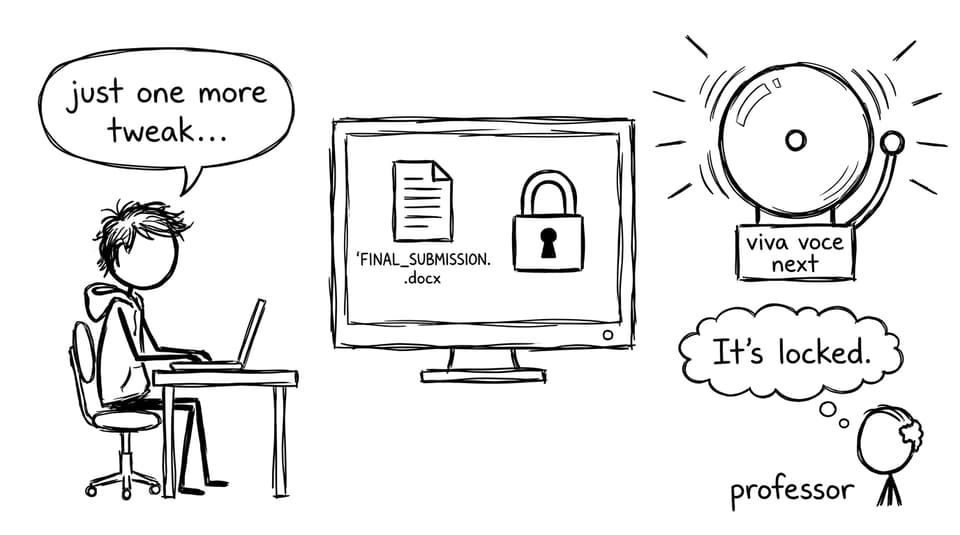
Once your final EE is submitted, you cannot keep tweaking. The only exception is an administrative error (for example, the wrong file uploaded).
So treat final submission like boarding a flight. Once the door closes, you can complain about your seat, but you cannot go back to pack better.
How to use your one EE draft comment like a high-scoring student
One draft comment sounds limiting until you plan for it.
Here is the approach that makes one round of feedback enough.
Submit a draft that is actually “draft-able”
Your supervisor can only comment on what exists.
Before you send your EE draft, ensure it includes:
- A precise research question.
- A full structure (intro, body sections, conclusion).
- Evidence integrated into analysis.
- Citations throughout (even if formatting is imperfect).
- A visible line of argument.
If you need a structure refresher, use How to Structure an Extended Essay (EE) and pair it with 7 Key Steps to Write a Strong Extended Essay Introduction.
Ask for the kind of feedback that is allowed
Instead of “Can you fix my wording?” ask:
- “Which sections do not answer the research question?”
- “Where does my argument stop being convincing?”
- “Where am I describing instead of analyzing?”
- “What is the biggest criteria-based risk?”
If your supervisor is unsure how to phrase comments safely, you can suggest they use questions only.
Convert comments into an action list
Create a two-column table in your notes:
- Column A: supervisor comment/question
- Column B: the change you will make (in your own words)
This keeps you from making random edits. It also makes your revision process coherent, which helps your reflection quality.
Protect exam preparation while you revise your EE
Most students lose marks in exams because the EE quietly absorbs all their time.
RevisionDojo is built to prevent that tradeoff:
- Use the Questionbank to keep exam technique alive while writing your EE.
- Use Study Notes to refresh content quickly without spiraling into re-reading entire textbooks.
- Use Flashcards for spaced repetition when your brain is saturated from long-form writing.
- Use AI Chat to clarify concepts or pressure-test reasoning without anyone rewriting your work.
- Use Grading tools to check rubric alignment early, before the final EE locks.
- Use Mock Exams and Predicted Papers to maintain timing and performance under pressure.
- Use the Coursework Library to compare structure and quality against examiner-verified exemplars.
- Use Tutors when you need strategy, accountability, and planning support.
If you want to see what top-band work looks like across subjects, browse IB Coursework Examples: IA, EE and TOK Exemplars.
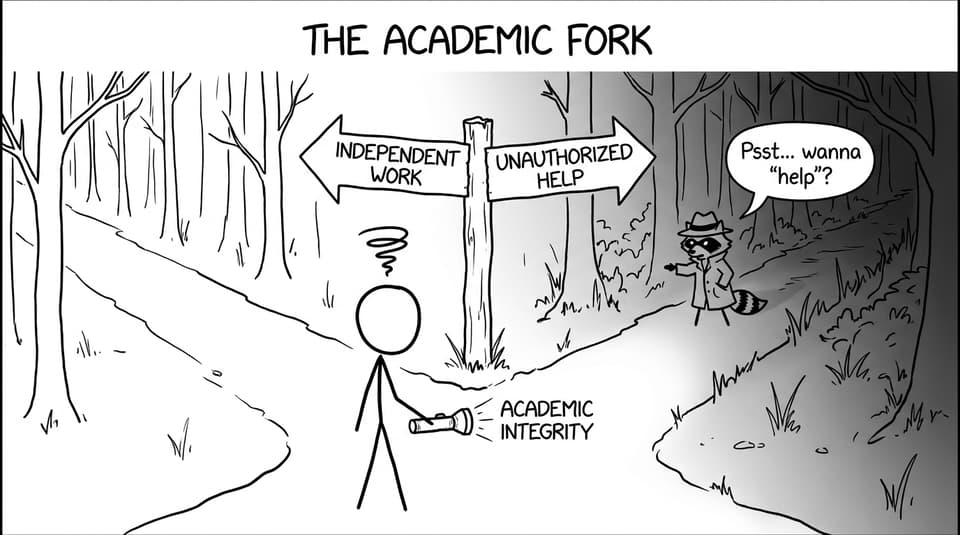
Academic integrity: why the EE one draft rule exists
The one draft rule is not about catching you out. It is about keeping the authorship signal clean.
When an examiner reads an EE, they are reading for thinking and voice. If the writing feels like it has been professionally polished, the examiner cannot know what is yours.
This is why suspected unauthorized assistance must be reported and may be investigated as academic misconduct.
And the uncomfortable truth is that misconduct often starts with a small misunderstanding:
- “My supervisor only fixed grammar.”
- “A tutor just rephrased a few sentences.”
- “My friend helped me tighten the introduction.”
Each one sounds harmless. Together, they create a document you did not fully author.
For a clear explanation of boundaries, read What Are IB’s Expectations for Academic Honesty in the Extended Essay (EE) and IB IA and EE Collaboration Rules: What’s Allowed and What’s Not.
How to revise your EE without crossing the line
You can still improve your EE dramatically without anyone editing it.
Use models without copying them
Reading exemplars helps you learn structure, proportion, and what “analysis density” looks like. But your EE must not become a template.
Use the Coursework Library to study patterns:
- How introductions establish scope.
- How headings map to the research question.
- How evidence is embedded.
- How conclusions answer the question directly.
Then close the exemplar and write your own paragraph from scratch.
Use tools that support thinking, not rewriting
The safest tools help you think better, not sound fancier.
RevisionDojo’s AI Chat can help you:
- Test whether your claim logically follows from evidence.
- Generate questions to deepen evaluation.
- Identify where your method is unclear.
But you still write the sentences. That is the point.
If you are worried your writing is too descriptive, use How to Make Your IB Extended Essay Analytical, Not Descriptive.
Closing: treat the EE one draft rule like a strategy, not a restriction
The one draft rule can feel harsh when you are tired and the document still does not sound like what you hoped.
But the rule is also a gift. It forces you to do the one thing that separates a strong EE from a fragile one: you become the author in full.
Use your supervisor’s one set of comments like a compass, not a crutch. Make your next version the final. Keep your voice consistent. Protect academic integrity.
And while you do all of that, keep your exams moving forward with RevisionDojo: the Questionbank for targeted practice, Study Notes and Flashcards for retention, AI Chat for fast clarification, Grading tools for coursework alignment, and Mock Exams and Predicted Papers for timing and confidence.
Your EE is not just something to submit. It is a proof of independence. Make it unmistakably yours.