
If you’ve ever stood by the sea at sunset, you’ve felt it: the air cools slowly, the wind shifts, and the day seems to end more gently than it does inland. That “gentle ending” is physics, and it’s one of the quiet foundations of IB Geography. The ocean isn’t just scenery. It’s the planet’s largest climate stabiliser, moving heat, carbon, and water in ways that shape everything from monsoons to mid-latitude storms.
Oceans and the global climate system (IB Geography focus)
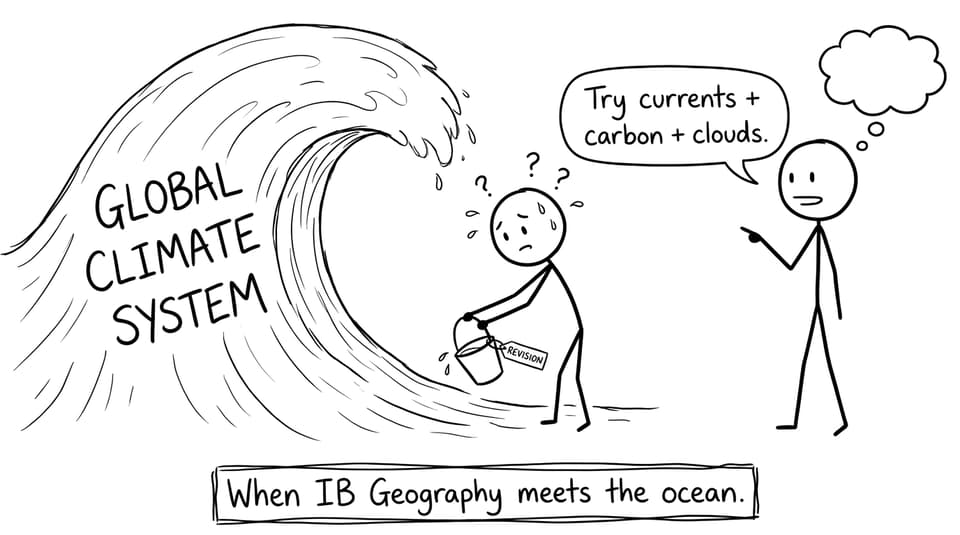
In IB Geography, especially Option B (Oceans and Coastal Margins), exam answers improve fast when you can link processes to outcomes. Think of the ocean as three systems working at once:
-
Heat store: absorbs and releases energy slowly
-
Heat transport: currents redistribute energy across latitudes
-
Carbon sink + moisture source: takes up CO2 and fuels rainfall
To revise the syllabus space this sits in, use IB Geography Option B: Oceans and Coastal Margins alongside IB Geography Resources.
Heat storage: why oceans buffer climate change
Water has a high specific heat capacity, so oceans can absorb huge amounts of solar energy without rapidly changing temperature. In IB Geography, that becomes a simple exam line: oceans reduce temperature extremes by storing heat in warm periods and releasing it in cooler periods.
This matters for climate change too. When the ocean absorbs excess heat, atmospheric warming can look “slower” for a time. But the energy hasn’t disappeared. It’s stored, and later affects sea surface temperatures, storm intensity, and circulation.
If you want a clean way to connect ocean buffering to wider climate systems, pair this with Impacts on the Hydrosphere and Atmosphere (notes).
Ocean currents: the planet’s moving heat conveyor
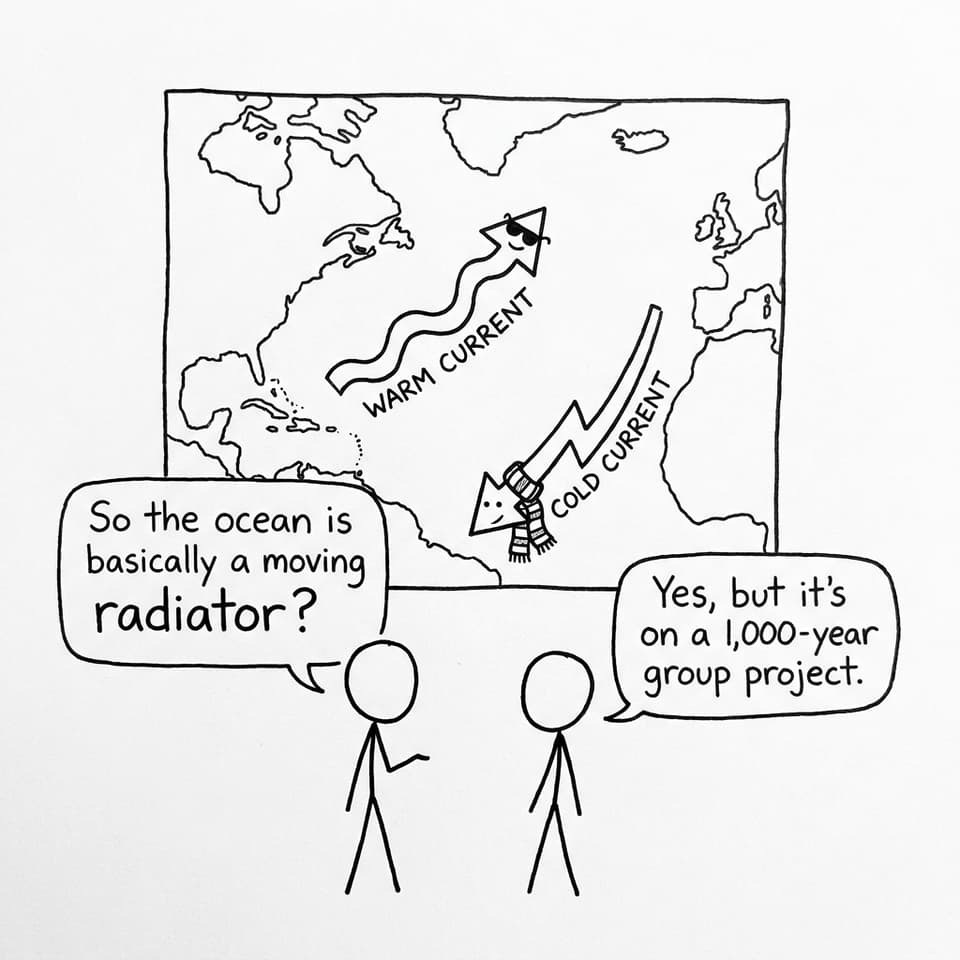
Currents move warm water from the tropics toward higher latitudes and return colder water toward the equator. This redistributes energy and reduces global temperature contrasts. In IB Geography, you can frame this as latitudinal heat transfer: currents help explain why some coastal areas are warmer or cooler than their latitude suggests.
For exam practice that forces you to apply (not just recall), drill questions from the Option B Questionbank. Then tighten memory with Option B Flashcards.
Carbon cycling: oceans as a major carbon sink
A large share of atmospheric CO2 dissolves into ocean water, making the oceans a major carbon sink. Some of that carbon is used by phytoplankton during photosynthesis, forming the base of marine food webs. When organisms die, some carbon sinks to deeper waters and sediments, storing it for long periods.
In IB Geography, this is a strong “link chain” to write:
CO2 uptake to biological pump (phytoplankton) to long-term storage to reduced atmospheric greenhouse effect.
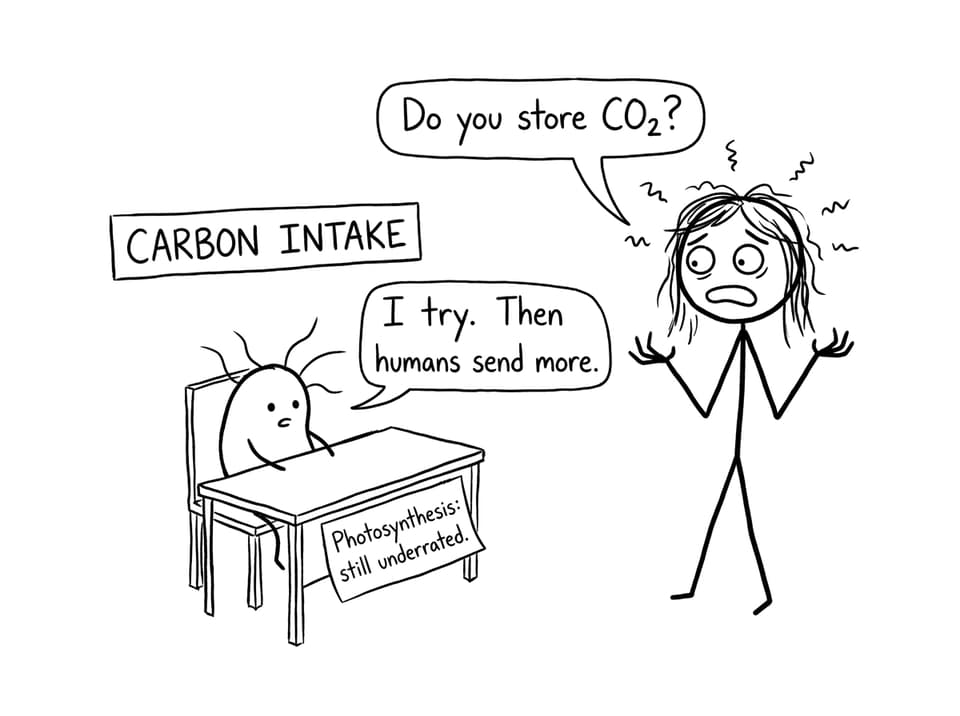
It’s also worth adding one evaluation sentence: warming oceans can reduce CO2 solubility and alter ecosystems, weakening this sink over time.
Evaporation and rainfall: oceans power the water cycle
Warm ocean surfaces increase evaporation. That moisture later condenses and falls as precipitation, shaping rainfall patterns from equatorial convection to monsoon systems and tropical storms. In IB Geography, “ocean-atmosphere interaction” is often where marks hide: you’re rewarded for connecting sea surface temperature to pressure, uplift, condensation, and rainfall.
For a focused explanation you can borrow structure from, see How Do Ocean-Atmosphere Interactions Create Climate Patterns? and topic support like Hurricanes and Their Impacts (notes).
Exam-ready mini checklist (IB Geography)
Before you write, quickly decide:
-
Which process is the question aiming at: heat, currents, carbon, or moisture?
-
Can you add one consequence at a different scale (local coastal climate vs global circulation)?
-
Can you include one evaluation line about climate change disrupting the process?
Closing: make oceans feel “usable” in IB Geography
The ocean’s role in the global climate system is easy to admire and surprisingly hard to explain under time pressure. But in IB Geography, you don’t need poetry. You need clean chains: heat storage, currents, carbon sink, and moisture cycling, plus one sentence evaluating how climate change can disrupt the same processes that once stabilised climate.
When you want that clarity on demand, RevisionDojo is built for it: Study Notes to understand fast, Flashcards to lock it in, Questionbank practice with feedback to sharpen application, AI Chat to unblock confusion, and Grading tools, Predicted Papers, and Mock Exams to rehearse exam performance. For deeper coastal context, you can also expand with Coastal Management Strategies and Future Challenges for Coastal and Ocean Environments.