
Coastlines have a strange talent: they look permanent until the day they don’t.
One storm can redraw a beach. One heatwave can bleach a reef. One policy decision can turn a fishing community into a conflict zone. For IB Geography, that tension is the whole point of Option B (Oceans and Coastal Margins): coastal and ocean environments are dynamic systems, and the future challenges are about managing change at speed.
If you’re revising for exams, think like an examiner: your job isn’t to list problems. It’s to explain processes, link them to impacts, and then evaluate responses.
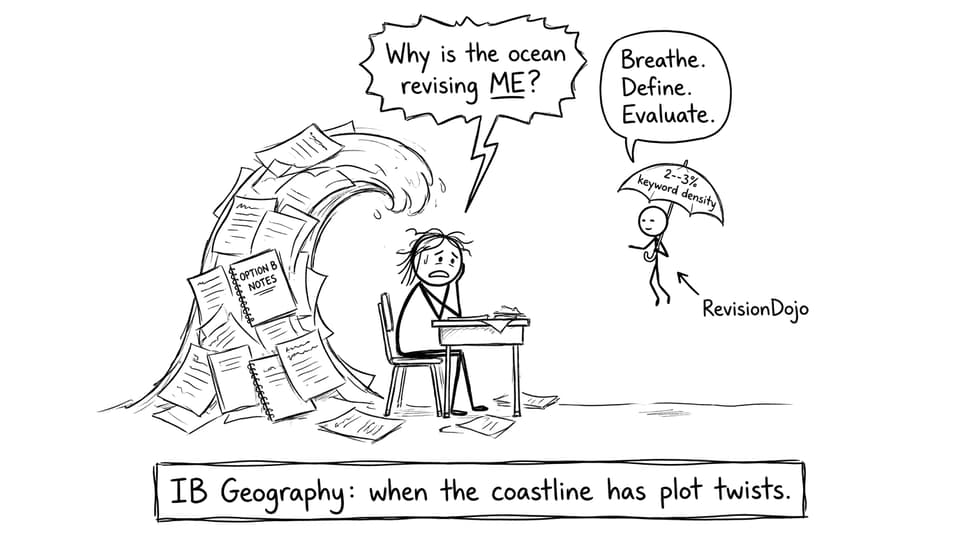
A quick exam checklist (IB Geography)
Use this as a fast structure for any short answer or essay in IB Geography:
-
Name the challenge (climate, ecosystems, pollution, resources, governance)
-
Explain the mechanism (what changes physically or socially?)
-
Identify winners and losers (stakeholders)
-
Add a management pathway (adaptation, mitigation, regulation)
-
Judge sustainability over time (cost, maintenance, equity)
For syllabus-aligned revision, anchor your notes in Option B: Oceans and Coastal Margins and then practice with the Option B Questionbank.
Climate change: sea-level rise, storms, and saltwater intrusion
The headline future challenge is climate change, but in IB Geography you get more marks when you specify how it shows up.
Rising sea levels increase the frequency of coastal flooding and accelerate erosion, especially in low-lying areas and deltas. Saltwater intrusion can push into freshwater aquifers, turning drinking water supplies brackish and damaging agriculture. More intense storms add extra wave energy and storm surge, which can overwhelm defenses designed for a different climate baseline.
To connect processes to responses, revise coastal protection options using Coastal Management Strategies and the core content in B.3 Managing coastal margins.
Ocean warming and acidification: ecosystems under stress
A second future challenge is ocean ecosystem change, lessless visible from the shore, but enormous in consequence.
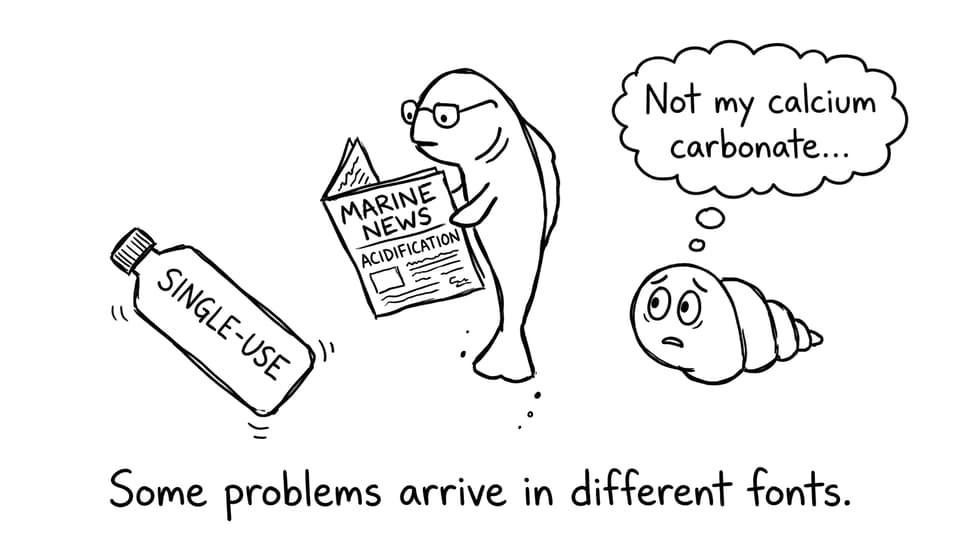
Warmer sea temperatures can disrupt food webs and contribute to coral bleaching, reducing biodiversity and weakening natural coastal protection. Acidification happens as oceans absorb more CO₂, lowering pH and making it harder for shell-forming organisms and corals to build calcium carbonate structures. In IB Geography, it’s worth linking this to livelihoods: fisheries and tourism are often the human systems most exposed.
If you want a clean way to phrase these links in exams, pair your coastal content with climate system understanding from How Ocean and Atmosphere Interactions Create Climate Patterns.
Pollution and plastics: a slow-moving crisis with fast impacts
Pollution is a future challenge because it scales: fromfrom local waste management failures to global circulation patterns.
Plastic waste harms marine life through ingestion and entanglement, while microplastics move through food chains and raise long-term health concerns. Strong answers in IB Geography often add one line of evaluation: reducing pollution is technically possible, but politically difficult because it requires coordinated regulation, corporate responsibility, and consumer change.
Overexploitation and illegal fishing: pressure on ocean resources
Overfishing (and illegal, unregulated fishing) reduces fish stocks and can destabilize marine ecosystems.
In IB Geography, try framing this as a resource management problem: demand rises, monitoring is expensive, and enforcement varies by country and capacity. That opens the door to evaluation about equity: whowho gets access to resources, and who bears the costs when systems collapse?
Governance: boundaries don’t match ecosystems
One of the most exam-friendly future challenges is governance.
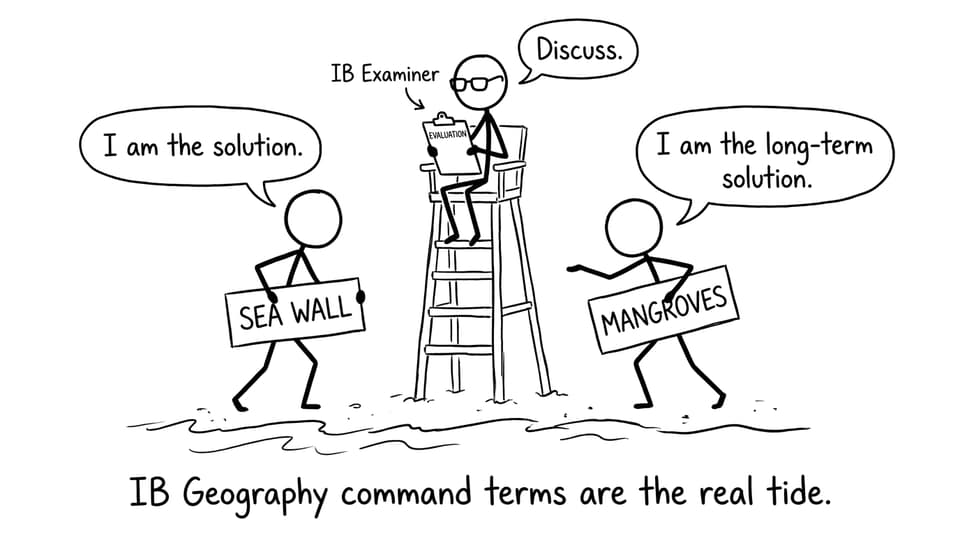
Oceans and coasts cross jurisdictions, and areas beyond national control can suffer from weak regulation. Competing interests (shipping, tourism, energy, conservation, fishing) often produce slow decision-making or policy compromise. For Paper 2 and Paper 3 style writing, governance is where you can show mature judgement: management success depends on cooperation, enforcement, and long-term funding.
To build that exam skill, practice essay structure with IB Geography Case Studies: A Comprehensive Exam Guide, and then pressure-test your recall using Flashcards for Option B.
How RevisionDojo helps you turn knowledge into marks
The jump from understanding to scoring is mostly repetition with feedback.
RevisionDojo makes IB Geography revision feel lighter because the system is integrated: Study Notes to learn the chain of causality, Flashcards for definitions and processes, and the Questionbank to turn ideas into exam language. When you want to simulate real exam pressure, use Mock Exams and Predicted Papers through the IB Geography Predicted Papers hub. And when your writing needs sharpening, RevisionDojo’s AI Chat and Grading tools help you identify what’s missing: the mechanism, the case evidence, or the evaluation.
Conclusion: the coastline is a test of long-term thinking
Future coastal and ocean challenges are not just environmental headlines. They’re stress tests for planning, fairness, and cooperation.
If you can explain climate risks, ecosystem shifts, pollution, resource pressure, and governance clearly, you can handle most IB Geography Option B questions with confidence. Build that confidence the smart way: learn the processes, practice the writing, and get feedback fast using IB Geography Resources on RevisionDojo.