Coastlines have a way of embarrassing confident plans. One calm day, everything looks stable: a neat promenade, a tidy beach, a line of houses that feel permanent. Then a storm arrives and reminds everyone that the coast is not a border -- it’s a moving argument between land and sea.
For IB Geography, coastal management strategies sit right at the centre of that argument, especially in Option B (Oceans and Coastal Margins). The exam isn’t just testing whether you can name a sea wall or define nourishment. It’s testing whether you can evaluate: who benefits, who loses, what happens elsewhere in the sediment cell, and whether the solution stays sensible over decades.
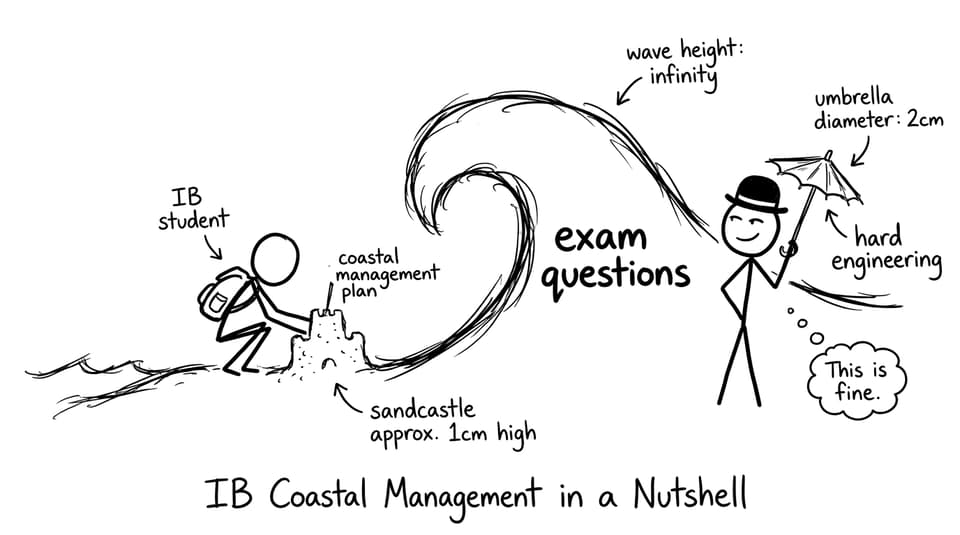
IB student vs wave of exam questions
Coastal management strategies: a quick exam checklist (IB Geography)
Use this checklist to organise any 6-, 10-, or essay-style response in IB Geography:
Hard engineering coastal management strategies (IB Geography)
Hard engineering tries to control natural processes with structures. In IB Geography, your marks often come from explaining effectiveness and unintended consequences.
Sea walls
Sea walls run parallel to the coast and reflect wave energy, protecting cliffs, roads, and settlements from erosion and flooding. They tend to be very effective in the area immediately behind them, which is why they’re common in high-value locations.
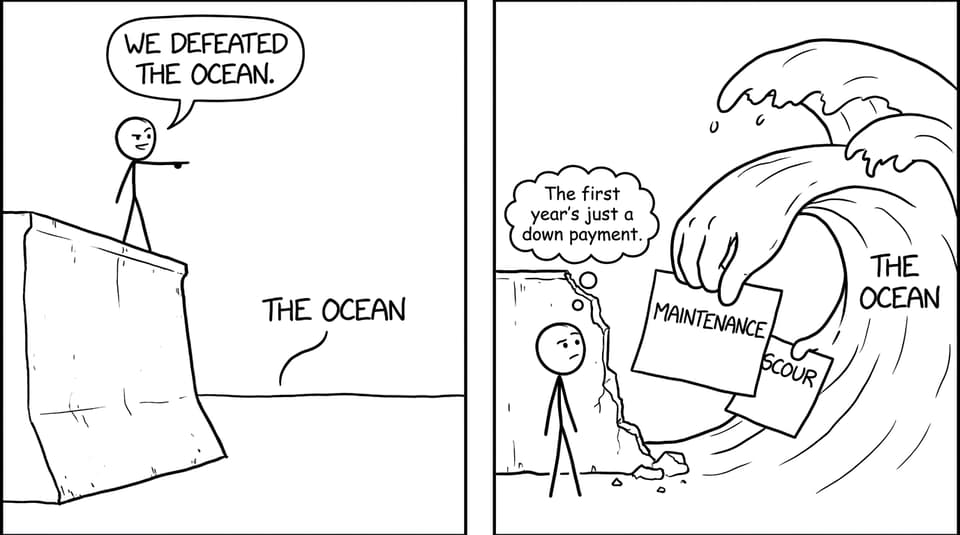
But reflection can increase turbulence and erosion at the base (scour). They’re also expensive to build and maintain, which gives you evaluation points about opportunity cost and long-term viability.
Seawall bragging rights vs maintenance bill
Groynes
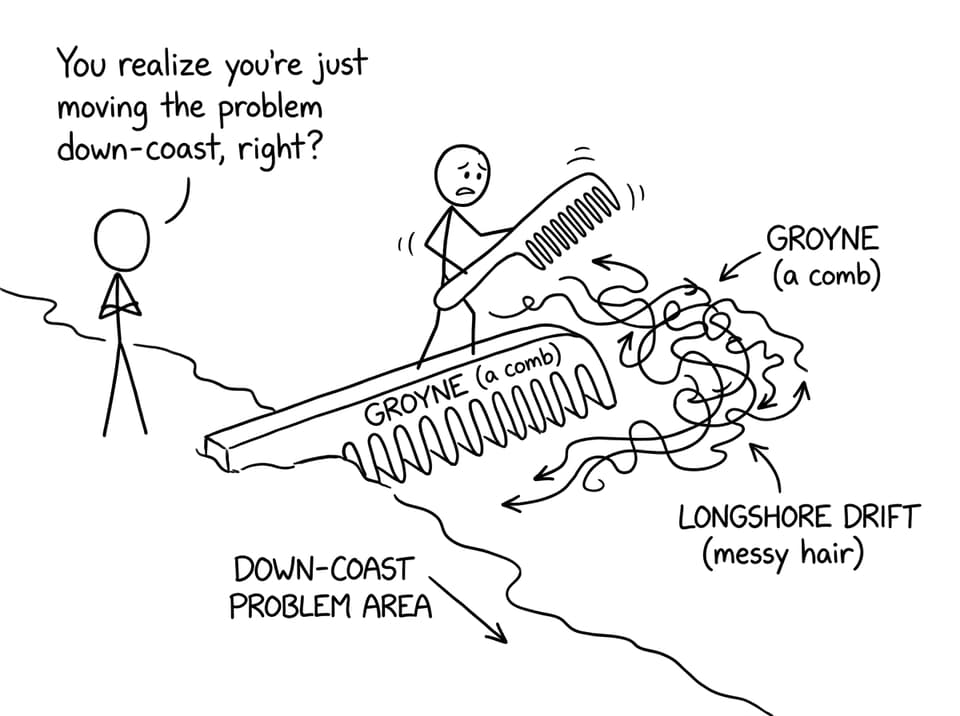
Groynes are built at right angles to the coastline to trap sediment moving by longshore drift. By widening the beach, they reduce wave energy reaching cliffs.
The classic IB Geography evaluation: groynes can starve beaches further along the coast, shifting erosion downdrift and creating conflict between communities.
Combing longshore drift with a groyne-comb
Breakwaters
Breakwaters sit offshore and reduce wave energy before it hits the coast, encouraging deposition in calmer water. They can be effective but are often costly, visually intrusive, and can disrupt nearshore ecosystems.
If you need the wider coastal systems context, connect this topic to Coastal Processes and Landforms and the way sediment moves through coastal environments.
Soft engineering works with coastal processes, usually aiming for flexibility and lower ecological damage.
Beach nourishment
Beach nourishment adds sand or shingle to replace material lost through erosion. Wider beaches dissipate wave energy and reduce flood risk.
In evaluation, mention that nourishment is typically temporary and requires repeated input (cost over time), plus potential impacts on habitats and sediment characteristics.
Managed retreat
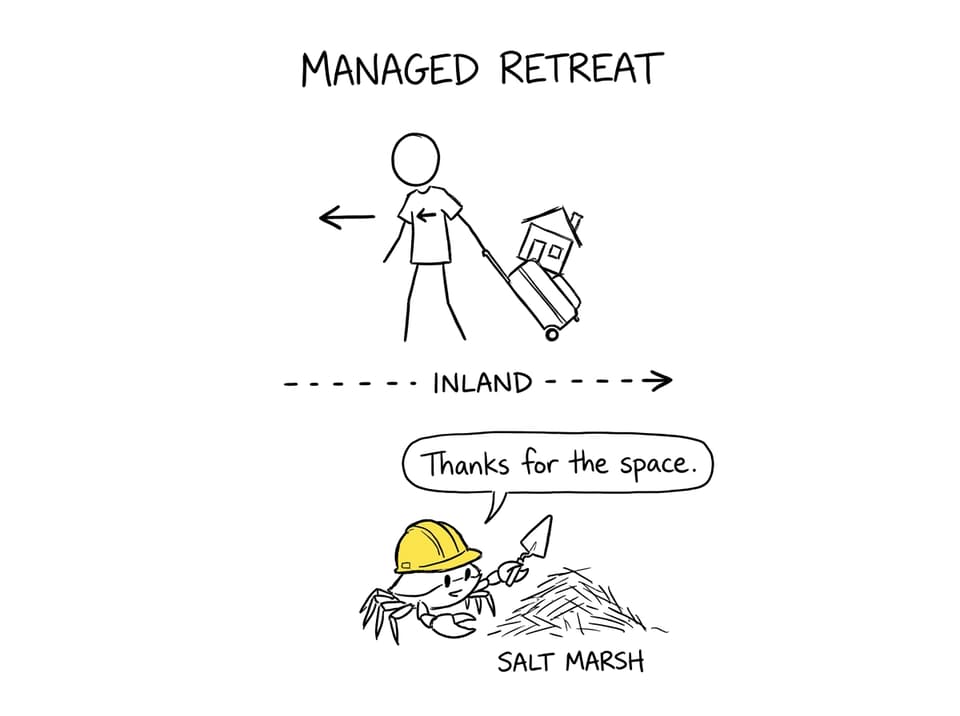
Managed retreat (realignment) deliberately allows low-value or high-risk coastal areas to flood, creating salt marshes/wetlands that act as natural buffers.
This is often framed as a more sustainable long-term option in IB Geography, but it can be politically difficult because it may involve relocating infrastructure and changing land use.
Managed retreat: house on suitcase, crab builds marsh
Planning and policy: the quiet coastal management strategies
Some coastal management strategies are less visible but hugely examinable:
Coastal zoning to restrict development in high-risk areas
Shoreline management planning across a sediment (littoral) cell to avoid fixing one stretch while worsening another
How to turn coastal management strategies into exam marks (IB Geography)
Examiners reward students who treat coastal management strategies like choices under constraints, not like a menu of definitions. A strong IB Geography paragraph often follows this flow: strategy -> how it works -> evidence of effectiveness -> unintended impacts -> overall judgement.
To practise that structure quickly, RevisionDojo makes it easy to go from learning to doing:
Closing: make coastal management strategies feel like decisions
The best way to remember coastal management strategies is to stop treating them as facts and start seeing them as trade-offs. Every groyne, sea wall, nourishment project, and retreat line is a decision about value, risk, and time.
If you’re revising IB Geography, practise writing those decisions under exam pressure with RevisionDojo: use the Questionbank for exam-style questions, Study Notes for clean explanations, Flashcards for fast recall, AI Chat when you’re stuck, Grading tools for feedback, Predicted Papers and Mock Exams for timed practice, and support resources like the Coursework Library and Tutors when you want extra structure. Coastal management strategies become much easier when you train your evaluation skills the way the exam rewards.
IB Geography: Can International Agreements Stop Climate Change?
IB Geography guide to how far international agreements can address climate change, with exam-ready evaluation points, examples, and RevisionDojo tools.