

Movement feels instant.
You decide to sprint, and your legs obey.
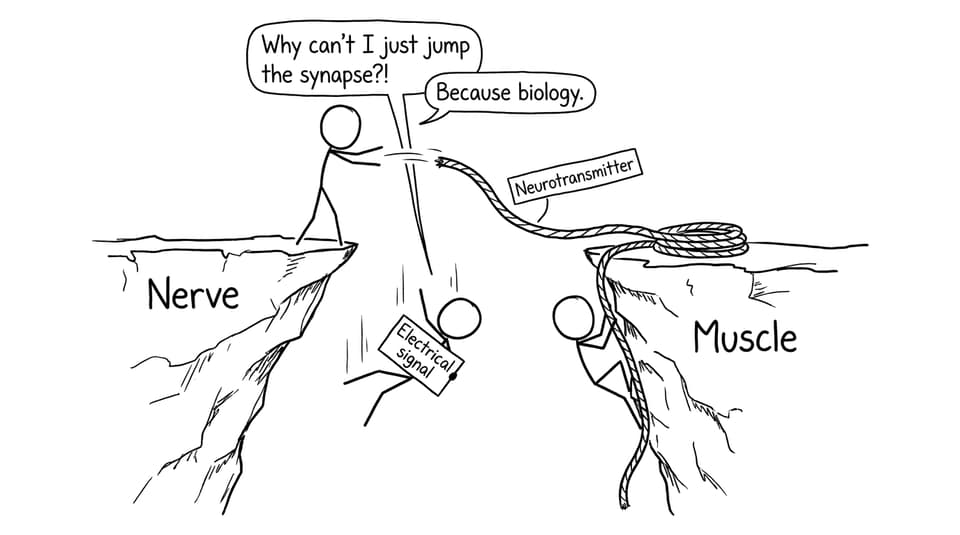
But in IB SEHS, that “instant” is a tiny handoff: an electrical message races down a motor neuron, then pauses at a microscopic gap where electricity can’t cross. A chemical messenger steps in, delivers the message, and only then does the muscle fibre fire and contract. Understanding that handoff is one of the cleanest ways to earn marks quickly in IB SEHS.
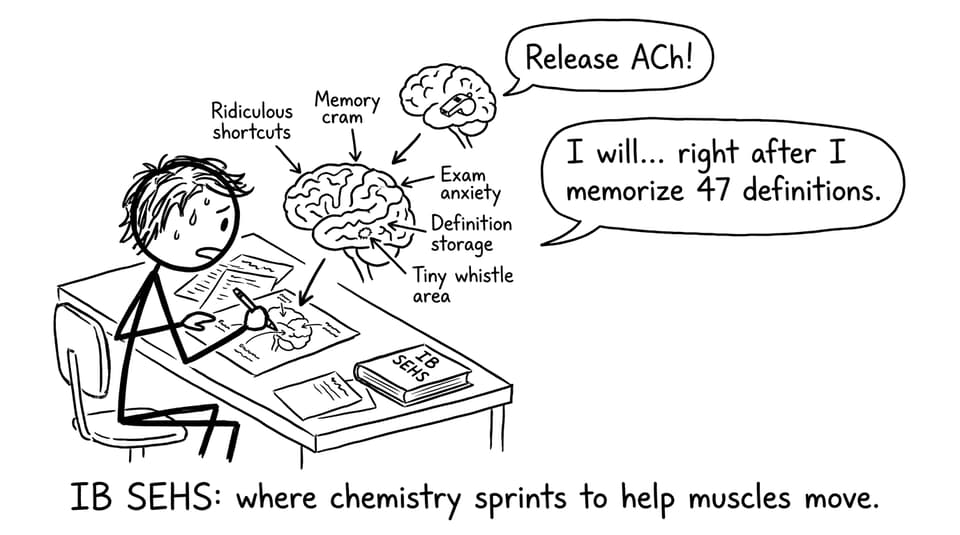
IB SEHS quick checklist: what to write in exams
Use this mini-sequence for short-answer questions on IB SEHS neurotransmitters:
-
Define neurotransmitters as chemical messengers at synapses
-
Mention the neuromuscular junction (NMJ) (motor neuron to muscle fibre)
-
State the key neurotransmitter: acetylcholine (ACh)
-
Explain: action potential arrives, ACh released, receptors bind, muscle membrane depolarizes
-
Link to outcome: muscle contraction and coordinated movement
-
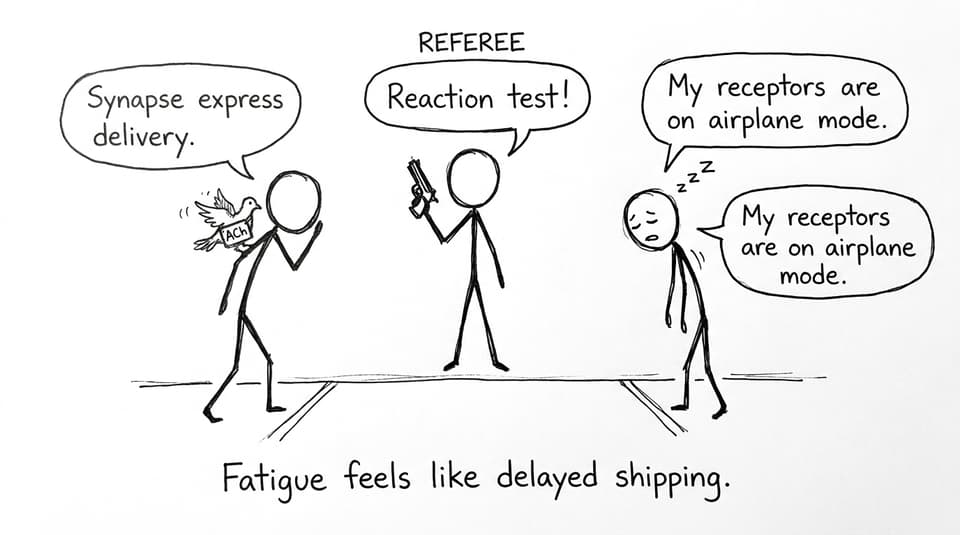
Extend: fatigue can reduce neurotransmitter effectiveness, lowering performance
If you want the syllabus-aligned version of this point, use 4.1.2 Neurotransmitters and skeletal muscle contraction notes.
What neurotransmitters are (in movement terms)
Neurotransmitters are chemicals released by neurons to transmit information across a synapse. That matters because electrical impulses do not “jump” the synaptic cleft. So the nervous system switches from electrical to chemical communication for a moment, then switches back.