



The second year of the IB Diploma can feel like watching several clocks count down at once. Coursework is still moving. Mock exams are approaching. University decisions hover in the background. Meanwhile, your child may answer every careful question with two words: “It’s fine.”
The reassuring truth is that families do not need to manage the whole year at once. This month-by-month guide to IB DP2 shows what usually matters from August through July, what parents can do without taking control, and what students should revise now.
Exact dates vary between schools and examination sessions. Internal deadlines for the Extended Essay, Theory of Knowledge, Creativity, Activity, Service, and internal assessments are set by the school, so your child’s coordinator calendar must remain the final reference.
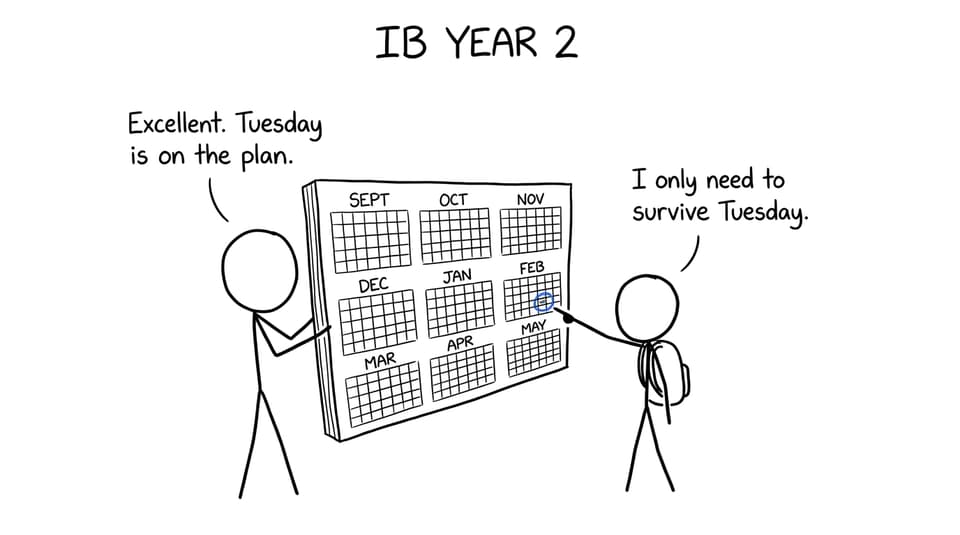
The IB Year 2 calendar at a glance
The year becomes easier to understand when divided into five phases:
- August to October: restart routines and move major coursework toward completion.
- November to December: close knowledge gaps before mock preparation intensifies.
- January to February: use mock exams as diagnostic evidence, not a final verdict.
- March to April: complete remaining submissions and shift toward timed exam practice.
- May to July: manage examinations, recovery, and results calmly.
The Diploma Programme combines six subjects with the core: TOK, the Extended Essay, and CAS. Subject grades run from 1 to 7, while TOK and the EE can contribute up to three additional core points. The highest possible diploma total is 45. Earning 24 points is necessary, but students must also satisfy the IB’s other passing conditions, including completing CAS.
Parents do not need to become amateur coordinators. Their most useful role is to protect routines, notice overload, and help the student convert vague worry into one specific next action.
August: rebuild the system before pressure rises
Some schools begin DP2 in August; others return in September. Either way, the first task is not aggressive revision. It is reconstructing a reliable weekly rhythm.
Ask your child to place school deadlines, mock dates, holidays, university tasks, and known examination dates in one calendar. Then identify unfinished DP1 work, especially internal assessments, the EE, TOK, and CAS records.
What to revise now: Briefly revisit high-dependency DP1 concepts that support new material. RevisionDojo Study Notes and Flashcards can make this a focused refresh rather than a complete rereading of every notebook.
Parent prompt: “Which deadline would become expensive if it were ignored for another month?”
September: turn deadlines into weekly outputs
September often looks manageable because final examinations still feel distant. That distance can be deceptive. A 4,000-word EE, several internal assessments, and six subjects become difficult when treated as one undivided workload.
Encourage weekly outputs such as completing one analysis section, correcting one problem set, or revising one essay plan. A balanced IB study schedule should leave room for sleep, school, movement, and genuine downtime.
What to revise now: Maintain current topics while diagnosing gaps from DP1. Use short Questionbank sets by topic, then record whether each error came from missing knowledge, method, interpretation, or command terms.
Parent prompt: “What does finished look like by Sunday?”
October: protect coursework quality
By October, coursework may compete directly with tests and university applications. This is when busy work becomes dangerous. Hours spent formatting notes can feel productive while the difficult paragraph remains unwritten.
The IB core is not an optional side project. Families unfamiliar with it can review TOK, EE, and CAS requirements. If the Extended Essay is still developing, RevisionDojo’s IB Extended Essay guides and Coursework Library can help students understand structure and criteria without replacing teacher supervision or independent thinking.
What to revise now: Prioritize subjects with upcoming tests, but keep two short weekly retrieval sessions for older material.
Parent prompt: “Do you need help creating time, finding the right resource, or being left alone to work?”
November: begin cumulative revision
November is the right moment to make revision cumulative. Waiting until study leave to reconnect an entire syllabus creates unnecessary pressure.
Students can use spaced repetition for IB revision to revisit material at expanding intervals. Flashcards are useful for definitions, formulas, quotations, vocabulary, and recurring mistakes, but they should be paired with application. Knowing a fact is different from earning marks with it.
What to revise now: Choose one weak topic from each subject. Review concise Study Notes, retrieve key ideas without looking, and complete several relevant Questionbank problems.
Parent prompt: “Which subject is quietly becoming easier to avoid?”
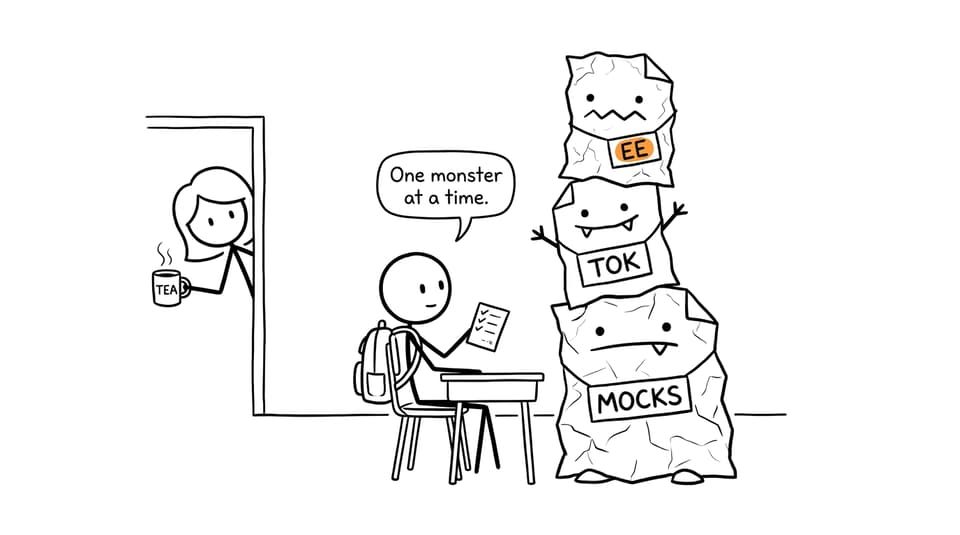
December: consolidate without filling the holiday
A break should contain rest. Exhaustion is not proof that revision worked.
Before the holiday, students can create a one-page status check for each subject: topics understood, topics uncertain, recent teacher feedback, and the next practice task. This becomes the starting point for mock preparation.
A sensible holiday plan uses bounded sessions rather than an endless promise to “study all day.” Families can agree in advance on protected work periods and protected time off. That reduces daily negotiation.
What to revise now: Repair the largest conceptual gaps and practise retrieval. Avoid scheduling full mock exams every day.
Parent prompt: “Which days are completely free from IB work?”
January: treat mocks as information
Many schools hold mock examinations in January or February. The timetable varies, but their purpose is broadly similar: expose weaknesses while there is still time to respond.
Students should practise under timed conditions, then spend serious time reviewing their responses. RevisionDojo Mock Exams, Predicted Papers, AI Chat, and Grading tools help turn attempts into feedback. Its online IB mock exam guide explains how to simulate timing and analyse performance.
What to revise now: Move from isolated topics toward mixed sets and timed sections. Practise deciding which question to answer, how long to spend, and what a command term requires.
Parent prompt: “What are you trying to learn from this mock?”
February: convert mock results into repairs
A disappointing mock result can feel final precisely because it arrives when the real examinations seem close. It is not final. It is a map drawn early enough to be useful.
Begin with teacher feedback and identify two or three high-value weaknesses per subject. The best response is targeted: relearn the concept, answer related questions, check the work, and retest later. Parents can use this guide to handling mock disappointment to keep conversations focused on evidence rather than blame.
What to revise now: Use Questionbank filters to repair weak areas. Ask RevisionDojo AI Chat to clarify misunderstood concepts, then verify understanding by answering without assistance.
Parent prompt: “What changed in the plan because of the mock?”
March: finish submissions and map the examination window
March is often a transition month. School-set coursework deadlines may be arriving while examination preparation becomes more urgent. Because submission calendars vary, never assume another school’s dates apply to your child.
Once major work is submitted, print or copy the official schedule for the relevant examination session. Record every paper, level, date, local session time, and duration. The IB exam timetable planning guide can help students see difficult clusters before they become surprises.
What to revise now: Alternate targeted repair with timed sections. Build a short error log that states what went wrong and the rule that will prevent repetition.
Parent prompt: “Where does the official schedule create the most demanding run of days?”
April: rehearse, review, and taper intelligently
For May-session candidates, examinations may begin in late April, depending on the official schedule for that year. By this stage, students should increasingly practise complete decisions under time pressure rather than endlessly collecting new resources.
A useful cycle is attempt, check, diagnose, repair, and retest. Full simulations matter, but so does recovery. Schedule lighter review after demanding practice and reduce intensity immediately before an examination.
What to revise now: Use Mock Exams and Predicted Papers for realistic rehearsal. Review errors with the Grading tools, then return to Study Notes only for the specific concepts still causing lost marks.
Parent prompt: “What can we remove from this week?”
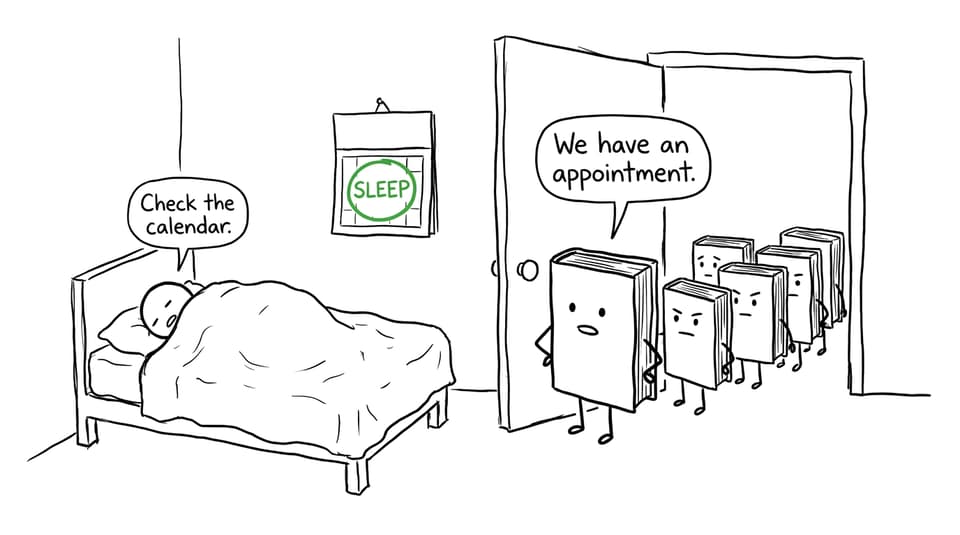
May: make the household exam-friendly
During examinations, the parent’s role becomes practical. Reduce avoidable decisions. Keep meals predictable, protect sleep, confirm transport, and avoid conducting a detailed post-mortem after every paper.
One difficult examination can distort a student’s view of the entire session. The next paper still deserves a steady mind. Ask what is needed for tomorrow rather than analysing what can no longer be changed.
What to revise now: Follow the examination order. Use short recall, error logs, formulas, vocabulary, essay plans, and selected questions. Stop at a planned time.
Parent prompt: “What would make tomorrow morning simpler?”
June: let recovery be real
After the final examination, students often experience relief mixed with uncertainty. Resist the urge to turn June into a month-long prediction exercise. The work is finished, and unofficial score speculation cannot change it.
Confirm that university or administrative tasks are complete, locate candidate login details, and make a simple results-day plan. Then allow the student to recover.
What to revise now: Nothing, unless the school has identified a separate requirement. Rest is the task.
Parent prompt: “What have you missed doing while the IB occupied so much space?”
July: approach IB exam results as information
For May examination sessions, candidate results are normally available through the IB candidate website from 12:00 GMT on 6 July. Students should confirm their exact access arrangements and credentials with their coordinator.
Before opening the results, agree to record the subject grades, core outcome, total, and diploma status before reacting. If a result affects a university condition, contact the coordinator and institution promptly. RevisionDojo’s parent guide to IB results day provides a calm sequence for interpreting the information and considering next steps.
What to revise now: Usually nothing. If a retake later becomes appropriate, build a new plan only after reviewing component information and coordinator guidance.
Parent prompt: “Would you like me beside you, nearby, or available afterward?”
The best parental support creates steadiness
IB Year 2 is not one long emergency. It is a sequence of changing priorities: coursework, mocks, targeted revision, study leave, examinations, recovery, and results. Families help most when they respond to the month they are actually in.
RevisionDojo can serve as the structured calendar behind that journey. Students can move from Study Notes and Flashcards to the Questionbank, AI Chat, Grading tools, Predicted Papers, and Mock Exams as their needs change. The Coursework Library supports the submission phase, while Tutors provide human guidance when a difficult subject needs more than another study session. Parents can also explore RevisionDojo support for IB families.
The goal is not to monitor every hour. It is to make the next useful action visible. When a year feels enormous, that is often enough to make it manageable.