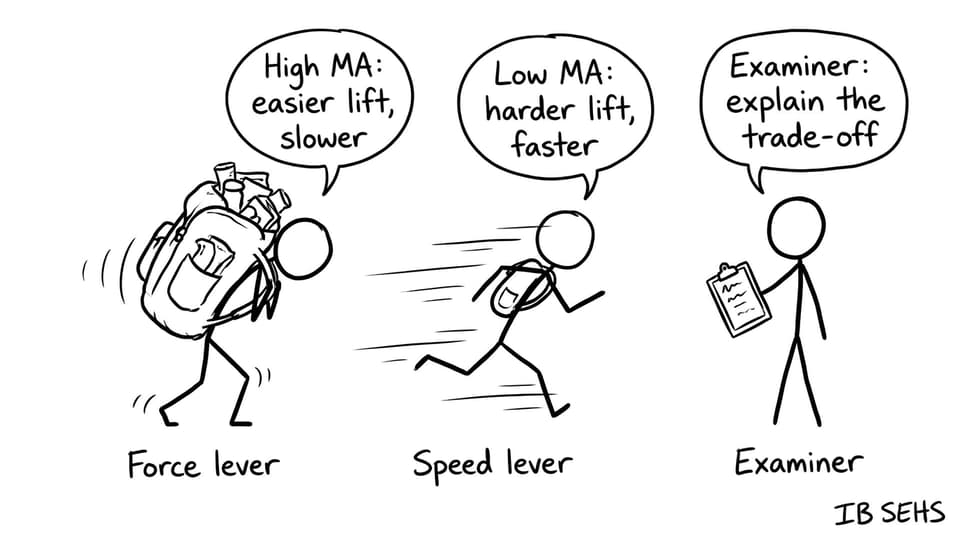


A sprinter explodes out of the blocks and it looks effortless. But inside that “effortless” moment is a quiet trade-off: the body often chooses speed and range of motion over easy force. That trade-off is exactly what IB SEHS means when it asks you about mechanical advantage in sport. If you can explain it calmly, you pick up marks fast.
Mechanical advantage in IB SEHS: the quick checklist
Before you write any answer, run this IB SEHS checklist:
-
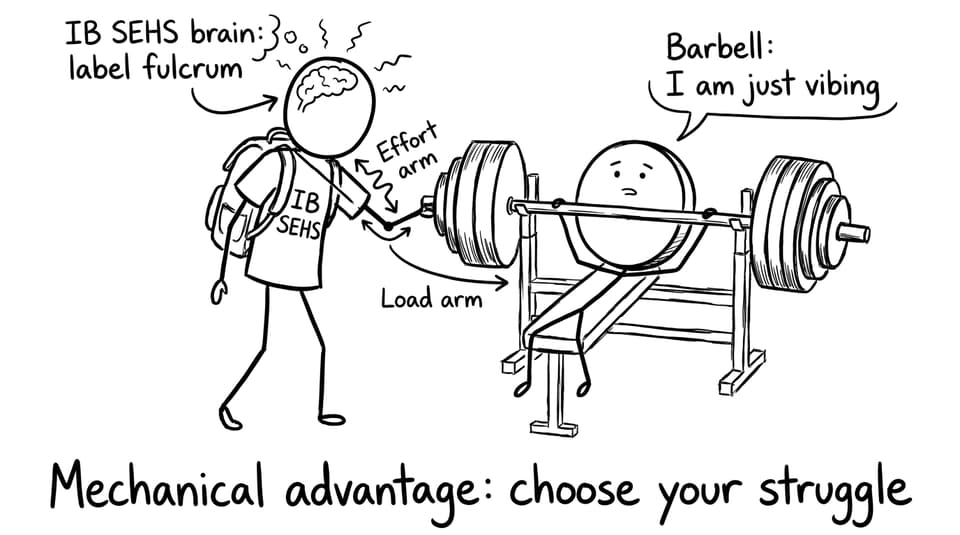
Define mechanical advantage as the relationship between effort arm and load arm in a lever
-
State the outcome: higher mechanical advantage favors force, lower mechanical advantage favors speed and ROM
-
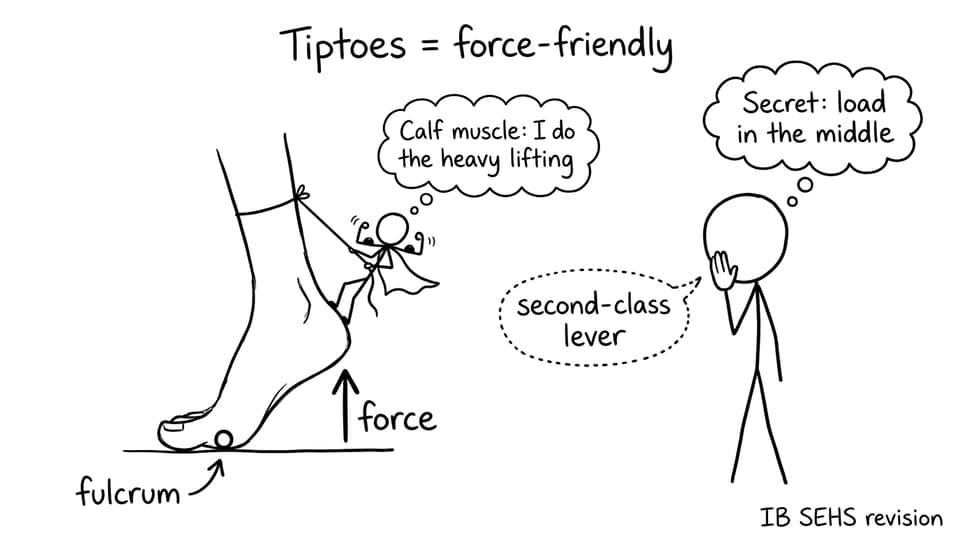
Identify lever parts: fulcrum (joint), effort (muscle), load (resistance)
-
Apply to a sport action and explain the performance effect
For the full biomechanics map, keep Conquering Biomechanics: A Visual Guide to SEHS Topic 4 open while you revise.
What is mechanical advantage (and why it matters in sport)?
In IB SEHS, mechanical advantage describes how effectively a lever system helps you overcome a load. Practically, it tells you whether the lever setup is “helping” you produce force or “helping” you move quickly.
-
Large mechanical advantage: less muscular effort for a given load, but typically less speed and smaller movement range