

The night before a deadline has a specific kind of silence. Your desk is loud with paper. Your brain is loud with tabs. And the word IB sits in the background like a tiny metronome: faster, faster, faster.
If you’ve ever wondered whether the IB curriculum is too rigorous, you’re not being dramatic. You’re noticing something real: the program doesn’t just test what you know. It tests how you manage pressure, ambiguity, and time. And that combination is why some students call the IB “good training” and others call it “a lot, all at once.”
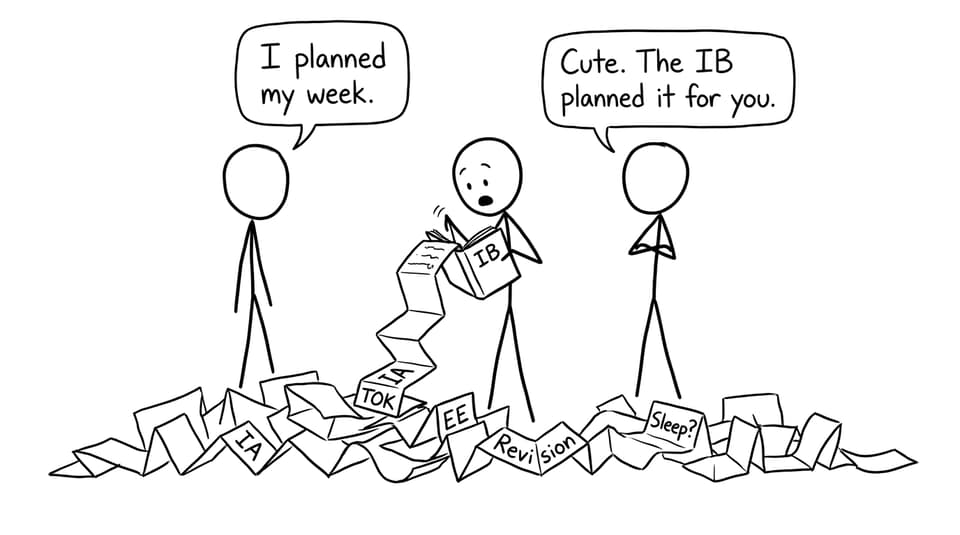
A quick checklist: why the IB feels so intense
Before we debate whether the IB is too rigorous, it helps to name what creates the feeling:
-
You’re assessed in multiple ways (exams, coursework, oral work, long-form writing).
-
You’re asked to think like an examiner, not just a student.
-
Your schedule stacks deadlines (Internal Assessments, TOK tasks, the Extended Essay, plus revision).
-
The grading can feel unfamiliar: you can work hard and still not get a “perfect” score.
When you see the structure clearly, the stress becomes less personal. It’s not “I’m failing.” It’s “This system is demanding, and I need a strategy.”
What the IB rigor is designed to do
The strongest argument for IB rigor is that it builds durable skills.
In many school systems, success is about remembering. In the IB, success is about using knowledge under constraints: limited time, strict command terms, and mark allocations that reward precision.
That’s why students often feel a gap between understanding and scoring. You might genuinely understand an Economics concept or a Biology process, but if you don’t frame it in the way IB mark schemes reward, you leak marks.
This is also why tools that connect content to performance matter. RevisionDojo’s Questionbank is built around that reality: practise questions, then learn how the IB awards marks, not just what the textbook says.
When IB rigor becomes too much
Rigor turns into “too rigorous” when the workload stops being challenging and starts being constant.
Three things usually push students into burnout:
Too many parallel deadlines
It’s not just the volume. It’s the overlap. The IB can ask you to draft a lab write-up while planning TOK reflections while also staying current in HL content. Even disciplined students can feel like they’re always “behind.”
Perfectionism meets IB marking
A common shock in IB is realizing that effort doesn’t equal full marks. Many questions are designed so that only specific phrasing, depth, and evaluation hits top bands.
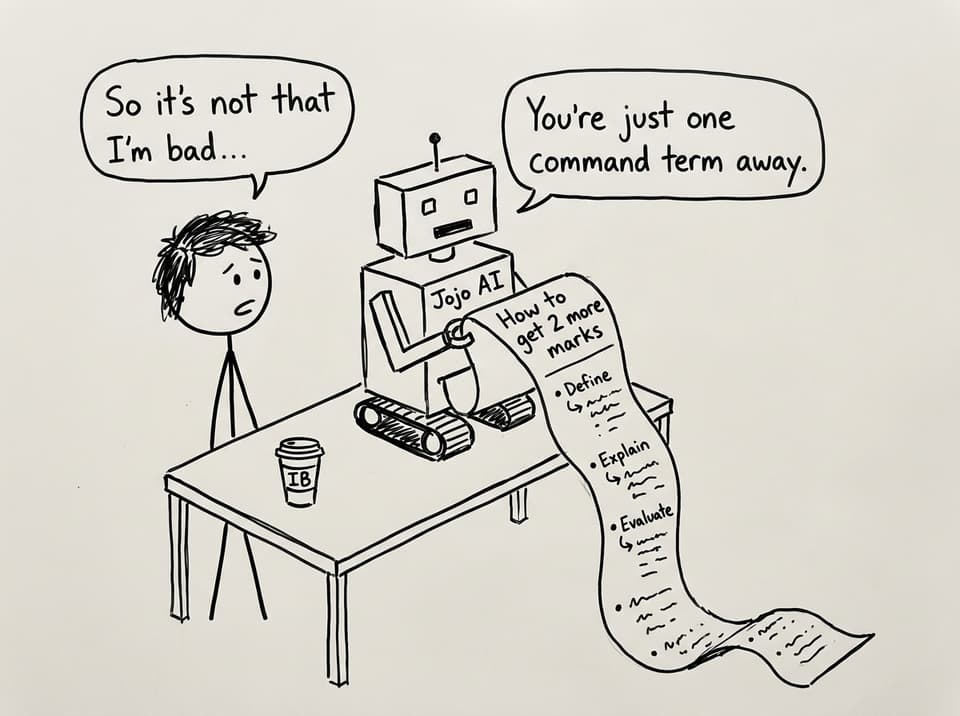
That’s where feedback becomes emotional relief. If you know why you lost marks, the problem becomes practical. RevisionDojo’s tools are built for that loop: practise, get feedback, fix patterns.
Revision that looks busy but doesn’t convert
Re-reading notes can feel safe. But IB exams reward retrieval, application, and timing.
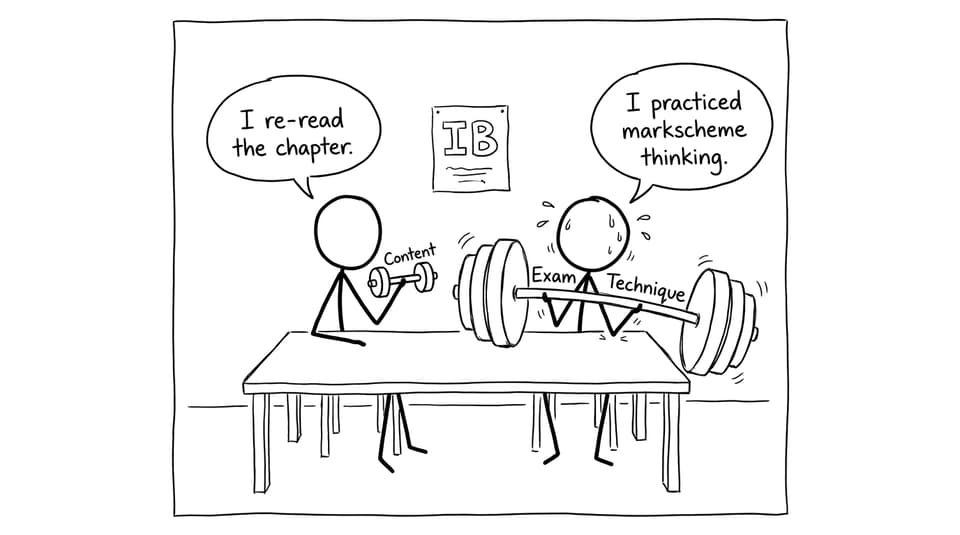
If your revision doesn’t include exam-style practice, the IB will feel harsher than it needs to.
A calmer way to handle IB rigor (without lowering standards)
You don’t beat IB rigor by working forever. You beat it by working in tighter loops.
Build a “practice-first” routine
Try this weekly structure:
-
Learn: skim targeted explanations in Digital IB Study Notes.
-
Recall: run daily IB Flashcards with Spaced Repetition (SRS) for short sessions.
-
Perform: do timed sets in the Questionbank.
-
Simulate: use IB Predicted Papers by IB Examiners (Free) to rehearse stamina and pacing.
That sequence matters. In the IB, understanding is step one. Scoring is step two.
Use the IB’s breadth to your advantage
The IB asks for range: different subjects, different assessment styles, different ways of writing.
But that breadth also creates cross-training. The clarity you learn in TOK can sharpen your evaluation in History. The structure you build for the Extended Essay can improve your longer responses in Psychology or English.
If TOK feels like “extra,” treat it as a thinking gym. RevisionDojo’s TOK resources like Connecting TOK Essay Ideas to Areas of Knowledge can make that gym feel less like wandering and more like training.
Don’t improvise coursework
Coursework is where IB stress quietly multiplies because it’s open-ended.
Two resources can reduce that uncertainty:
-
IB IA Guides for structure and rubrics
-
IB Coursework Examples: IA, EE and TOK Exemplars to see what “good” actually looks like
The point isn’t to copy. It’s to calibrate.
So, is the IB too rigorous? A more useful question
“Too rigorous” is usually a proxy for something else:
-
“I don’t know what to do next.”
-
“I’m working hard but not improving.”
-
“I’m scared this level of stress is the price of doing well.”
The IB is rigorous. That’s not a myth. But it becomes manageable when you turn the workload into a system: practice questions, feedback, spaced repetition, and timed simulations.
RevisionDojo exists for exactly that: one place to revise with Study Notes, Flashcards, an exam-focused Questionbank, AI Chat support, Grading tools, Predicted Papers, Mock Exams, a deep Coursework Library, and access to Tutors when you need a human voice.
If the IB is going to be intense, your tools should make it simpler.
Final thought: make IB rigorous, not relentless
The IB will probably never feel “easy.” But it can feel controlled. When you stop revising by hope and start revising by feedback, you trade panic for progress.
If you want a calmer way through the IB exams, start with RevisionDojo for IB students: RevisionDojo for IB. Build your plan around practice, use the Questionbank to learn the marking logic, and let your effort finally translate into marks.