

If you’ve ever caught yourself practising while your friends are “just revising,” you already understand the strange appeal of IB Music. It’s one of the few IB subjects where effort can sound like something beautiful. But it’s also one of the few where your to-do list can include: perform, compose, analyse, reflect, and somehow stay calm.
So is IB Music worth taking? For the right student, yes. Not because it’s “easier” or “more fun,” but because it rewards a rare mix: discipline plus creativity, structure plus personality.
Quick checklist: should you take IB Music?
Before committing to IB Music, run this honest check:
-
You enjoy practising or creating consistently (not perfectly, just consistently).
-
You’re willing to write about music, not only play it.
-
You can handle subjective feedback without taking it personally.
-
You have access to an instrument, tech setup, or reliable practice space.
-
You want a course that builds a portfolio, not just exam technique.
If you’re already exploring resources, start with the IB Music hub to see what the course demands across the year.
What you gain from IB Music (beyond the grade)
The best part of IB Music is that it teaches you to notice things. Noticing is a skill that transfers.
You learn how to hear structure in chaos: motifs returning, textures thinning, harmony shifting to change mood. That kind of attention shows up later in essays, presentations, and even how you study other subjects.
Academically, IB Music can strengthen university applications, especially for arts, humanities, media, education, and interdisciplinary courses. But the deeper value is personal: you build a record of work that proves you can start with an idea and shape it into something coherent.
If creating is your strength, this guide on how to compose music for IB Music coursework is a practical look at turning inspiration into marks.
The hard parts of IB Music (and why they surprise students)
Most students don’t struggle with “music.” They struggle with the invisible workload around the music.
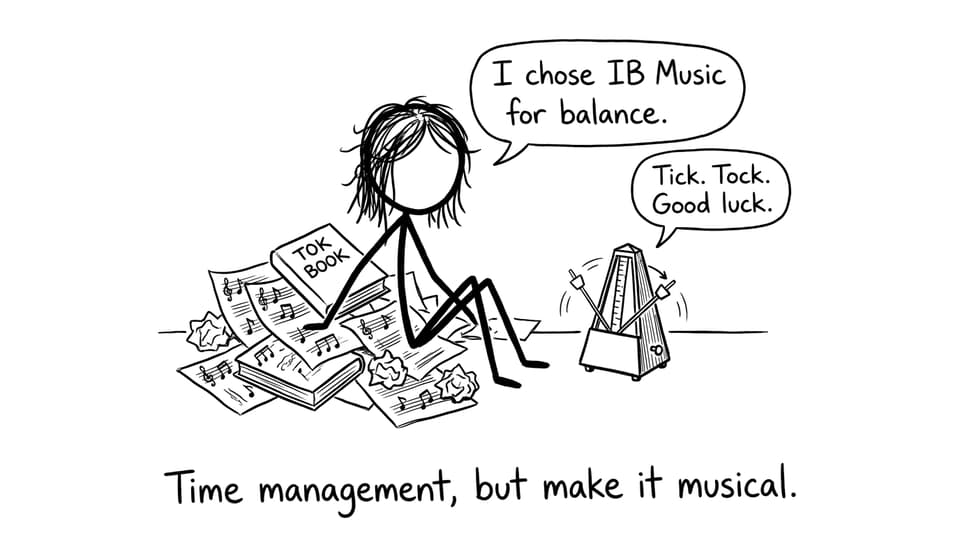
Time is the real assessment
IB Music is not one weekly deadline. It’s a steady rhythm of practice logs, drafts, recordings, listening notes, and reflections. If you leave any strand untouched for weeks, you don’t just lose time; you lose evidence.
The fix is boring but effective: build a weekly loop. One small task for performing, one for creating, one for exploring. Revision is less stressful when it’s routine.
For listening-focused prep, use How to revise effectively for IB Music listening exams to turn “I listened” into exam-ready analysis.
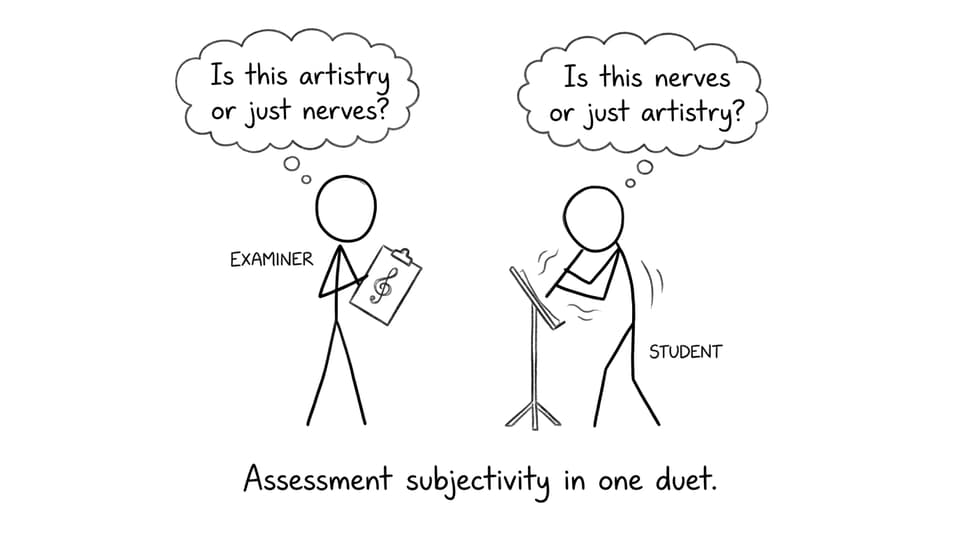
Assessment can feel subjective
Performance and creative work can feel personal, so feedback can sting. But examiners aren’t grading your identity; they’re grading evidence of control, intention, and reflection.
A helpful mindset shift: treat every comment as data. If three people misunderstand your intention, your reflection needs clarity or your musical choices need stronger signalling.
To see what “evidence” looks like, read What examiners look for in IB Music performances and What examiners look for in IB Music compositions.
Real-world value: where IB Music actually helps
The obvious path is the music industry: performance, composition, production, teaching, sound design. But IB Music also builds skills that employers and universities recognise in any field:
-
Presenting ideas clearly (reflections and commentary)
-
Managing long projects (portfolio building)
-
Cultural analysis (music in context)
-
Iteration (drafts, rehearsal, revision)
If you’re aiming for top marks, bookmark Is IB Music hard to get a 7? and pair it with IB Music HL grade boundaries 2025: complete breakdown for realistic target-setting.
How RevisionDojo makes IB Music feel manageable
When students burn out in IB Music, it’s rarely because they lack talent. It’s because they lack a system.
RevisionDojo helps you build one:
-
Study Notes to clarify musical features and exam expectations
-
Flashcards to lock in vocabulary (texture, timbre, harmonic devices, form)
-
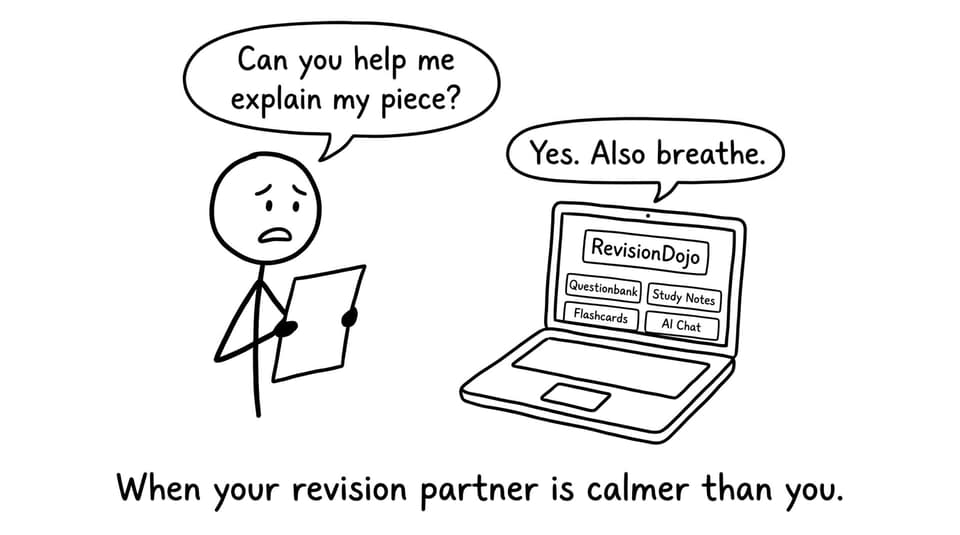
AI Chat to pressure-test your reflections and analysis wording
-
Grading tools for rubric-aligned feedback (try the IB Music: Presenting music Grader)
-
Mock Exams and Predicted Papers to train timing and reduce surprises
-
Coursework Library to learn what strong evidence looks like
-
Tutors when you need targeted, human feedback
-
A structured Questionbank workflow mindset, even when the subject is portfolio-heavy (see RevisionDojo app: the smarter way to prep for IB exams and You’re not lazy; your IB study method is broken)
Conclusion: so, is IB Music worth taking?
IB Music is worth taking if you want a subject that turns effort into something you can hear, show, and explain. It’s demanding, yes, but it’s also unusually meaningful when you approach it with a steady routine.
If you decide to take IB Music, don’t rely on motivation. Build structure. Use RevisionDojo’s Study Notes, Flashcards, AI Chat, Grading tools, Predicted Papers, Mock Exams, Coursework Library, Questionbank-style practice loops, and Tutors to keep your work consistent and your portfolio calm. Then let the creativity be the reward, not the rescue plan.