



Is IB Music hard to get a 7?
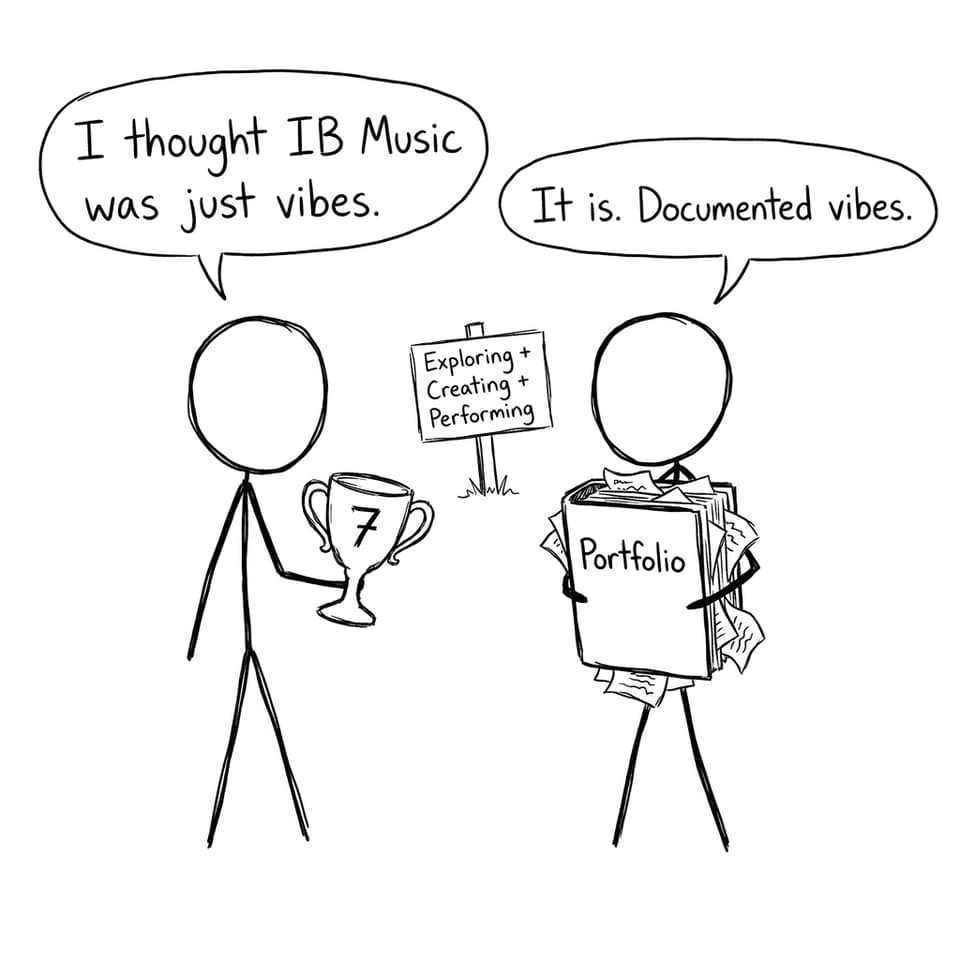
IB Music is one of those courses that looks friendly from a distance. You play, you listen, you create. Then you open the assessment criteria and realize it is not grading your talent, but your evidence. A 7 in IB Music is absolutely achievable, but it is rarely accidental. The students who earn top marks tend to do one quiet thing consistently: they treat every recording, annotation, and reflection as proof of intentional music-making.
If you are preparing for exams and coursework submissions, the real question is not “Am I good enough?” It is “Can I show the examiner what I did, why I did it, and how it connects to context?” That is where IB Music becomes demanding, and where you can win.
Quick checklist: what a 7 in IB Music usually requires
-
Strong balance across exploring, creating, and performing
-
Clear, specific musical vocabulary (features, effects, purpose)
-
Portfolio work that shows process, not only final outcomes
-
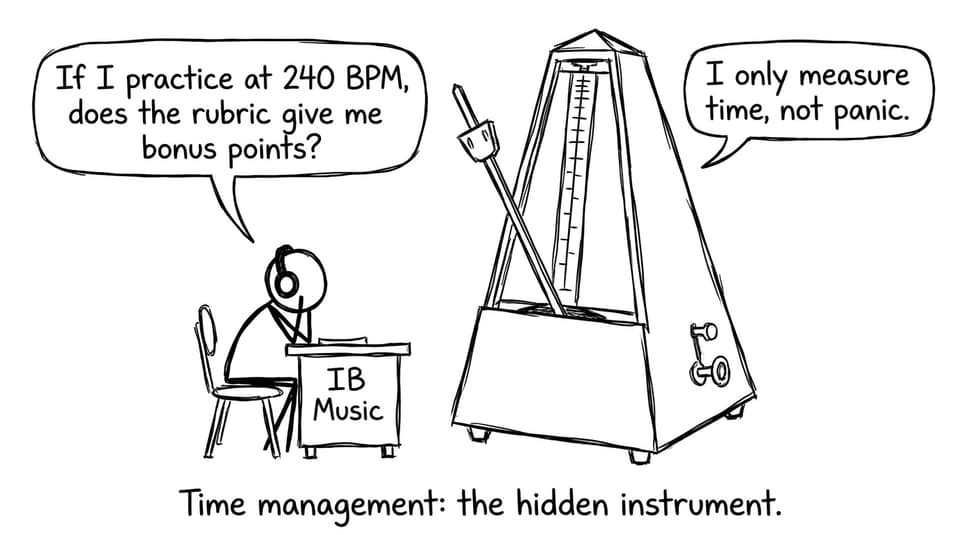
Consistent time management for practice and drafting
-
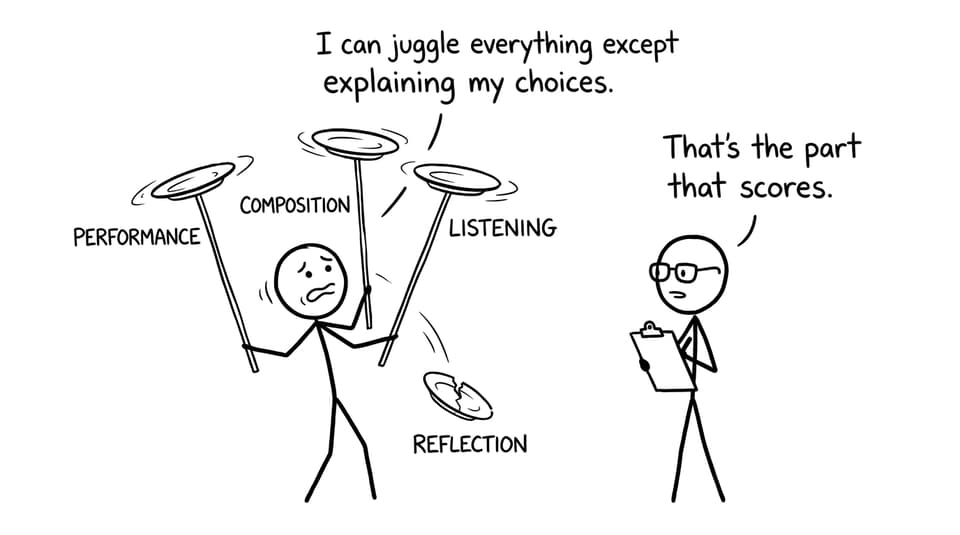
Reflections that explain decisions (not diary entries)
For a clean overview of how the course is structured, keep this open while you plan: IB Music Syllabus Breakdown: What Students Need to Know.
Why IB Music feels hard (and why that can help you)
The difficulty of IB Music comes from its mix of identities. On Monday you are a performer, on Tuesday an analyst, on Wednesday a composer, and on Thursday a writer trying to explain sound using words that are both technical and human.
This is also the advantage. Because IB Music is multi-component, you can earn a 7 by building strengths strategically. If performance is your comfort zone, you can protect marks by tightening your written reflections and comparative analysis. If you are more of a creator, you can make your portfolio examiner-friendly by showing development choices clearly.
To understand the assessment logic behind those marks, read: How IB Music Is Graded: Assessment Components Explained.
The three pressure points: exploring, creating, performing
Exploring Music: depth beats description
High-scoring IB Music exploration is not a list of features. It is an argument about how music works in context. Examiners reward specificity: not “the rhythm is fast,” but “a steady clave-like pattern locks the ensemble, creating propulsion that matches the dance function.”
A practical way to level up quickly is to build your exploration around themes that force comparison and musical detail. Start here: Best IB Music Exploration Themes for Depth and Variety.
Creating Music: craft, not magic
Composition in IB Music can feel personal, which makes feedback feel personal too. But at the top band, the criteria are surprisingly practical: clear ideas, development, control of musical elements, and reflection that explains your choices.
If you want a structured approach, use: How to Compose Music for IB Music Coursework and then check what examiners listen for in: What Examiners Look for in IB Music Compositions.
Performing Music: expression + evidence
A 7-level performance is not only accurate. It is stylistically informed and supported by reflection that shows your preparation decisions. Think: why this tempo, why this articulation, what you changed after rehearsals, and how the cultural context shaped your interpretation.
Use this as your benchmark: What Examiners Look for in IB Music Performances.
The simplest strategy: build a weekly “evidence loop”
Most students lose marks in IB Music the same way: not through lack of ability, but through missing documentation. So build a loop you repeat every week:
-
One listening annotation (features + effect + context)
-
One creating checkpoint (draft, variation, or experiment)
-
One performing checkpoint (record 60-90 seconds and note one fix)
-
One reflection paragraph explaining a decision
If you are not sure where your marks leak, skim: Common Pitfalls That Lower Marks in IB Music Coursework.
How RevisionDojo helps you push from a 6 to a 7 in IB Music
At the top end, improvement is rarely about doing more. It is about doing the right things with clarity.
RevisionDojo supports IB Music in the moments that matter:
-
Use Study Notes and Flashcards to lock in feature vocabulary, genre conventions, and context fast.
-
Use AI Chat to test your analysis phrasing and refine reflection clarity.
-
Use the Grading tools to rubric-check your portfolio strands before submission, including the IB Music: Presenting music Grader.
-
Use the Coursework Library to model what “specific evidence” looks like.
-
Use Tutors when you need targeted feedback loops.
-
Use Mock Exams and Predicted Papers as structured practice for exam-style thinking (without guessing what matters).
-
Use the Questionbank to keep revision active, not passive.
If you want more targeted IB Music reading in one place, browse: All IB Music Posts.
Conclusion: yes, IB Music is hard, but it is winnable
IB Music is hard to get a 7 in when you treat it like a talent contest. It becomes winnable when you treat it like a portfolio of choices: choices you can explain, justify, and refine. Build a weekly evidence loop, aim for balance across components, and write reflections that show your musical thinking.
When you are ready to turn effort into marks, RevisionDojo helps you organize that thinking with Study Notes, Flashcards, AI Chat, Grading tools, Predicted Papers, Mock Exams, a Coursework Library, a Questionbank, and Tutors, all built to help IB Music students earn the score they are capable of.