
A qualification can feel solid at home and strangely fragile at a border. For parents, the concern is understandable: after two demanding years, will a university in another country know what the IB Diploma means?
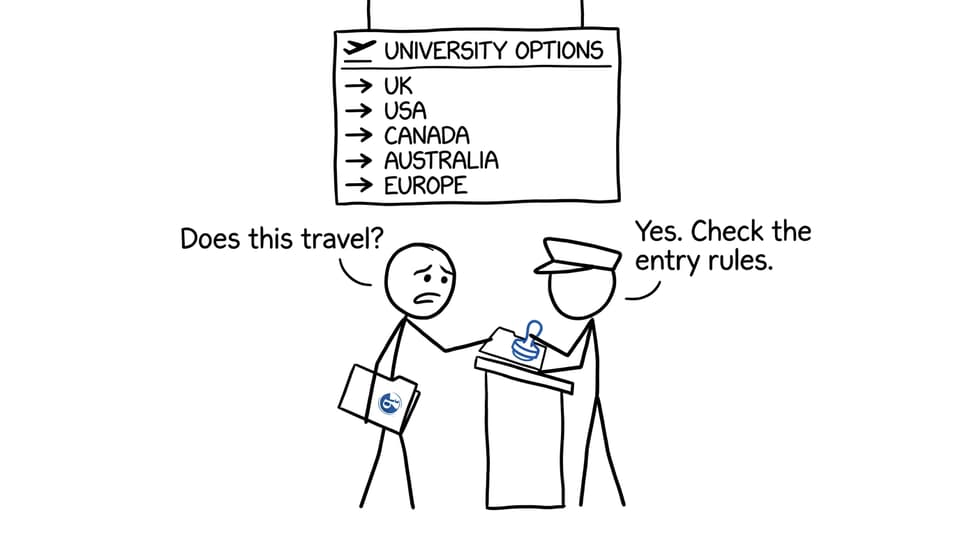
The clear answer is yes, the IB is widely recognized internationally. According to the International Baccalaureate, more than 4,500 universities across over 110 countries and territories receive IB applications and transcripts each year. Universities in major destinations such as the United Kingdom, United States, Canada, Australia, and much of Europe routinely consider IB applicants.
But recognition is not the same as automatic admission. Every university, degree program, and national education system may set its own score, subject, language, and documentation requirements. The useful question is therefore not only "is IB recognized internationally?" but also "how will this particular university evaluate my child's IB subjects and results?"
The short answer for IB parents
If your child hopes to study outside your country, work through this checklist:
- Confirm that the destination country recognizes the full IB Diploma as a university-entry qualification.
- Check the admissions page for the specific university and degree, not merely the university homepage.
- Compare the required total score with your child's predicted or final result.
- Look for required Higher Level subjects and minimum subject grades.
- Check language, testing, portfolio, interview, or entrance-examination rules.
- Confirm how predicted results and the official IB transcript must be submitted.
- Distinguish admission from university credit or advanced standing.
That final distinction matters more than it first appears. A university might recognize the Diploma, consider the student for admission, and still award no course credit for IB results. Another might grant credit for particular Higher Level subjects. Both institutions recognize the IB, but they use it differently.
What is the IB Diploma?
The International Baccalaureate Diploma Programme is a two-year pre-university program generally taken by students aged 16 to 19. Students complete six subjects, normally three at Higher Level and three at Standard Level, alongside Theory of Knowledge, the Extended Essay, and Creativity, Activity, Service.
Each subject receives a grade from 1 to 7. The six subjects contribute up to 42 points, while Theory of Knowledge and the Extended Essay can add up to three core points, producing a maximum Diploma score of 45. CAS is required but does not add numerical points. Parents who want a fuller foundation can read this complete explanation of the IBDP and the IB grading system explained.
This consistent structure is one reason the qualification travels well. An admissions office abroad does not have to guess what "IB Mathematics: Analysis and Approaches HL" means based solely on a local school curriculum. It can evaluate a recognizable program, level, subject, and grading scale.
International recognition does not guarantee admission
The word recognized can sound more generous than it is. In university admissions, it usually means that an institution accepts the qualification for consideration. It does not mean that every Diploma holder qualifies for every course.
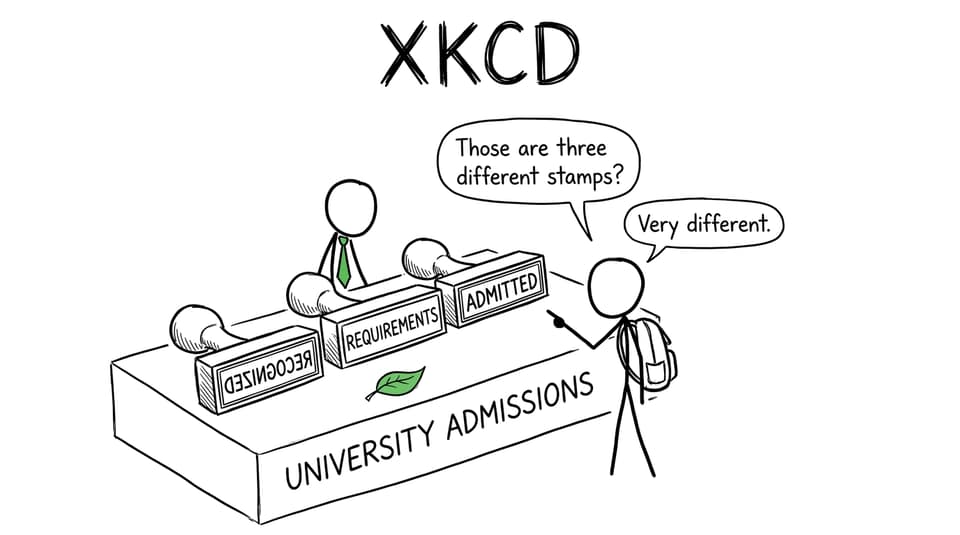
Think of the process as three separate decisions:
| Decision | What it means |
|---|---|
| Recognition | The institution understands and accepts the IB credential for consideration. |
| Eligibility | The applicant satisfies the course's score, subject, language, and other minimum requirements. |
| Admission | The university offers a place after applying its selection process. |
A student can hold a recognized qualification but remain ineligible because the degree requires Chemistry HL, a particular mathematics course, or a higher overall score. An eligible student can still be unsuccessful when places are limited and selection is competitive.
This is why broad lists of universities that accept the IB are only a starting point. The IB itself advises applicants to verify current policies directly because recognition statements and institutional requirements can change. The IB university recognition database is useful for initial research, but the current course page should be treated as the practical authority.
How recognition differs between university systems
The Diploma remains the same across borders. The admissions systems around it do not.
United Kingdom
UK universities commonly publish offers as an overall IB score plus grades in Higher Level subjects. A course might require a certain total and a specified HL pattern, with additional prerequisites for subjects such as engineering, medicine, or economics. Applications made before final examinations commonly use predicted grades, and offers may be conditional on the final result.
Parents should read the individual course page carefully rather than relying on a general university range. The role of predictions is explained in this guide to IB predicted grades in early university applications.
United States
US institutions generally evaluate the IB within a broader application. The school transcript, course rigor, essays, recommendations, activities, testing policies, and personal context may all matter. There is no single national IB score required for admission and no universal IB-to-GPA conversion.
Recognition and credit are also separate. A university may value the full Diploma in admission but grant credit only for qualifying Higher Level results. Policies vary by institution and sometimes by academic department. Families considering this destination can review how to report the IB in US college applications without inventing their own grade conversion.
Canada and Australia
Canadian requirements are usually set by individual universities and faculties. Applicants may encounter overall score expectations, required subjects, language conditions, and province-specific procedures.
In Australia, participating institutions commonly treat the IB Diploma as comparable to a Year 12 qualification, often converting the result into a local selection rank. The Universities Admissions Centre explicitly notes that equivalence does not guarantee entry because courses can be competitive and may impose additional selection requirements.
Continental Europe
Recognition can be more rule-based in parts of continental Europe. National authorities may specify which IB subjects must have been studied, at what level, and under what schooling conditions.
Germany is a useful example. The German Academic Exchange Service explains that IB recognition depends on detailed conditions involving the full Diploma, subject combination, levels, grades, and duration of schooling. A student may have a valid IB Diploma yet lack the exact combination needed for unrestricted direct entry. Families considering Germany should check the current official DAAD guidance for IB Diploma recognition well before applications begin.
The lesson is not that recognition is uncertain. It is that some countries recognize the IB through precise national rules rather than a flexible institutional judgment.
Why Higher Level choices matter abroad
Parents often focus first on the total score. Universities frequently look one layer deeper.
A prospective engineering student may need a particular mathematics course at Higher Level and possibly Physics HL. A medicine applicant may need specified sciences. A humanities program may expect evidence of strong essay-based study. The exact combination varies, but a high total cannot always compensate for a missing prerequisite.
Subject planning should therefore begin with possible degree destinations, even if those plans are provisional. The comparison of how universities treat HL and SL subjects explains why the distinction affects admissions even though both levels contribute equally to the 45-point total.
For a student already preparing for examinations, subject choices may be fixed. The priority then becomes identifying courses where the existing combination meets the published requirements rather than assuming every related degree will interpret it identically.
How scores and predicted grades are evaluated
There is no worldwide "good enough" IB score. Requirements reflect the university, course, applicant pool, and admissions system.
Some institutions publish a clear minimum overall total. Others combine the total with required HL grades. More holistic systems may assess the Diploma alongside the rest of the application. The global guide to minimum IB university scores can help families understand the range of approaches, but current official course requirements should always decide the final application list.
When students apply before receiving final results, schools may submit predicted grades. These are forecasts rather than achieved scores. Depending on the destination, they can support a conditional offer or form one part of a wider review. Students should report predictions only where requested and should never present them as final results.
Documents an international applicant may need
Recognition solves only the first part of the administrative puzzle. Universities may also request:
- A school transcript showing grades across several years
- Predicted IB grades, if available and requested
- Final results sent through the official IB transcript service
- Proof of English or another language
- A personal statement, essays, or references
- An admissions test, interview, audition, or portfolio
- Certified translations or credential verification
- Visa and financial documents after admission
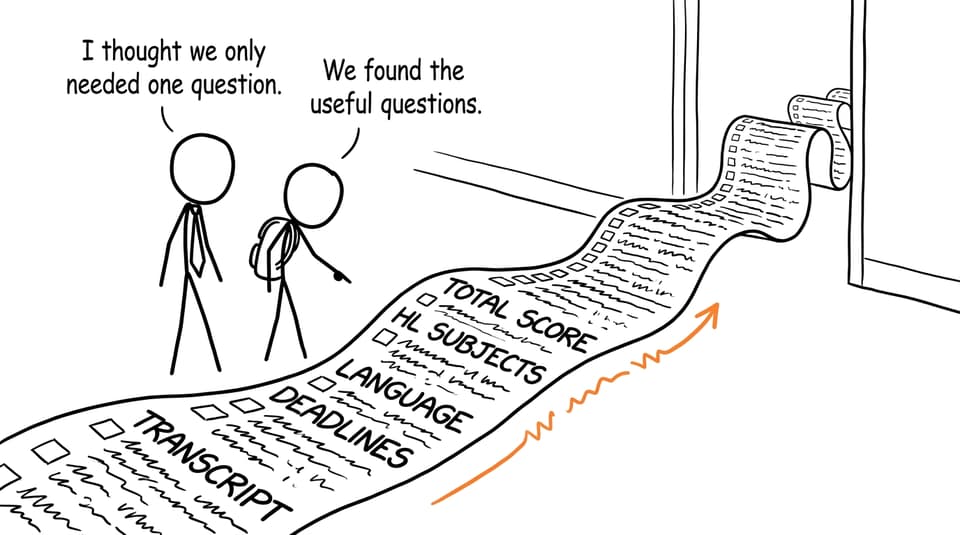
The official IB transcript is especially important. The IB can send results directly to higher education institutions, and procedures differ depending on whether the request is made before or after results are issued. Your child's school coordinator can explain the correct process and deadlines.
A reliable way to check any university
Use the same sequence for every course under consideration:
- Open the official page for the exact degree and intake year.
- Find the international or country-specific entry requirements.
- Locate the section for the International Baccalaureate Diploma.
- Record the overall score, required HL subjects, and minimum grades.
- Check language and additional selection requirements.
- Confirm whether the offer uses predicted grades or final results.
- Ask admissions directly if the wording is missing or ambiguous.
- Save the page and note when it was checked.
Do not assume that a missing entry in a recognition database means rejection. The IB notes that universities without published statements may still accept IB credentials. In that situation, a short written question to the admissions office is more reliable than speculation.
The reassuring conclusion
The IB Diploma is not confined to the country where a student studies it. It is a widely understood international qualification used in applications across major higher education destinations. That portability is real.
The limits are equally important: recognition is not automatic eligibility, and eligibility is not guaranteed admission. Total points, Higher Level subjects, language evidence, documents, and course-specific rules still shape the outcome. For parents, the most useful next step is simple: create a shortlist of universities, open each official course page, and record its current IB requirements in one shared document. Once the broad worry becomes a list of specific conditions, it becomes far easier to manage.