
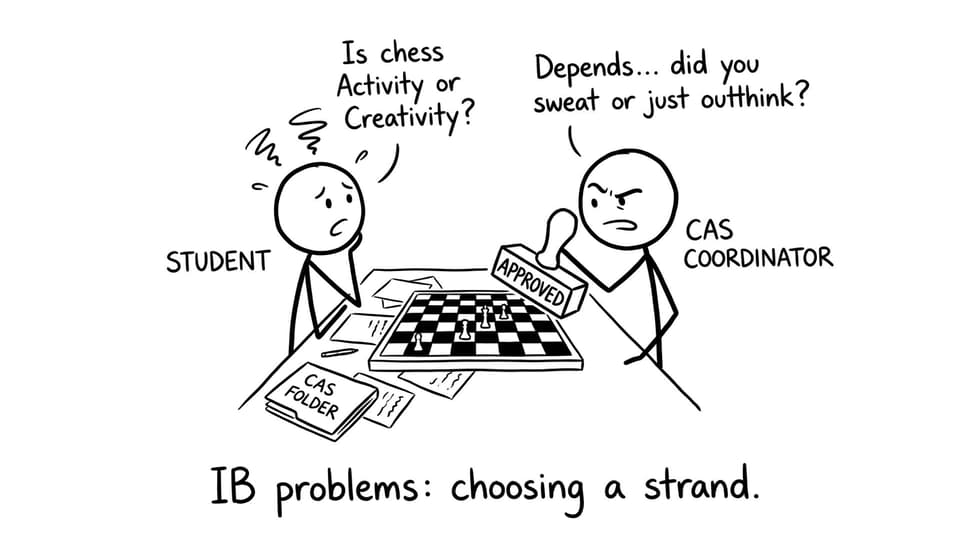
The chessboard looks harmless until you’re sitting there in silence, calculating ten moves ahead while your brain quietly overheats. It feels like work. It feels like art. And if you’re an IB student trying to log CAS cleanly, it also feels like a classification problem: is chess an Activity, or is it Creativity?
In IB CAS, the answer is rarely “one word.” It’s usually “tell me what you did, how you grew, and what evidence you have.” Let’s make that practical.
Quick IB checklist: make chess CAS-ready
Before you pitch chess to your coordinator, run this IB CAS checklist:
-
Can you link chess to one CAS strand clearly (Activity or Creativity)?
-
Can you show ongoing engagement (not one intense weekend)?
-
Can you produce evidence (photos, fixtures, agendas, teaching materials, screenshots of pairings, feedback)?
-
Can you write reflections that connect to learning outcomes?
-
If it’s solo-only (especially vs AI), can you add a social/collaborative element?
If you need the official framing first, read What is CAS (Creativity, Activity, Service)? and then anchor your plan with Understanding the minimum requirements for CAS in the IBDP.
When chess counts as Activity in IB CAS
In IB CAS, “Activity” often suggests physical exertion, but many schools accept mentally demanding activities when they build stamina, focus, perseverance, and routine. Chess fits when the emphasis is on training and performance discipline.
What Activity chess can look like
-
Weekly chess club sessions with structured practice and timed games
-
Preparing for and competing in tournaments (even local school leagues)
-
Setting a training plan (openings, tactics puzzles, endgames) and tracking progress
How to write it up as Activity (without stretching the truth)
Your reflection should sound like training, not like a hobby description. Talk about mental endurance, pressure, time management, tilt, recovery between rounds, and commitment over weeks.
This connects naturally to sustained engagement expectations discussed in How does CAS get verified in the IB system?.
When chess counts as Creativity in IB CAS
Chess becomes “Creativity” in IB CAS when the focus is on invention, design, expression, or creating something new for other people. Not “I played creatively” (too vague), but “I built something creative around chess.”
What Creativity chess can look like
-
Designing a beginner chess curriculum (slides, worksheets, mini challenges)
-
Creating annotated games or a “mistake gallery” for your club
-
Running a themed tournament (blitz night, gambit week, puzzle ladder) with creative branding
-
Making content: posters, newsletters, short explainer videos, or strategy guides
A helpful bridge is to treat chess like a creative project container, similar to ideas in CAS project/experience ideas that fit exam season.
The most accurate answer: chess can be both in IB CAS
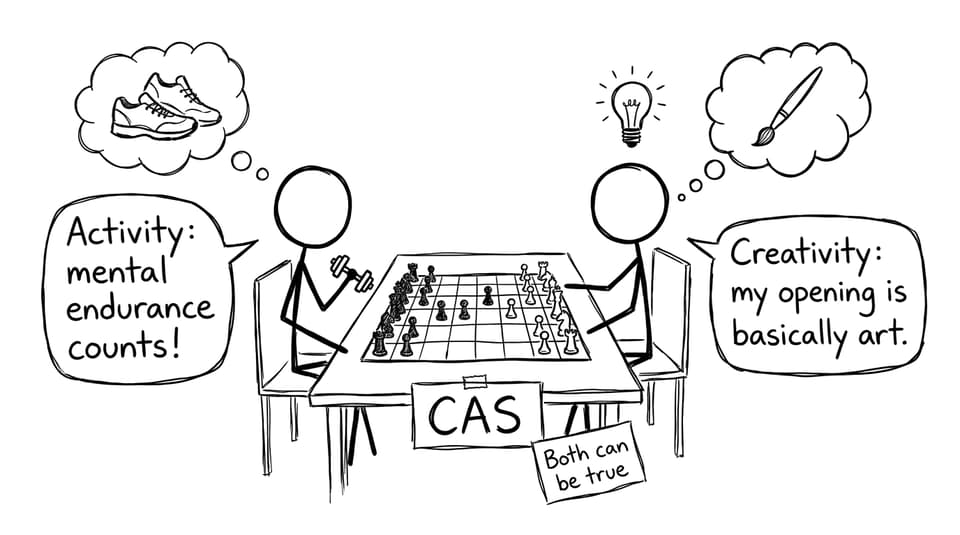
A calm way to think about IB CAS is: the strand is not the game, it’s the story of your engagement.
-
If your chess experience is mainly routine, training, performance, stamina, Activity is usually clean.
-
If your chess experience is mainly design, creation, planning, producing resources, Creativity is usually cleaner.
-
If you do both (common), you can split evidence and reflections accordingly.
Also make sure you’re not confusing a CAS “experience” with a longer “project.” This matters for how much planning and collaboration you need. Use What counts as a CAS project vs. a CAS experience? to label it correctly.
Documenting chess properly (so it survives verification)
In IB CAS, good documentation is boring in the best way: it makes approval easy.
-
Keep a simple log: dates, duration, what you did, what changed
-
Collect evidence: club attendance, tournament pairings, photos, lesson plans, student feedback
-
Write reflections quickly, while details are fresh
If you’re missing a formal supervisor, don’t panic. Follow What to do if you don’t have a CAS supervisor.
And remember: reflections are not optional in the IB. If you want a reality check, read What happens if you don’t submit a CAS reflection?.
A final note for IB exam season
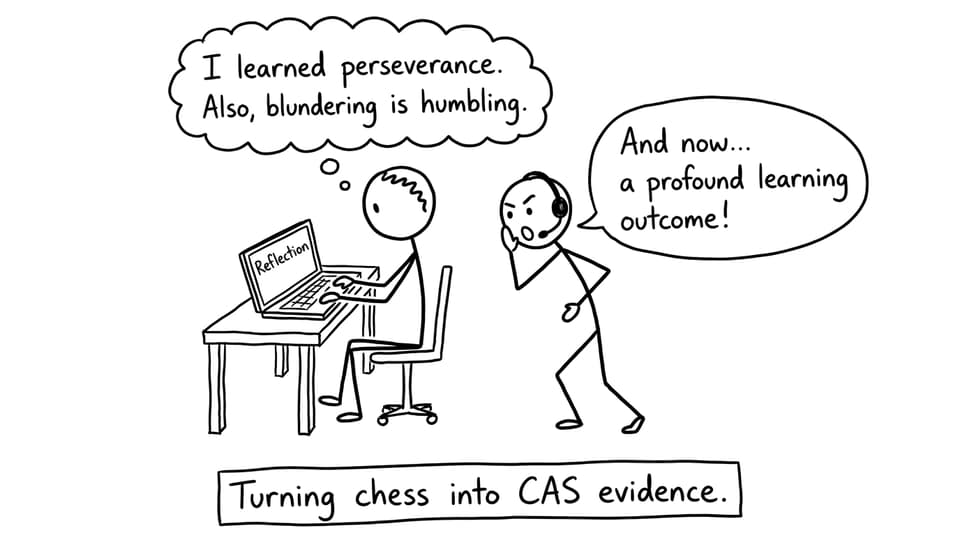
Here’s the quiet truth: IB students don’t fail CAS because their idea was wrong. They fail CAS because the idea wasn’t documented, sustained, or reflected on.
If chess helps you stay steady during exam prep, build it into a simple system: one weekly session you can keep, one small piece of evidence each time, and one short reflection the same day. For the rest of your IB workload, keep revision equally systematic with RevisionDojo’s Questionbank, Study Notes, Flashcards, AI Chat, Grading tools, Predicted Papers, Mock Exams, Coursework Library, and Tutors.
When your CAS portfolio and exam prep both run on routines, chess stops being a classification stress and becomes what it should be: a focused hour where you learn how to think under pressure.