
When your IB results load, your brain tries to turn a number into a verdict.
It happens fast. One refresh becomes ten. The room gets smaller. Your future starts sounding like a single sentence you didn't agree to.
But disappointment on IB results day isn't proof you failed as a person. It's proof you cared, worked, hoped, and attached meaning to an outcome you couldn't fully control. The painful part is not the number itself. It's the story your mind writes around it.
This article is that story, rewritten with a little more accuracy and a lot more kindness. It's a guide for IB students preparing for exams who want something practical: what to do in the first hour, the first week, and the next season of your life.
A quick IB results day checklist (save this)
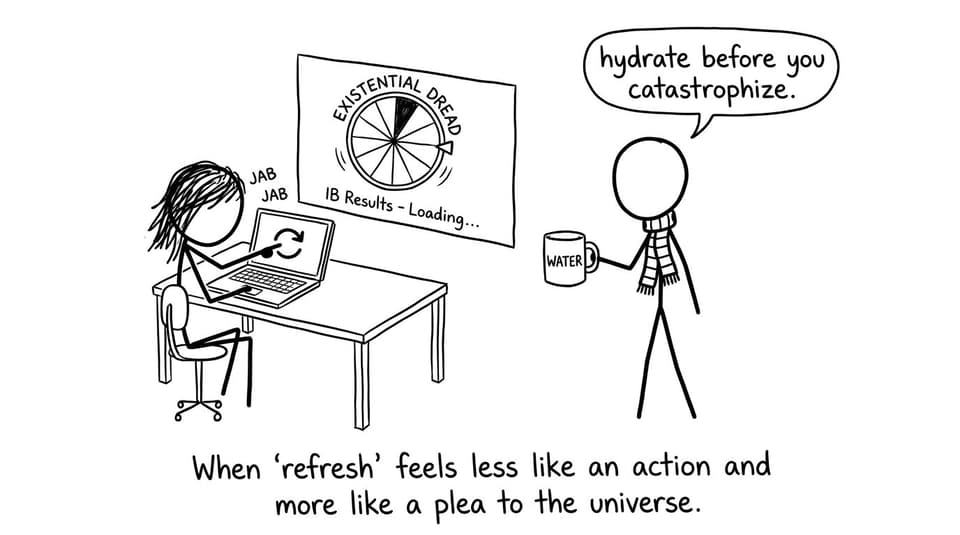
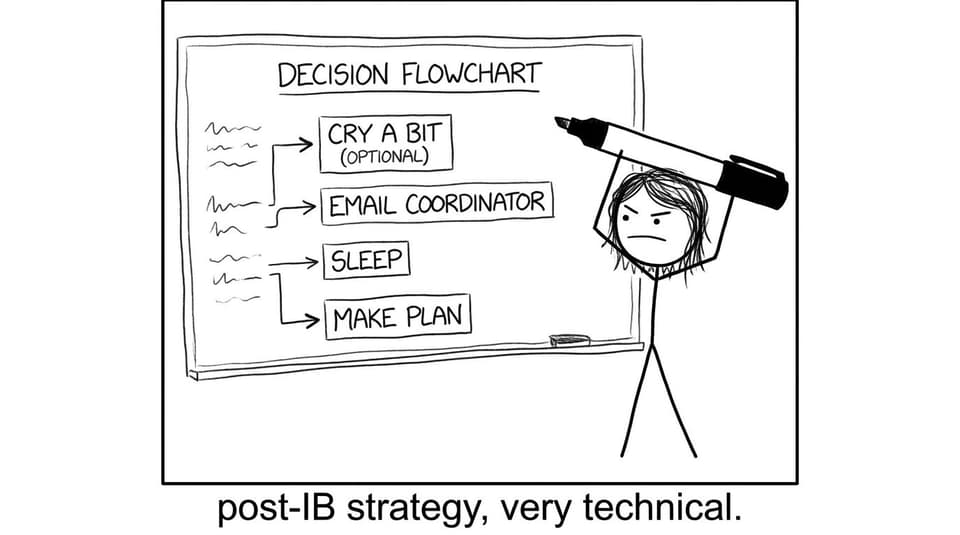
If you're disappointed, your job is not to "feel okay." Your job is to stabilize, get facts, and create options.
- Pause for 10 minutes before messaging anyone
- Write down your IB total points, subject grades, and core points (TOK/EE)
- Confirm diploma status and any minimum requirements you needed
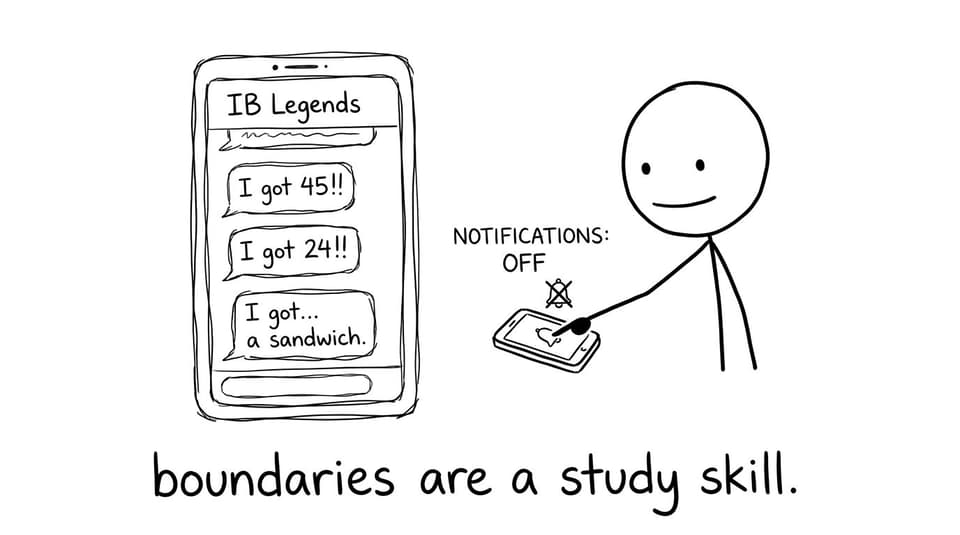
- Mute group chats for 24 hours if they spike comparison
- Contact your IB coordinator to ask about component marks and next steps
- Decide whether a remark (EUR) is rational based on boundary proximity
- If university offers are involved, write a short, calm email today
- Build a two-week plan you can actually repeat
If you want a practical timeline for logistics, read What Should I Do on the IB Results Day? A Step-by-Step Guide and the timing breakdown in Do Students See IB Results Before Schools?.
The first hour: don't make life decisions with fresh pain
Disappointment is a loud emotion. It speaks in absolutes: "I ruined everything." "Everyone else did better." "I'm behind forever."
But the first hour after IB results is not a thinking hour. It's a nervous system hour.
Here are three rules that sound simple and work because they're simple:
- Delay broadcasting. Don't post, don't explain, don't perform your reaction for other people.
- Name the feeling accurately. "I'm disappointed and scared" is truer than "I'm a failure."
- Do one physical reset. Drink water, eat something boring, take a shower, go for a walk. Your brain can't reason well in a threat state.
This is also the moment to get your numbers correct. Shock makes people misread screens. Write down your IB total, each subject grade, and the core points. Treat it like evidence, not identity.
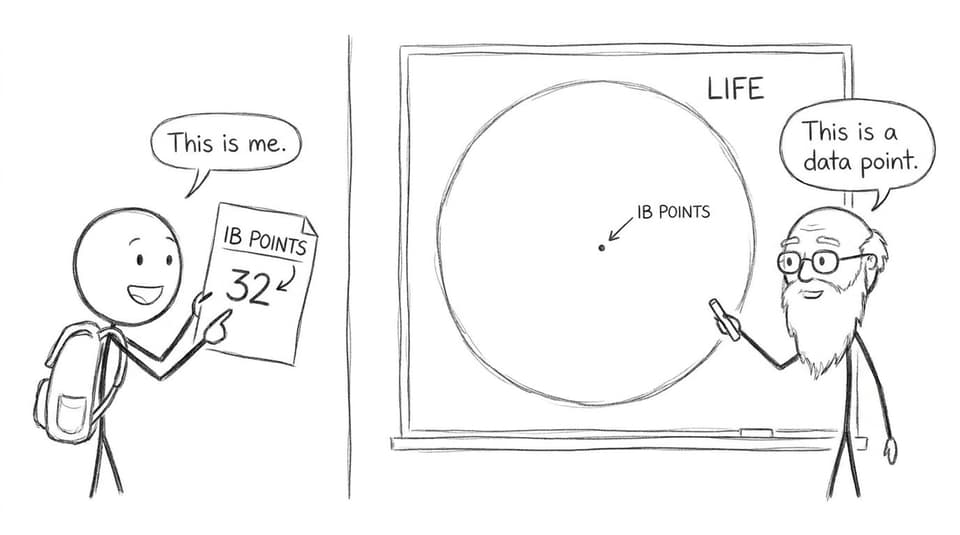
Why IB disappointment feels personal (and why it isn't)
The IB is intense because it bundles many types of effort into one final output. You don't just revise. You manage deadlines, coursework, uncertainty, and the social pressure of doing it all at once.
So when results disappoint, it can feel like the programme is judging your character.
But IB marks are mostly measuring two things:
- Performance under constraints (time, wording, command terms, exam behavior)
- Consistency of retrieval (what you can actually produce, not what you "understand")
That distinction matters because it gives you leverage. You can improve performance. You can train retrieval. And you can do it without rebuilding your entire personality.
If you want a calmer lens on what the IB teaches beyond content, keep Lessons the IB Teaches That School Never Mentions open in a new tab for later.
The next 24 hours: make the situation legible
Disappointment becomes panic when the situation is fuzzy. The cure is clarity.
What to ask your IB coordinator
Send one short email. Ask for facts:
- Can you share my component marks?
- How close am I to the next grade boundary in each subject?
- What are the deadlines and fees for an Enquiry Upon Results (EUR)?
- If I retake, what is the registration process and timeline?
If you need language for the "everything went wrong" scenario, use the structure in IB Results Day: What If Everything Goes Wrong?.
How to think about a remark (EUR)
A remark is not therapy. It's a probability question.
If you're far from the boundary, an EUR may be expensive hope. If you're close, it may be a rational step. Component marks and boundary proximity turn this from emotion into math.
The next week: rebuild confidence with evidence (not motivation)
After IB results day, most students try to fix feelings with big promises:
"I'll work harder." "I'll become disciplined." "I'll never procrastinate again."
The problem is that disappointment doesn't need a vow. It needs proof.
Proof is small, repeatable, and measurable. That's why the fastest way to regain confidence is to return to an exam-shaped loop:
- learn one small concept
- test it immediately
- get feedback
- log the mistake
- retest within 48 hours
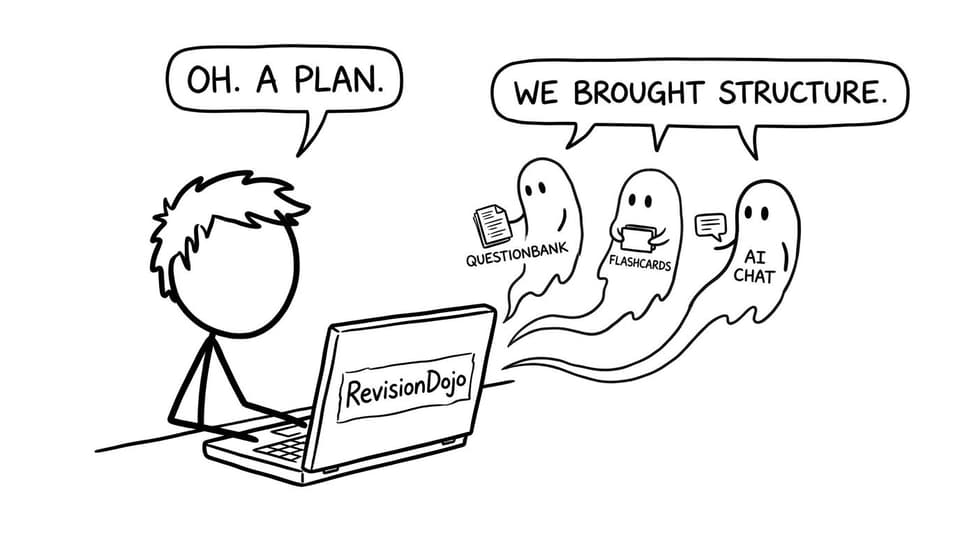
This is exactly what RevisionDojo is built to make frictionless: Study Notes for fast clarity, Flashcards for daily recall, the Questionbank for targeted exam-style practice, AI Chat for quick explanations, Grading tools for rubric-aligned feedback, and Mock Exams plus Predicted Papers for timing and realism.
If you want the full system, start with RevisionDojo App: The Smarter Way to Prep for IB Exams, then anchor practice in Questionbank and daily memory in Flashcards.
A calm two-week plan after disappointing IB results
You don't need to solve your entire future. You need two weeks that create options.
Week one: stabilize and triage
- Day 1: sleep, eat, write the numbers down, talk to one trusted person
- Day 2: coordinator email, component marks request, boundary proximity check
- Day 3: university communication (if relevant)
- Days 4-7: one daily proof session:
- 25-40 minutes in the Questionbank on one weak topic
- 10 minutes logging mistakes
- 7-12 minutes of Flashcards
If you feel behind, use the structure from How to Study for IB Exams When You Feel Behind.
Week two: turn weak points into a repeatable loop
Pick two subjects that most improve your total. For those two, run:
- 2 topic blocks using Study Notes + questions
- 2 timed blocks using Mock Exams or Predicted Papers
- 1 review day focused on rewriting answers and correcting patterns
To make the plan realistic, steal the weekly rhythm from How to Study for IB Exams: Step-by-Step Guide and the pressure-training ideas from How 45-Point IB Students Prepare.
How to talk to other people about IB results (without shrinking)
The hardest part of IB disappointment is often the social part.
Everyone asks the same question. "How did it go?" It sounds like small talk. It lands like an audit.
Use a script that protects your dignity:
- "Not what I hoped for. I'm taking today to process, then I'll look at options."
- "I'm disappointed, but I have a plan for next steps."
- "I'd rather not share the number right now, but I'm okay."
If someone pushes, remember: you are allowed to set boundaries on results day. Boundaries are not avoidance. They're emotional pacing.
Closing: let IB be a chapter, not a verdict
Your IB results matter. They can affect offers, timelines, and plans. It's okay to care.
But disappointment becomes dangerous when you assume it's the final sentence of your story. It isn't. It's one page. And if you treat it like information, you can turn it into options: a remark decision that makes sense, a retake plan that's realistic, or a pathway that still leads where you want to go.
If you want the most stable next step, make RevisionDojo your home base: use the Questionbank to rebuild confidence through targeted practice, Study Notes to patch gaps quickly, Flashcards to keep recall automatic, AI Chat and Grading tools to get feedback fast, and Mock Exams plus Predicted Papers to make exam conditions feel familiar again. The IB rewards students who can repeat a calm system. Your job now is to build that system, and keep going.