
The hardest part of supporting an IB student is often not understanding the work. It is understanding when everything happens.
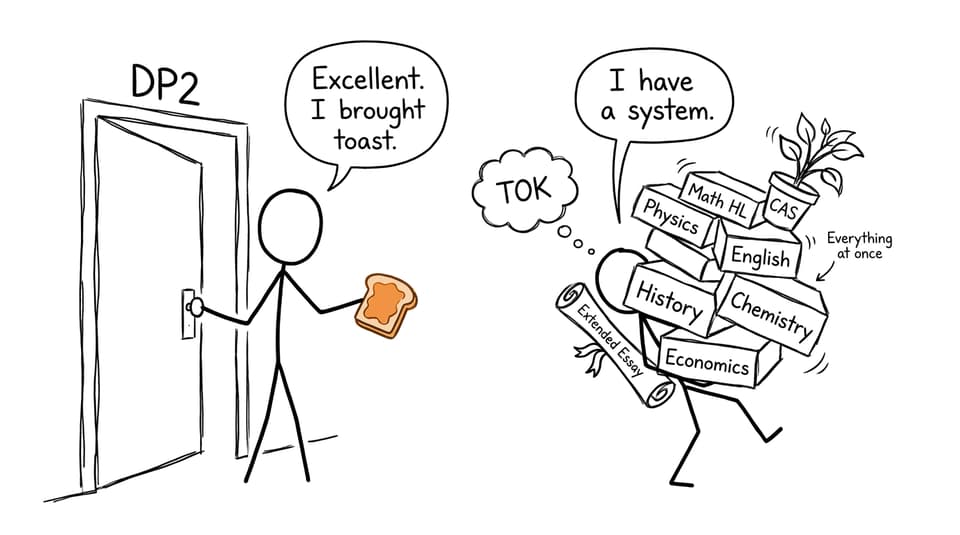
Subject choices influence university options. Coursework begins earlier than many families expect. Predicted grades may matter before final examinations. Applications, mock exams, internal deadlines, and revision can all converge during DP2.
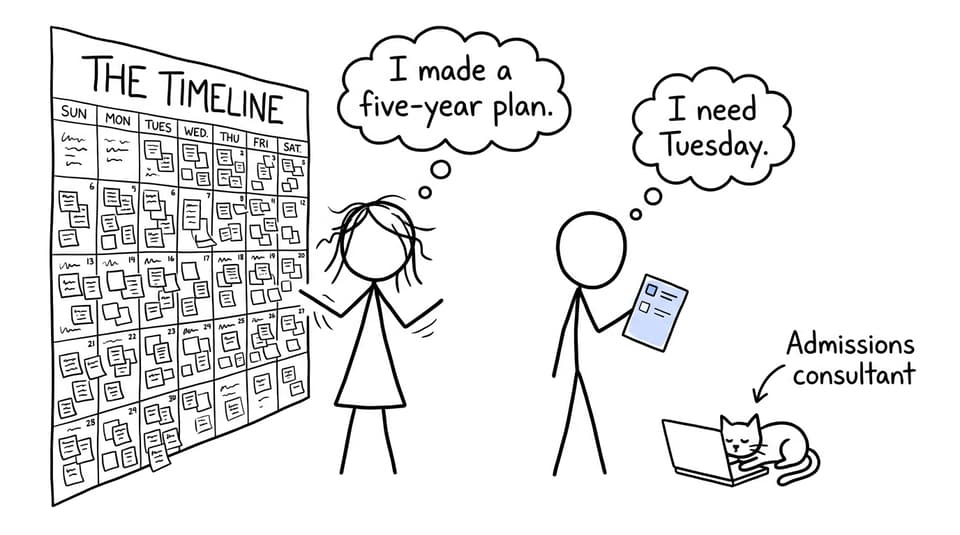
The reassuring answer is that families do not need to manage the entire Diploma Programme at once. This IB parent timeline overview breaks the journey into manageable stages: choosing the programme, preparing before DP1, building foundations during IB Year 1, navigating applications in IB Year 2, and moving through final results.
A parent's most useful role is not to become the student's project manager. It is to help make the next important decision visible.
The IB parent timeline overview at a glance
| Stage | Student priority | Helpful parent role |
|---|---|---|
| Choosing IB | Confirm programme fit and subject availability | Ask practical questions about workload, support, and university pathways |
| Pre-DP | Build sustainable study habits | Protect routines without creating an intensive revision regime |
| DP1 | Learn content, begin coursework, and explore universities | Review progress periodically and encourage early help-seeking |
| DP1 summer | Research courses and strengthen weak areas | Help organise visits, requirements, and a realistic summer plan |
| DP2 autumn | Complete applications while maintaining grades | Track administrative deadlines without taking over the application |
| DP2 mocks | Diagnose knowledge, technique, and timing gaps | Keep results in perspective and support a focused response |
| Final revision | Practise under timed conditions and protect energy | Reduce unnecessary demands and encourage consistent routines |
| Results and transition | Confirm offers and arrange transcripts | Help prepare alternatives before results arrive |
Choosing the IB Diploma Programme
The Diploma Programme is a two-year course for students generally aged 16 to 19. Its curriculum combines six subjects with three core components: Theory of Knowledge, the Extended Essay, and Creativity, Activity, Service. Students normally study three subjects at Higher Level and three at Standard Level, although some schools permit four Higher Level subjects.
That description is simple. The experience is interconnected. An aspiring engineering student may need particular combinations of Higher Level mathematics and science. A medicine applicant may face required subjects, admissions assessments, or experience expectations that differ by country and university. Families should therefore examine possible degree requirements before subjects are finalised.
Ask the school:
- Which subjects and levels are actually available?
- How are internal deadlines distributed across the two years?
- What support exists for the Extended Essay, TOK, and university counselling?
- When can subjects be changed, and what is the final school deadline?
- How are mock assessments and predicted grades handled?
University requirements must be checked on each institution's official course page. A university may specify an overall IB score, particular Higher Level grades, required subjects, or additional tests. Requirements can change between admission cycles.
Where RevisionDojo fits: Before DP begins, families can explore the complete collection of IB resources and IB support designed for parents and families. This helps students see what subject-level learning and assessment practice will eventually involve without beginning DP2-style revision too early.
Pre-DP: Build habits before pressure arrives
Pre-DP preparation should create stability, not exhaustion. A student who arrives with a workable weekly routine has an advantage over one who spent the summer trying to learn six syllabuses in advance.
Useful foundations include:
- Reviewing prerequisite mathematics, science, or language skills
- Learning to plan backward from a deadline
- Keeping notes and files consistently organised
- Reading regularly in subjects that demand analysis
- Practising focused work without constant phone interruptions
- Maintaining sleep, exercise, and interests outside school
Parents can help by agreeing on simple household expectations before the workload increases. Discuss when the student usually works best, what kind of reminders feel supportive, and when a parent should step in. These conversations are easier before either person is stressed.
Where RevisionDojo fits: Pre-DP students can use Study Notes to preview unfamiliar ideas and Flashcards for short recall sessions. The objective is habit-building: brief, deliberate practice followed by rest.
IB Year 1: Foundations matter more than urgency
DP1, or IB Year 1, often feels deceptively spacious. Final examinations are distant, yet much of the later outcome is already being shaped. Students are learning subject content, discovering IB command terms, considering Extended Essay directions, completing CAS experiences, and beginning internal assessment work according to their school's calendar.
The best DP1 question is not, "Is everything finished?" It is, "Is the system working?"
A functioning system has a weekly plan, a clear place for deadlines, regular question practice, and a method for revisiting mistakes. It also leaves enough capacity for sleep and life outside the Diploma. The parent guide to balancing IB academics and extracurriculars can help families distinguish healthy involvement from an overloaded schedule.
Parents should review progress at natural checkpoints, such as reports or the end of a term. Look for patterns rather than reacting to one grade. Repeated missed deadlines, avoidance of one subject, or a widening gap between effort and performance deserves a calm conversation with the student and teacher.
If a subject choice appears unsuitable, act early. Changing courses depends on school policy, scheduling, and how much content has been missed. The guide to changing subjects during DP1 or near DP2 explains the questions families should raise.
Where RevisionDojo fits: DP1 is the time for foundational practice. Students can learn through Study Notes, test each topic in the Questionbank, turn recurring gaps into Flashcards, and ask focused questions through AI Chat. Grading tools and the Coursework Library can clarify assessment expectations, while Tutors can provide targeted human support when a difficulty persists.
The summer between DP1 and DP2
This summer is a hinge, not an empty interval. Used well, it prevents university research and unfinished academic work from colliding in the autumn.
Students should leave DP1 knowing their school's deadlines for coursework, references, predicted grades, and application support. They can then create a short university list, record subject and score requirements, investigate admissions tests, and note financial or scholarship deadlines. Applicants considering multiple countries need separate timelines because each system operates differently.
Academic work should be selective. Completing agreed Extended Essay or coursework milestones may be sensible, but students also need recovery. For revision, choose a few weak DP1 topics and use a learn-practise-review cycle rather than rereading everything.
Where RevisionDojo fits: A focused summer plan might combine one Study Notes section, a related Questionbank set, and a short Flashcards review. The goal is to enter DP2 with fewer hidden gaps, not to simulate final-exam season in July.
IB Year 2: Applications and predicted grades
DP2, or IB Year 2, compresses several timelines into one. Applications may be due while coursework is being completed and mock exams are approaching. Predicted grades often support applications made before final IB results exist, but the method and timing used to determine them vary by school.
Families should ask the coordinator or counsellor when predictions are produced and what evidence informs them. RevisionDojo's explanation of how IB predicted grades work provides useful background, while the guide to predicted grades in early university applications connects them to admissions.
Application dates depend on destination. For 2027 UK entry, UCAS lists 15 October 2026 for Oxford, Cambridge, and most medicine, dentistry, and veterinary applications, followed by 13 January 2027 for most other undergraduate courses. Future applicants must verify the dates for their own cycle. In the United States, there is no single Common App deadline; each institution and application plan sets its own date.
A family calendar should therefore contain:
- School submission deadlines, which may precede official deadlines
- Admissions test and interview dates
- Reference and transcript requests
- Financial aid or scholarship deadlines
- Mock exams and major coursework checkpoints
- Final examination dates
The student should own the application content. Parents can proofread for clarity, check that forms are complete, and help compare practical factors such as cost and location. They should not rewrite the student's voice.
Where RevisionDojo fits: DP2 practice becomes more exam-focused. Students can diagnose weak topics through the Questionbank, use the IB grade calculator to model outcomes from practice marks, and apply feedback through Study Notes, AI Chat, and grading tools.
Mock exams: Treat the result as a diagnosis
Mock exams matter because they reveal what ordinary homework can hide: pacing, recall under pressure, interpretation of command terms, and the ability to move between topics. They may also contribute to school decisions about predicted grades, depending on local policy.
A useful post-mock review separates mistakes into three categories:
- Knowledge: The concept was not understood or remembered.
- Technique: The student knew the material but did not answer in the required form.
- Timing: The response was incomplete, rushed, or poorly prioritised.
Parents can ask, "What did the mock reveal?" rather than, "Why was this grade lower?" The first question invites analysis. The second can make one assessment feel like a verdict.
Where RevisionDojo fits: Mock Exams and Predicted Papers let students repeat timed conditions. Grading tools help identify weaknesses, after which targeted Study Notes, Questionbank sets, Flashcards, AI Chat, or Tutors can address the cause.
Final examinations, results, and university transition
The final revision phase should narrow the student's attention. A practical sequence is to repair specific gaps, complete timed sections, review errors, and progress toward full exam simulations. RevisionDojo's step-by-step guide to studying for IB exams offers a repeatable structure for this period.
At home, predictability is valuable. Protect sleep, reduce avoidable commitments, and avoid introducing an elaborate new study system shortly before examinations. Support should make the environment quieter, not the stakes louder.
After examinations, families should confirm how results reach universities. The IB sends official transcripts directly to higher education institutions. Before results are released, current candidates can arrange requests through their school coordinator for up to six institutions worldwide, with an admissions centre such as UCAS counting as one destination. May-session candidate results are released on 6 July each year, but students should confirm access arrangements and deadlines with their coordinator.
The timeline is a tool, not a source of pressure
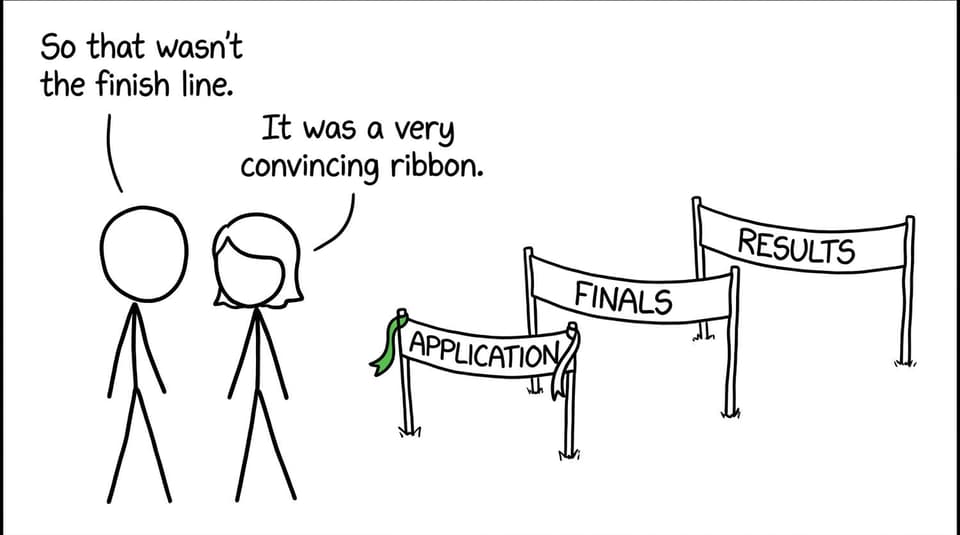
The Diploma Programme becomes less intimidating when the family stops viewing it as one enormous two-year event. Choosing IB requires careful questions. Pre-DP requires habits. DP1 requires foundations. DP2 requires coordination. Mocks require diagnosis. Finals require focused repetition.
RevisionDojo fits across that journey because its tools change with the student's needs: Study Notes and Flashcards for early foundations, the Questionbank and Coursework Library for DP1, AI Chat and grading tools for feedback, then Predicted Papers, Mock Exams, and Tutors as performance becomes more important.
The next step is simple. Identify the student's current stage, choose the next meaningful milestone, and build one manageable week around it. A calm timeline does not remove every difficult moment. It makes sure the family knows which moment matters now.