
A quick story before the numbers
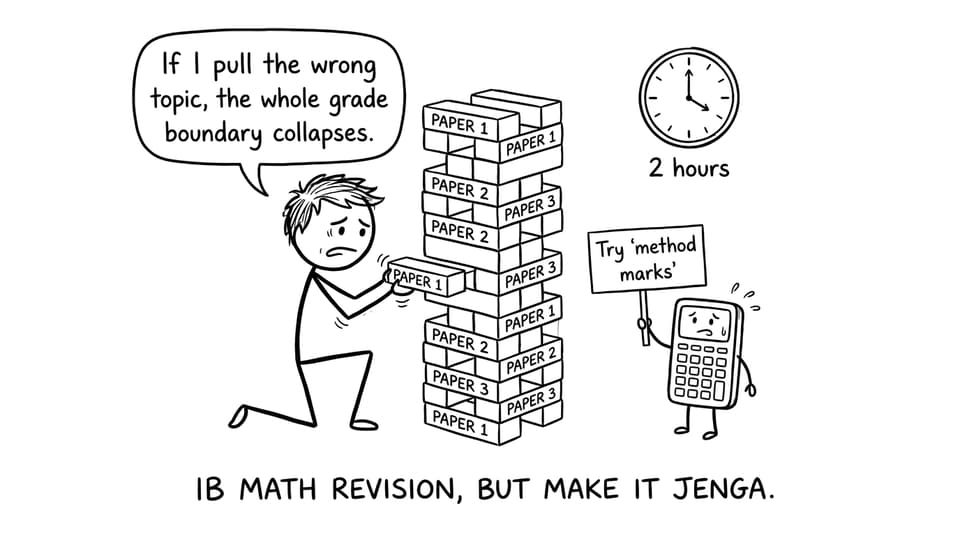
The strange thing about IB Math is that you can feel “good” after a paper and still miss your target grade by a few marks. Not because you did nothing, but because you didn’t know where the marks actually live.
Grade boundaries turn vague motivation into something you can aim at. They help you answer a calmer, more useful question: How many marks do I need per component to be safely on track for my goal? In this IB Math AA HL 2025 grade boundaries guide, we’ll break down the targets for every assessment piece and show you how to use them to revise smarter.
Quick checklist: how to use grade boundaries (fast)
-
Convert your goal grade into a marks target (overall out of 100).
-
Work backwards: Exploration + Paper 1 + Paper 2 + Paper 3.
-
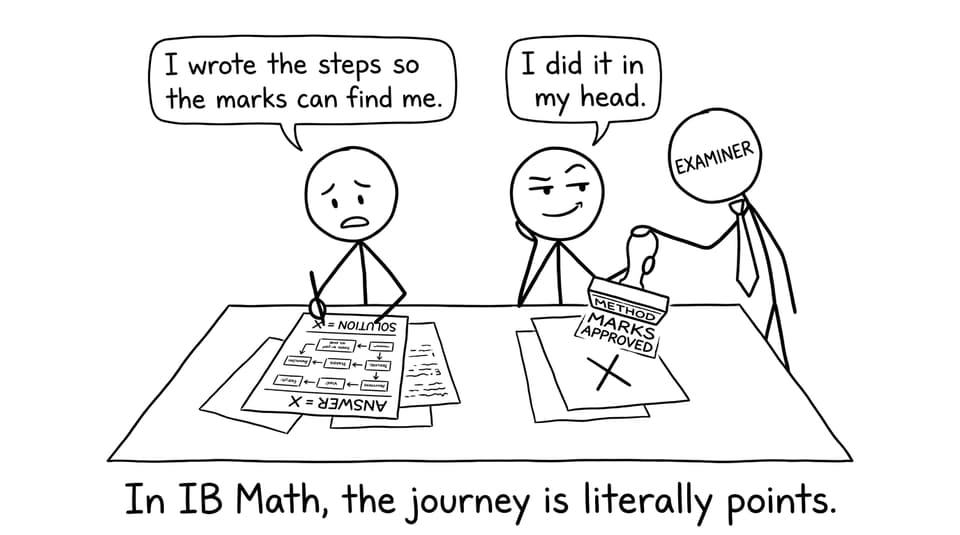
Prioritise “method marks” and presentation, because they’re the most reliable marks in IB Math.
-
Use a targeted system: learn a method, drill questions, then simulate exam timing.
Helpful starting points on RevisionDojo:
-
Use the syllabus map as your basecamp: IB Mathematics Analysis and Approaches Resources
-
Build targeted practice sets: IB Math: Targeted Revision Using the Questionbank
IB Mathematics AA HL 2025 grade boundaries (by component)
These IB Math boundaries are the mark ranges you should treat as “score bands.” Your job isn’t to obsess over the exact cutoff on exam day; it’s to train so your typical performance lands comfortably inside the band you want.
Exploration (IA), out of 20
-
Grade 7: 17-20
-
Grade 6: 15-16
-
Grade 5: 12-14
-
Grade 4: 9-11
-
Grade 3: 6-8
-
Grade 2: 3-5
-
Grade 1: 0-2
Paper 1 (non-calculator), out of 110
-
Grade 7: 86-110
-
Grade 6: 69-85
-
Grade 5: 54-68
-
Grade 4: 37-53
-
Grade 3: 28-36
-
Grade 2: 16-27
-
Grade 1: 0-15
Paper 2 (calculator), out of 110
-
Grade 7: 84-110
-
Grade 6: 68-83
-
Grade 5: 54-67
-
Grade 4: 38-53
-
Grade 3: 29-37
-
Grade 2: 17-28
-
Grade 1: 0-16
Paper 3 (HL), out of 55
-
Grade 7: 45-55
-
Grade 6: 38-44
-
Grade 5: 31-37
-
Grade 4: 24-30
-
Grade 3: 16-23
-
Grade 2: 9-15
-
Grade 1: 0-8
Final overall IB Mathematics AA HL grade boundaries, out of 100
-
Grade 7: 79-100
-
Grade 6: 65-78
-
Grade 5: 52-64
-
Grade 4: 37-51
-
Grade 3: 26-36
-
Grade 2: 14-25
-
Grade 1: 0-13
What these boundaries mean for your revision (Level 7 logic)
A Level 7 in IB Math AA HL is rarely “perfect maths.” It’s usually:
-
Fewer unforced errors in algebraic manipulation.
-
Clear working that makes method marks easy to award.
-
Better decisions under time pressure (when to move on, when to tidy up).
Two high-leverage ways to train that on RevisionDojo:
-
Learn and revisit core methods quickly via IB Mathematics AA Data Booklet and topic hubs.
-
Drill weak areas with feedback using the Calculus Questionbank (AA) and Functions Questionbank (AA).
A practical “marks plan” you can steal
If your goal is a 7 (79+ overall), don’t plan to scrape 79. Plan for breathing room.
-
Lock in the Exploration marks early with a clear research question and clean math communication.
-
Build Paper 1 fluency with exact values, algebra, and proof-style clarity.
-
Use Paper 2 to gain marks through interpretation and correct calculator workflow.
-
Treat Paper 3 as a resilience test: communicate structure, assumptions, and reasoning.
For paper expectations and common traps, read: IB Math HL: What to Expect in the Final Exams and Common Mistakes in IB Math HL exams.
FAQ
Are these IB Math AA HL 2025 grade boundaries guaranteed?
Not in the sense that you should treat them like a law of physics. Grade boundaries can vary slightly by session because they depend on overall paper difficulty and cohort performance. But as a revision tool, they’re still extremely useful because they convert your goal into concrete mark targets. The point is to plan for a range and aim to perform comfortably inside it. That’s why IB Math revision is better when you focus on repeatable method marks and communication, not just “getting the answer.” If you train that way, small shifts in boundaries matter far less.
How do I improve fastest if I’m stuck on a grade boundary band?
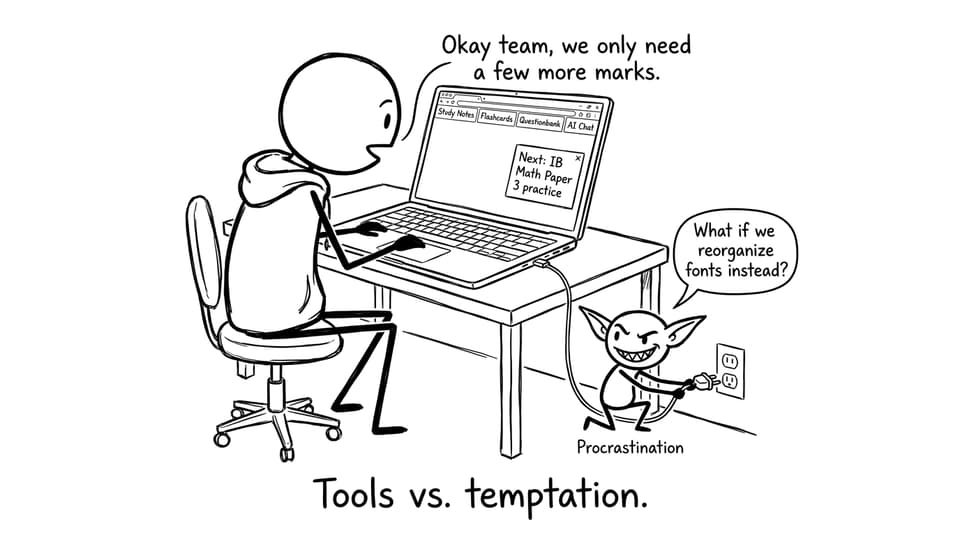
Most students don’t need more content, they need better conversion of effort into marks. Start by identifying where you lose marks: algebra slips, unclear working, wrong command terms, or time pressure. Then run a tight loop: learn the method from Study Notes, practice in the Questionbank, and review mistakes with AI feedback. On RevisionDojo, students typically combine Questionbank sets, Flashcards for recall, and AI Chat for “stuck” moments that would otherwise waste an hour. Add Grading tools to see which errors repeat, and you’ll usually move a band faster than you expect. In IB Math, fixing two recurring mistakes can be worth more than learning one new topic.
What should I do differently for Paper 3 in IB Math AA HL?
Paper 3 rewards structure. It’s not just about being clever; it’s about being readable. You want to show assumptions, define variables, justify a method choice, and keep your reasoning easy to follow. Practically, that means you should practice extended problems under timed conditions and then review your presentation, not only your final answers. RevisionDojo’s Mock Exams and Predicted Papers are useful here because they simulate the “long-problem stamina” and help you rehearse how to communicate an investigation. If Paper 3 feels unpredictable, that’s normal, and your edge comes from training calm, step-by-step reasoning.
Closing: use IB Math grade boundaries as a compass
Grade boundaries don’t reduce IB Math to a numbers game, they stop it from becoming an emotions game. When you know your targets for the Exploration, Paper 1, Paper 2, and Paper 3, revision becomes clearer: fewer random hours, more deliberate marks.
If you want a single home base for AA HL, use RevisionDojo: start with the IB Mathematics Analysis and Approaches Resources, practise with the Questionbank, revise with Study Notes and Flashcards, get unstuck with AI Chat, and rehearse with Mock Exams and Predicted Papers. Then treat the boundaries as your compass, and your daily practice as the steps that actually move the needle.