
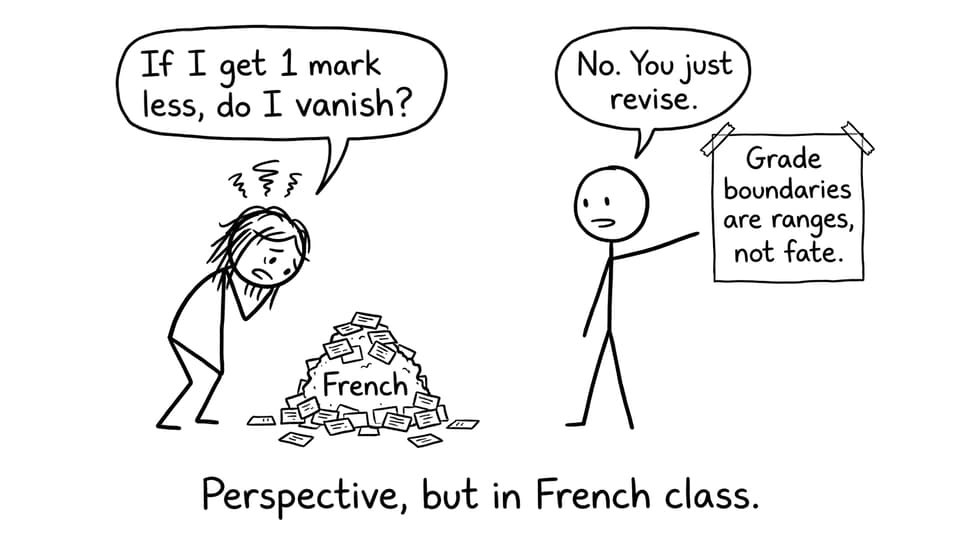
A single mark can feel like a trapdoor. One day you’re confident in French, the next you’re staring at your scores thinking, “Is this a 4… or a 5?” That’s why grade boundaries matter. They don’t predict your destiny, but they do give you a calmer way to plan your French revision: you stop guessing and start targeting.
If you want a central place to organise everything, start with the IB French ab initio Resources hub and keep it open while you revise.
Quick checklist (before you obsess over boundaries)
-
Know what each component tests: writing, receptive skills, and speaking.
-
Track your marks by component, not just your overall score.
-
Use targeted practice: French writing templates, timed listening sets, and oral drills.
-
Mark, fix, repeat (RevisionDojo’s Grading tools and AI Chat make this loop faster).
For topic-by-topic fluency building, the IB French ab initio Exercises are a clean way to turn weak themes into reliable points.
IB French Ab Initio SL grade boundaries 2025 (full breakdown)
Below are the French Ab Initio SL 2025 grade boundary ranges by component and overall.
Internal Assessment (Oral) (out of 30)
-
Grade 7: 27-30
-
Grade 6: 22-26
-
Grade 5: 18-21
-
Grade 4: 13-17
-
Grade 3: 8-12
-
Grade 2: 4-7
-
Grade 1: 0-3
Paper 1 (out of 30)
-
Grade 7: 24-30
-
Grade 6: 21-23
-
Grade 5: 17-20
-
Grade 4: 14-16
-
Grade 3: 8-13
-
Grade 2: 4-7
-
Grade 1: 0-3
Paper 2 Listening (out of 25)
-
Grade 7: 18-25
-
Grade 6: 16-17
-
Grade 5: 13-15
-
Grade 4: 11-12
-
Grade 3: 7-10
-
Grade 2: 4-6
-
Grade 1: 0-3
Paper 2 Reading (out of 40)
-
Grade 7: 33-40
-
Grade 6: 28-32
-
Grade 5: 24-27
-
Grade 4: 19-23
-
Grade 3: 14-18
-
Grade 2: 7-13
-
Grade 1: 0-6
Final IB French Ab Initio SL grade boundaries (out of 100)
-
Grade 7: 79-100
-
Grade 6: 67-78
-
Grade 5: 55-66
-
Grade 4: 43-54
-
Grade 3: 27-42
-
Grade 2: 13-26
-
Grade 1: 0-12
To compare boundaries across sessions and subjects, use the IB Grade Boundaries page or the dedicated IB French ab initio grade boundaries history.
How to use French grade boundaries to study smarter
Grade boundaries are most useful when they change your weekly actions in French.
Raise your Oral score (IA)
Treat speaking like a skill with reps, not a talent you either “have” or don’t. Build 3 reusable story banks (identity, experiences, school life), then practise expanding them with opinions and reasons. If you want modelled structure, explore the French AB initio Exemplars and borrow the patterns.
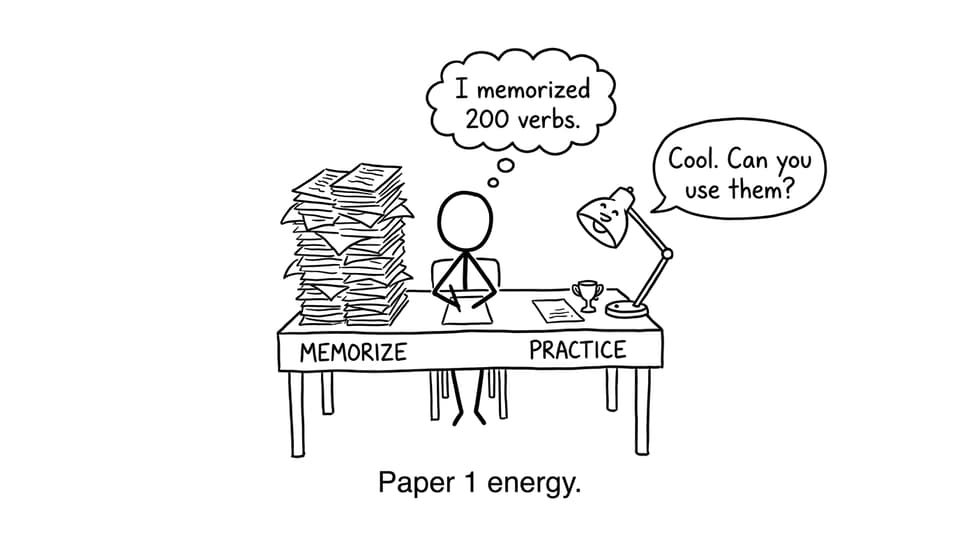
Improve Paper 1 writing reliability
Most Paper 1 marks come from clarity and control: correct register, clean sentence structures, and obvious organisation. RevisionDojo’s Study Notes and Flashcards help you keep connectors, opinion phrases, and tense triggers ready on command. For a broader plan, the French Ab Initio preparation guide maps what to practise each week.
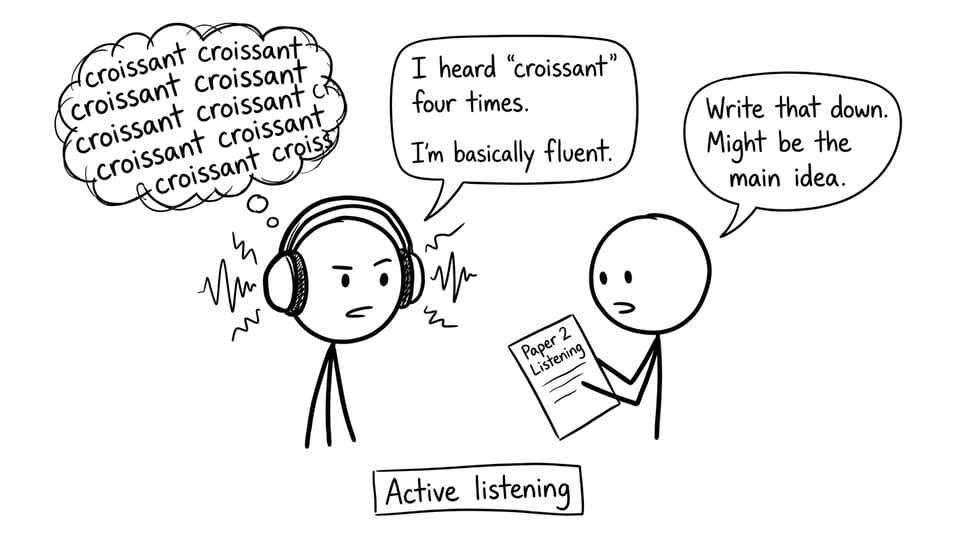
Build Paper 2 Reading and Listening stamina
Reading is about strategy: gist first, then details, then proof in the text. Listening is the same, but faster. Use the IB French ab initio Paper 2 Reading page and the broader External Assessment hub to align practice to what earns marks.
FAQ: IB French Ab Initio SL grade boundaries 2025
Are French grade boundaries the same for every school?
Grade boundaries are set at the exam-session level, not by individual schools. That means your teacher can predict, but the boundary itself is not something your school gets to choose. The useful part for you is that French boundaries convert raw marks into grades, so you can estimate what you need in each component. However, boundaries can shift slightly across sessions depending on paper difficulty and global performance. Use them as planning ranges, not a guarantee. When in doubt, track improvement in raw marks in each paper and the oral.
If I’m near a boundary, what’s the fastest way to jump a grade in French?
The fastest jumps usually come from reducing avoidable errors rather than learning “more content.” In French Paper 1, that means choosing a text type you can execute cleanly and using a repeatable plan (opening, development, closing). In listening and reading, it means training your method: underline questions, hunt for evidence, and avoid overthinking. On RevisionDojo, students often combine the Questionbank with Grading tools so every practice set ends with specific fixes. If you can convert three frequent mistakes into habits (agreement, tense consistency, and article/preposition choices), the mark gain is real. That’s how boundaries become achievable.
How do I track my progress without getting obsessed with French scores?
Pick one metric per component and keep it boring. For French listening, track “main idea accuracy” first, then add detail questions later. For reading, track how often you can quote or point to proof in the text. For writing, track whether you hit the text-type conventions and whether your paragraphs are easy to follow. RevisionDojo’s Mock Exams and Predicted Papers can help you practise under time pressure, but your weekly wins should be small and repeatable. If you want accountability, add a session with Tutors to convert feedback into a concrete plan. Progress feels calmer when it’s measured by actions, not mood.
Final thoughts: let grade boundaries guide your French plan
The point of French grade boundaries in 2025 isn’t to make you anxious. It’s to give you a map: which component needs attention, how many marks matter, and what “good enough” looks like on exam day.
Build your routine around RevisionDojo: practise with the Questionbank, review with Study Notes and Flashcards, refine with AI Chat and Grading tools, then pressure-test with Mock Exams and Predicted Papers. When you want the fastest route to clarity, return to the IB French ab initio Resources hub and let it keep your French revision focused.