
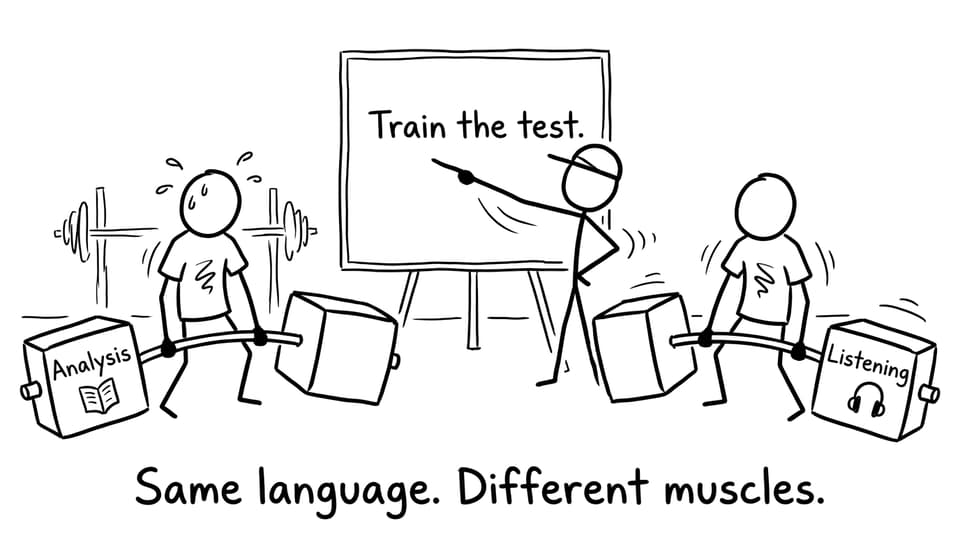
French exams rarely feel hard because the language is impossible. They feel hard because you can work for hours in French and still train the wrong skill.
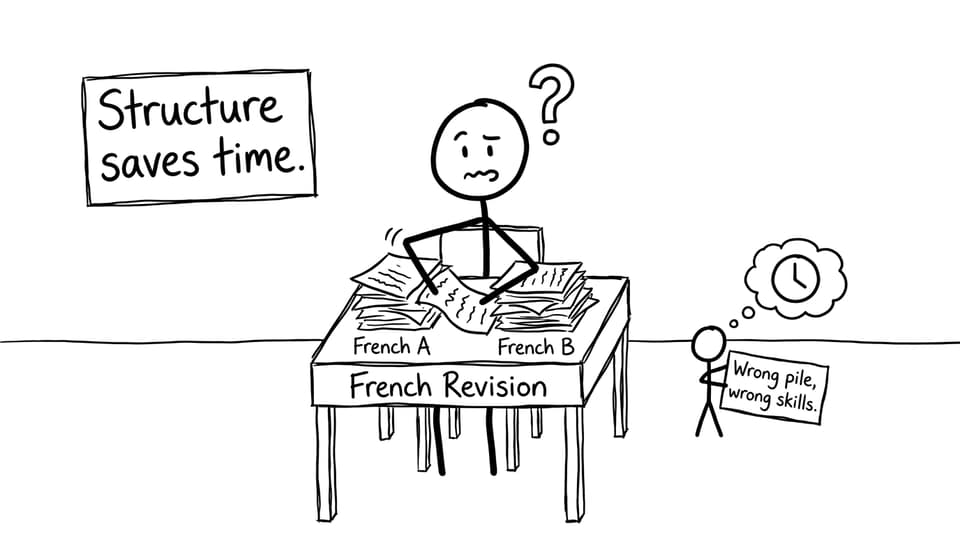
One student I tutored spent weeks memorising fancy connectors for French B, only to panic in listening because their ear had never practised real speed. Another treated French A like vocabulary drills, then froze when the exam demanded an argument, not a translation. Same language. Different game.
Quick checklist: choose the right French exam lens
-
Confirm your course: French A (Literature / Language & Literature) or French B (language acquisition)
-
Map each component: Paper 1, Paper 2, and the oral (plus HL-only parts)
-
Revise by skill: analysis vs communication
-
Practise under timing at least weekly
-
Track mistakes in one place (RevisionDojo makes this simple with connected tools)
If you want a quick hub for what applies to you, start with IB French A Resources or IB French B Resources.
French A vs French B: what’s the real difference?
French A is about reading like a critic and writing like you mean it. You are assessed on interpretation, analysis, and how convincingly you can argue from the text.
French B is about functioning in the language: reading, listening, speaking, and writing with clarity and accuracy in realistic contexts.
A good rule: French A rewards depth of ideas; French B rewards control and range of language.
IB French A exam structure (what each part tests)
For French A, your papers are built around interpretation.
Paper 1: unseen text analysis
You analyse an unfamiliar extract. The main challenge is not knowledge; it’s decision-making: what to focus on, what to quote, and how to build a line of argument fast.
Paper 2: comparative essay on studied works
You respond to a question using works you studied in class. The strongest answers compare meaningfully (themes, authorial choices, context) instead of summarising plot.
French A is where RevisionDojo’s Study Notes and AI Chat help: you can rehearse thesis statements, test interpretations, and refine comparisons without drifting into summary.
IB French B exam structure (what each part tests)
For French B, think in skills: productive, receptive, and interactive.
Paper 1: writing
You produce one task (choice of prompts) in an appropriate text type. Marks often hinge on three things: clear purpose, correct register, and accurate grammar.
To train this directly, use Paper 1 - IB French B and the guided lessons at IB French B Paper 1 Lessons.
Paper 2: reading and listening
This is where many strong writers lose marks. The fix is simple but not easy: small, frequent listening sessions plus targeted comprehension practice.
RevisionDojo’s Questionbank, Grading tools, and Mock Exams are built for that loop: attempt, get feedback, log the pattern, retest.
Common French revision mistakes (and the quick fixes)
-
Revising French A like French B: vocabulary lists won’t replace analysis practice. Fix: do one timed unseen each week.
-
Revising French B like French A: elegant essays don’t matter if listening collapses. Fix: short daily listening plus transcript review.
-
Overwriting without structure: more words can mean fewer marks. Fix: plan for 3 minutes, write for 27.
-
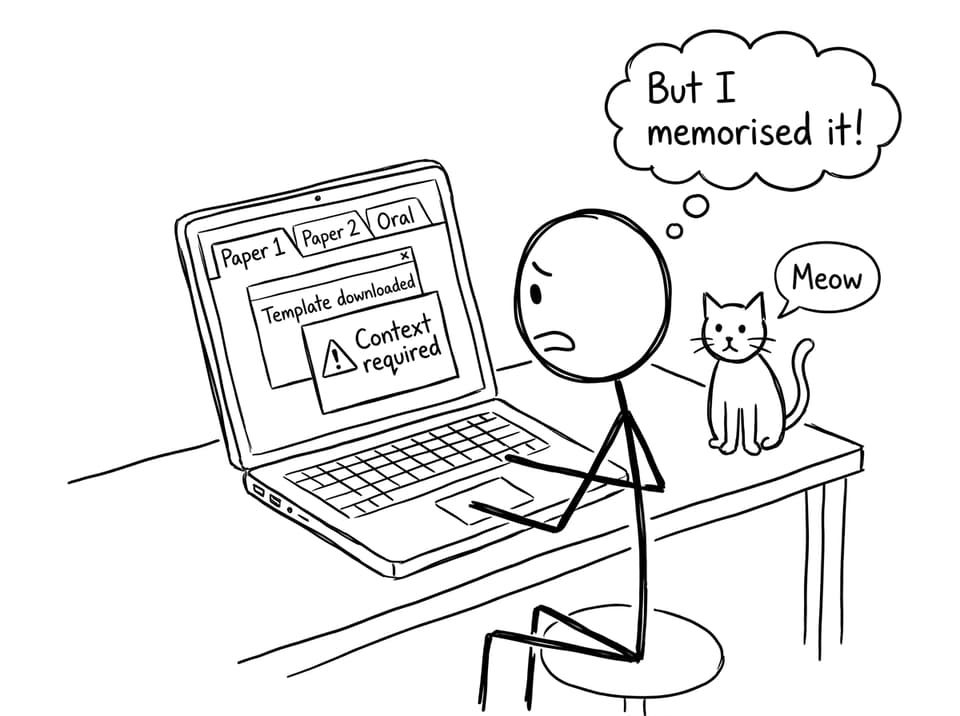
Memorising templates too rigidly: exam prompts punish copy-paste thinking. Fix: learn flexible frames, then adapt.
For daily repetition that actually sticks, pair practice with spaced repetition via IB Flashcards with Spaced Repetition and the syllabus-aligned French B Grammar Flashcards.
A simple weekly plan for French A or French B
-
2x skill sessions (A: unseen analysis / B: listening + reading)
-
1x timed writing session (A: paragraph-to-essay / B: Paper 1 task)
-
2x short flashcard reviews (grammar + high-frequency vocab)
-
1x correction session using feedback (this is where grades move)
To make that sustainable across all subjects, build it into the RevisionDojo Study Planner and keep your practice organised inside RevisionDojo | IB & MYP Resources.
FAQ
Is French A harder than French B?
It depends on what “hard” means for you. French A is usually harder for students who dislike uncertainty, because unseen analysis rewards judgement, not memorisation. It also demands a calm writing process: selecting quotes, interpreting techniques, and staying coherent under time pressure. French B can feel harder if you have gaps in listening or grammar, because those gaps show up immediately and repeatedly. In other words, French A challenges your thinking, while French B challenges your control. The best approach is to treat difficulty as a signal: practise the exact component that causes the stress.
Should French B students memorise writing templates?
You can memorise a flexible structure, but a rigid template is risky in French B. Exams are designed to see whether you can match purpose, audience, and register, not whether you can reproduce a prewritten paragraph. A template can also push you into unnatural phrases that create grammar mistakes under pressure. Instead, memorise adaptable “building blocks”: openings for formal vs informal, ways to give opinions, and connectors for contrast and consequence. Then practise adapting them to different prompts using timed tasks and feedback. RevisionDojo’s Paper 1 lessons and Grading tools make this process much more efficient.
Is listening usually the hardest part of French B?
For many students, yes, because listening is the least rehearsed skill. Reading lets you pause and reread, but audio moves on without permission. Listening also exposes weaknesses in vocabulary recognition and speed, even when you “know” the words on paper. The fix is consistency: short daily listening beats one long weekly session. Use a simple loop: listen once for gist, listen again for details, then check with a transcript and note the phrases you missed. Over time your brain stops translating and starts recognising.
Conclusion: the French exam rewards specificity
Once you see the structure, French stops being vague. You know what to practise, how often, and why it earns marks.
If you want one place to train the right skills, with Study Notes, Flashcards, Questionbank, AI Chat, Grading tools, Predicted Papers, Mock Exams, Coursework Library, and Tutors; build your routine in RevisionDojo and lock it into the RevisionDojo Study Planner. Your French revision should feel focused, not frantic.