


You can usually tell your Group 3 subject is wrong for you in one quiet moment: you’re writing an essay, you know what the question is asking, and you still feel like you’re dragging a heavy object uphill.
Choosing between IB Digital Society and IB History is basically choosing which kind of uphill you’re willing to train for. Both reward argument, evidence, and judgment. But they look at the world through different time lenses.
If you’re preparing for exams and want a choice you can actually sustain, this guide compares IB Digital Society with History in the ways that matter: the thinking you’ll do, the writing you’ll produce, and the revision habits that will make your marks predictable.
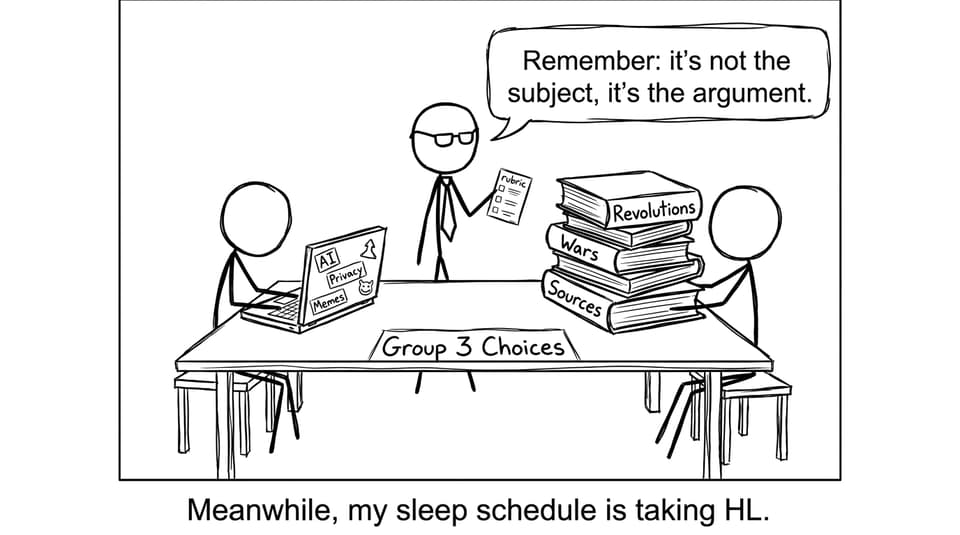
Quick checklist: IB Digital Society vs History
Use this as your 60-second filter before you overthink:
-
Choose IB Digital Society if you enjoy modern case studies, ethics, and how platforms shape power.
-
Choose History if you like building depth over time, comparing interpretations, and using evidence to explain cause and consequence.
-
Both subjects reward clear essays, skeptical source handling, and balanced evaluation.
-
For both, your score rises fastest when you practise timed writing and get feedback.
If you want a course map for IB Digital Society while you decide, start with the IB Digital Society resources hub.
What you actually study in IB Digital Society
IB Digital Society is not “a tech class.” It’s a Group 3 course about people and communities living inside digital systems.
In practice, you’ll spend a lot of time asking questions like:
-
Who benefits from this platform feature, and who is excluded?
-
What trade-offs are being normalized (privacy, fairness, autonomy)?
-
How do culture and politics change when algorithms mediate daily life?
A huge advantage of IB Digital Society is that real-world examples are everywhere. The risk is also obvious: students describe examples without turning them into arguments.
Revision gets easier when you revise by themes and reuse a small bank of high-quality examples. Two helpful starting points are IB Digital Society: Key Themes Explained and Inquiry in IB Digital Society, Explained Simply.
What you actually study in IB History
History is about the past, but the course is really training you to do something harder: make judgments when evidence is messy.
Depending on your school’s options, you’ll likely study conflict, systems of power, political change, and social transformation. But the recurring skill is the same: selecting evidence and building an interpretation that answers the question directly.
If you want a clear look at what top performance signals to admissions teams, read What Universities Look For in IB History HL Students. For exam-season structure, keep IB History Exam Prep: A Comprehensive Guide nearby.

The real difference: what earns marks
Here’s the simplest way to compare them.
IB Digital Society rewards
IB Digital Society rewards your ability to connect:
-
a digital system (platform, policy, tool, network)
-
to impacts on people and communities
-
with evaluation (trade-offs, uncertainty, ethical reasoning)
If you want to calibrate expectations quickly, see What Is IB Digital Society? A Beginner’s Guide and Is IB Digital Society Hard? Honest Expectations Explained.
History rewards
History rewards your ability to:
-
stay locked on the question
-
choose the right evidence (not the most evidence)
-
weigh competing factors and interpretations
-
write with disciplined structure under time pressure
If your essays drift into storytelling, this is where marks leak.
What universities tend to value (and how to signal it)
Universities don’t “prefer” one universally. They prefer evidence of readiness for a certain kind of degree.
-
History often reads as strong preparation for law, politics, humanities, and any writing-heavy course.
-
IB Digital Society can be a powerful signal for media, sociology, international relations, tech policy, communications, and interdisciplinary social science.
If your bigger worry is how predicted grades shape offers, this matters more than subject reputation. Use Do IB Predicted Grades Matter for Conditional Offers? to keep your plan realistic.
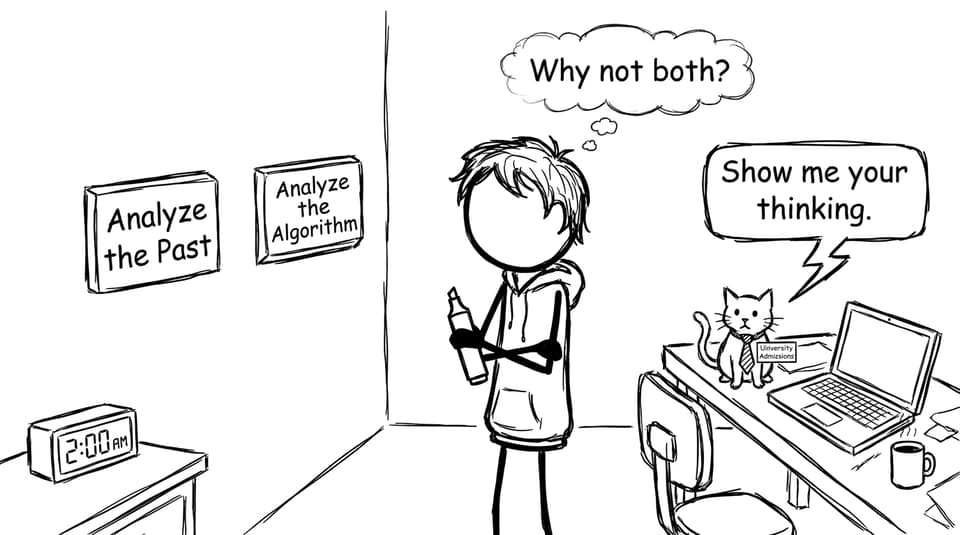
How to revise smarter for either subject
Whichever you pick, the winning routine looks similar:
-
Study Notes to get clear fast (no wandering in textbooks).
-
Flashcards for definitions, concepts, and essay-ready language.
-
Questionbank for exam-style practice under time.
-
AI Chat when you’re stuck and need a clean explanation or counterargument.
-
Grading tools to see what your writing is missing.
-
Predicted Papers and Mock Exams to rehearse pressure.
-
The Coursework Library when you need models of structure and clarity.
-
Tutors when you want fast, targeted feedback.
That’s the RevisionDojo advantage: one place to run the loop of learn -- recall -- practise -- feedback -- improve.
If coursework is part of your stress, use IB Coursework Strengths Analysis to protect what’s already working instead of rewriting blindly.
FAQ
Which is easier: IB Digital Society or IB History?
“Easier” depends on which kind of thinking feels natural under exam conditions. IB Digital Society often feels accessible because you can find modern examples quickly, but it becomes difficult if you only describe what happened and don’t evaluate impacts and implications. History can feel heavy because of the depth and detail, but it becomes manageable when you learn to select evidence strategically rather than trying to include everything. Both courses reward structure, and both punish vague claims. The best predictor is not interest alone, but whether you can write clear arguments under timed pressure. If you’re unsure, try two timed responses in each style and compare how easily you can reach a judgment.
Can I take both IB Digital Society and History?
Some schools allow two Group 3 subjects, but you should treat that decision like a workload equation, not a personality test. Both subjects are writing-intensive, and both expect regular practice with source handling and argument structure. Taking both can be a smart combination if one is SL and you have strong time management. It can also become stressful when major deadlines overlap with TOK and other subjects. Before you commit, ask your teachers how much timed writing they expect per week and look at your full calendar. If you do take both, build one shared revision system so you’re not reinventing study habits twice.
What should I choose if I want strong university options?
Start by checking prerequisites for the degrees you might apply to, because prerequisites beat general impressions. If you don’t have strict prerequisites, choose the subject where you can earn the highest grade through consistent practice. History is a classic signal for writing-heavy degrees, but IB Digital Society can be equally persuasive for interdisciplinary programs that care about modern governance, ethics, media, and technology. Universities value sustained performance, not just “interesting” subjects. Your job is to make your thinking visible: clear essays, evidence-based evaluation, and steady improvement in mocks. If you want a broader context on what the diploma signals, read What Do Universities Think of the IB Diploma?.
Conclusion: choose the uphill you’ll actually climb
If you want to understand the present and argue about what societies should do next, IB Digital Society is a strong fit. If you want depth, context, and the discipline of historical judgment, History will suit you.
Either way, your result won’t come from choosing perfectly. It’ll come from practising the skills the markscheme rewards, then tightening the loop with feedback.
If you choose IB Digital Society, anchor your revision in the IB Digital Society resources hub and use RevisionDojo’s Questionbank, Study Notes, Flashcards, AI Chat, and Grading tools to turn effort into marks.
