

When you tell someone you study IB History, they usually picture dates, dictators, and a lot of late-night highlighting.
Universities picture something else.
They picture a student who can take messy evidence, weigh competing interpretations, and still land on a defensible judgement under time pressure. In other words, IB History is less about knowing the past and more about showing you can think.
This guide breaks down what competitive universities often look for in IB History HL applicants, and how to make those signals obvious in your grades, writing, and coursework.
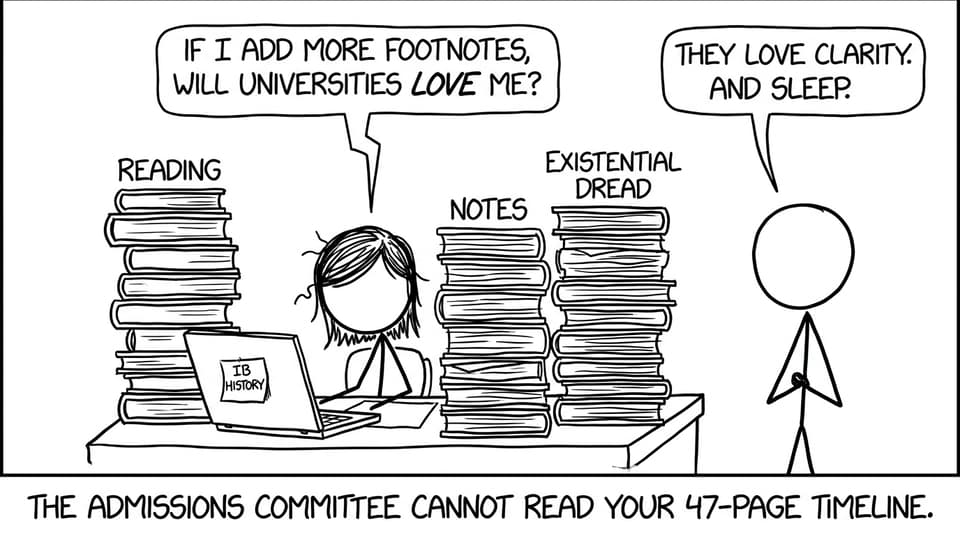
A quick checklist universities notice in IB History
Before details, use this as your quick self-audit for IB History HL:
-
Strong HL performance (usually aiming 6-7, depending on course and country)
-
Clear, structured argument writing (not just knowledge-dumps)
-
Confident source evaluation (OPVL and beyond)
-
Research maturity shown through the History IA
-
Academic alignment: History HL connects logically to your intended degree
If you need to map targets realistically, start with IB score benchmarks and global averages.
High HL performance in IB History is still the loudest signal
Universities may say they read applications holistically, but predicted grades remain a major filter. For selective courses, strong IB History HL performance helps show you can handle intensive reading, nuanced writing, and sustained workload.
The real point isn’t prestige. It’s proof. A high HL grade tells an admissions tutor: this student can do difficult thinking consistently, not occasionally.
To understand how universities interpret rigor across the diploma, see why an IB score matters for top universities.
Universities want your IB History essays to make judgements, not summaries
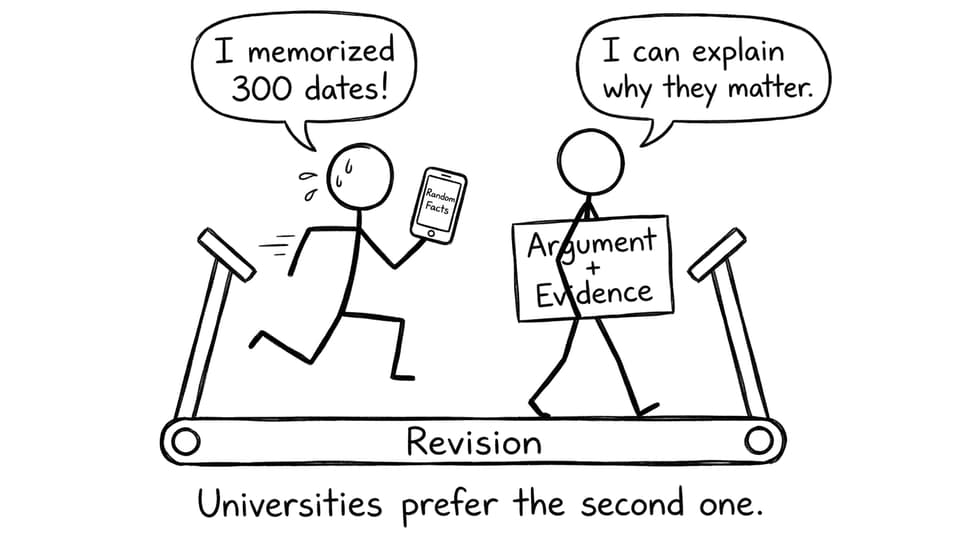
Plenty of students revise IB History like it’s a memory contest. But strong applicants practice like it’s an argument contest.
In Paper 2 and Paper 3 especially, the difference between a good essay and a great one is usually the same quiet habit: making a judgement early, and using evidence selectively to defend it. Universities love this because it mirrors undergraduate work. Professors don’t grade how much you know. They grade how you think with what you know.
If you want a paper-by-paper strategy, use the comprehensive IB History exam preparation guide and reinforce skills with the IB History resources hub.
Your History IA is a mini sample of university-level research
A strong IA signals something grades alone can’t: research discipline.
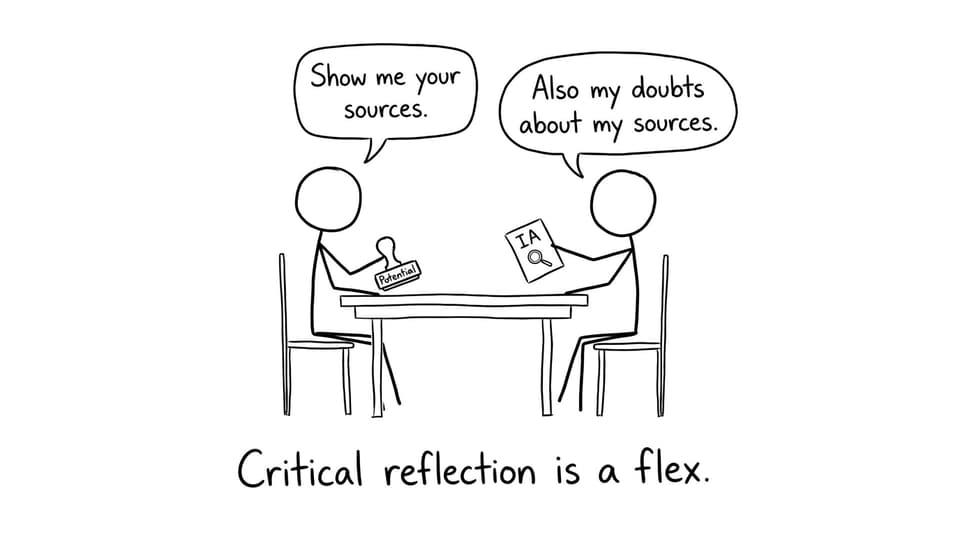
When admissions teams see a well-designed IA, they infer that you can choose a focused question, find usable sources, evaluate bias, and stay analytical. That’s basically first-year university work in a smaller container.
If your IA still feels like a timeline with citations, fix that now using:
Degree alignment: IB History works best when your story makes sense
Universities don’t just admit strong students. They admit coherent ones.
IB History HL naturally supports degrees like History, Politics, International Relations, Law, PPE, and parts of Economics and Anthropology. But alignment isn’t about saying “I like history.” It’s about showing the same traits across your choices: subjects, IA topic, Extended Essay direction, extracurricular depth (debate, MUN, local archives, oral history projects).
For admissions context across systems, the IB-to-top US universities guide is a useful reference.
How RevisionDojo helps you turn IB History into an admissions advantage
The hardest part of IB History isn’t effort. It’s direction.
RevisionDojo helps you build a focused loop: learn, practise, get feedback, repeat. Use the Questionbank for paper-style practice, Study Notes to compress content into usable arguments, and Flashcards for active recall without drowning in timelines. When you draft essays or IA sections, AI Chat can challenge your claims and improve clarity, while Grading tools help you match the rubric.
Then, when it’s time to perform, use Predicted Papers and Mock Exams to train timing and decision-making under pressure. If you want human feedback, the Tutors and Coursework Library are there to keep your work ambitious but controlled.
Conclusion: make IB History look like university readiness
Universities don’t pick IB History HL students because they can recite the Cold War. They pick them because they can argue about it.
If you want your application to feel inevitable, focus on the signals that travel well: strong HL performance, judgement-driven essays, and an IA that reads like real research. Then train those signals with a system.
Start with the IB History exam prep guide, practise using RevisionDojo’s tools, and let IB History become the proof of who you are becoming: a student ready for university-level thinking.

