

The moment your IA comes back, your brain goes quiet
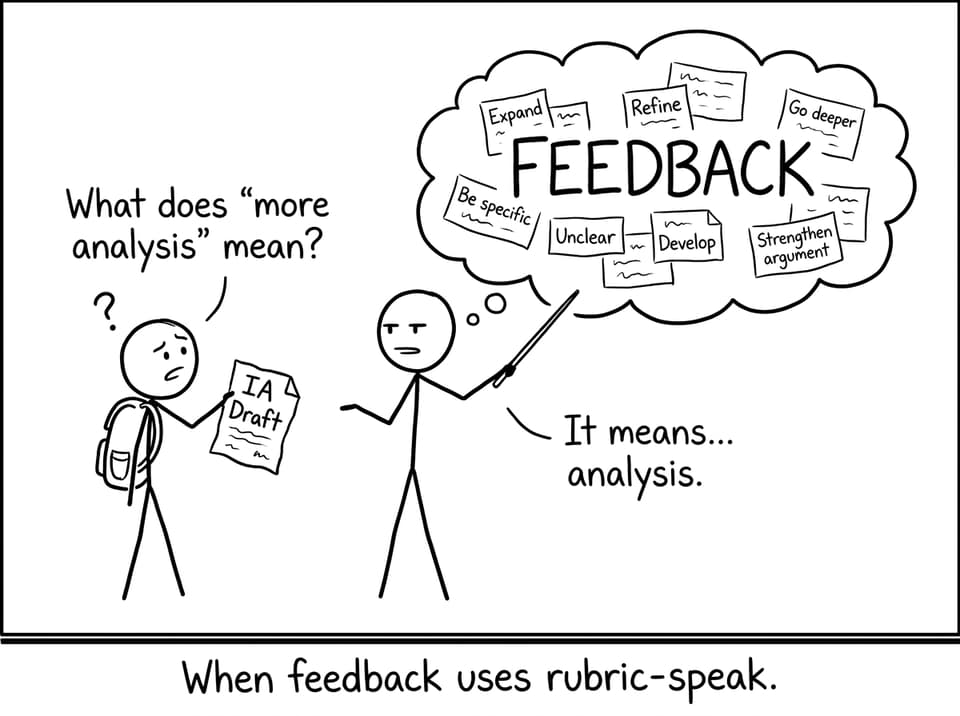
You open the document. You scan for a number, or at least a clear verdict. Instead, you find a handful of comments that sound like they were written by a polite robot: “more analysis,” “limited evaluation,” “unclear focus.”
And suddenly your IA feels less like a project and more like a riddle.
If IA feedback feels confusing, it usually isn’t because you “don’t get it.” It’s because IB feedback is designed to protect independence, speak in criteria language, and signal what a marker can (or can’t) see in your writing. Once you understand that, the same feedback becomes actionable.
Quick checklist: turn confusing IA feedback into a plan
-
Locate the criterion behind each comment (analysis? evaluation? structure?)
-
Rewrite the comment in plain English (what is the marker missing?)
-
Fix one section at a time (don’t attempt a full rewrite in one sitting)
-
Add evidence of thinking: signpost why your choice matters
-
Re-check against exemplars and criteria before you submit
For practical workflows, pair this article with How to Integrate Feedback from Teachers into Your IA.
Why IA feedback is vague (and why that’s not personal)
Teachers are constrained by IB rules
Your teacher can’t rewrite your IA, line-edit it into perfection, or hand you the exact sentence to use. That’s not them being unhelpful. It’s the system protecting authorship.
So instead of “change this paragraph to X,” you get “this lacks analysis.” The comment is a direction, not a solution. If you want the marking context, read Who Marks the IA? The Truth Behind Your Final Score.
Feedback is often written for rubrics, not for humans
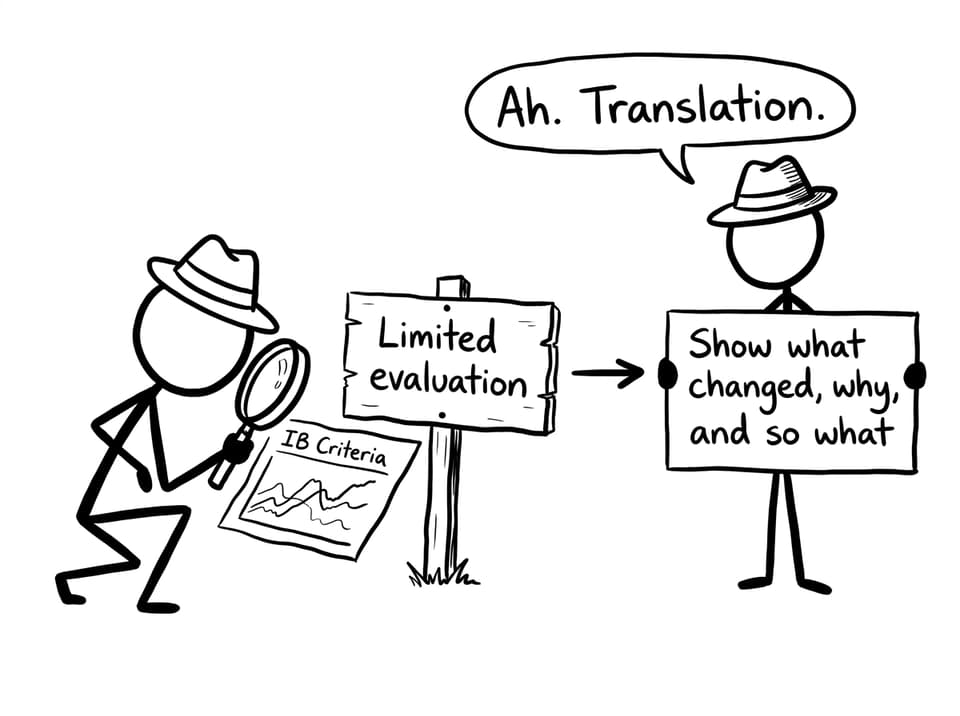
Phrases like “limited evaluation” are meaningful only when you map them to what IB rewards. In most subjects, “evaluation” means identifying limitations and explaining impact and proposing realistic improvements.
A helpful companion is What IB Examiners Look for in a Strong IA, which translates examiner expectations into concrete writing moves.
Your emotional timing is terrible (and totally normal)
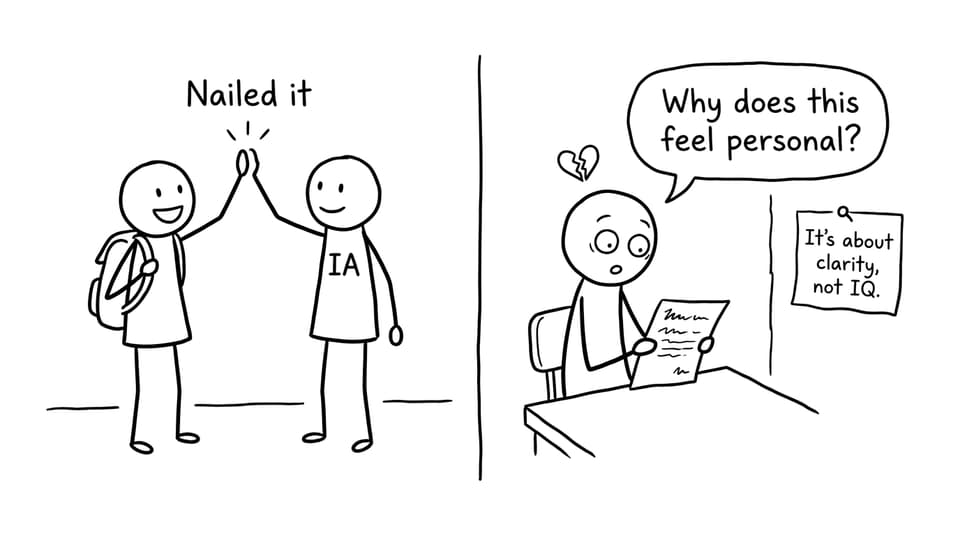
IA feedback usually arrives after you’ve invested days of effort. So critique lands like a judgment, even when it’s actually about clarity and evidence.
That’s why the best students treat IA drafting as iterations, not verdicts: draft, check against criteria, revise one criterion, repeat.
Why feedback can sound contradictory
Sometimes a teacher praises one section and criticizes another that feels similar. Usually that isn’t contradiction. It’s inconsistency in focus or depth.
Markers reward work that makes your thinking easy to justify. If one paragraph clearly links evidence back to the research question, it earns credit. If another paragraph describes results without explaining “so what,” it triggers “needs more analysis.” If you want a direct model, What Real Analysis Looks Like in an IB IA is a strong reference point.
How RevisionDojo makes IA feedback clearer (fast)
When you’re revising an IA while also preparing for exams, confusion is expensive. RevisionDojo helps you shorten the loop:
-
Use the RevisionDojo Coursework Guide to decode common comments into examiner expectations.
-
Use the IB Coursework Grader to get criterion-by-criterion feedback you can act on.
-
If your subject has a specific rubric page (example: IB Physics IA Grader or IB Geography IA Grader), use it as your revision map.
-
Keep exam prep moving with How to Study for IB Mocks (Without Burning Out) and the all-in-one workflow on RevisionDojo: Questionbank, Study Notes, Flashcards, AI Chat, Grading tools, Predicted Papers, Mock Exams, Coursework Library, and Tutors.
Your next step: make IA feedback usable in one afternoon
Take your IA feedback, underline the three comments that appear most often, and translate each into a single concrete action. Then run one revision loop: fix, re-check against criteria, and only then polish.
If you want that loop to be faster and less stressful, use the RevisionDojo Coursework Guide alongside the IB Coursework Grader. Your IA will still be your work, but the path from “confusing comment” to “higher-band evidence” will finally feel clear.