
If you’ve ever walked out of an IB Math lesson thinking, “That makes sense,” and then stared at an exam question like it’s written in a different alphabet, you’re not alone.
The quiet frustration comes from a simple truth: understanding is calm. Exams are noisy. In class, the teacher steers the ship. In an IB exam, you’re steering in fog, on a clock, with every small algebra slip costing real marks.
This guide is about the bridge between those two worlds: how to transition from understanding to exam performance in IB Math, using habits that convert knowledge into points.
The quick bridge checklist (save this)
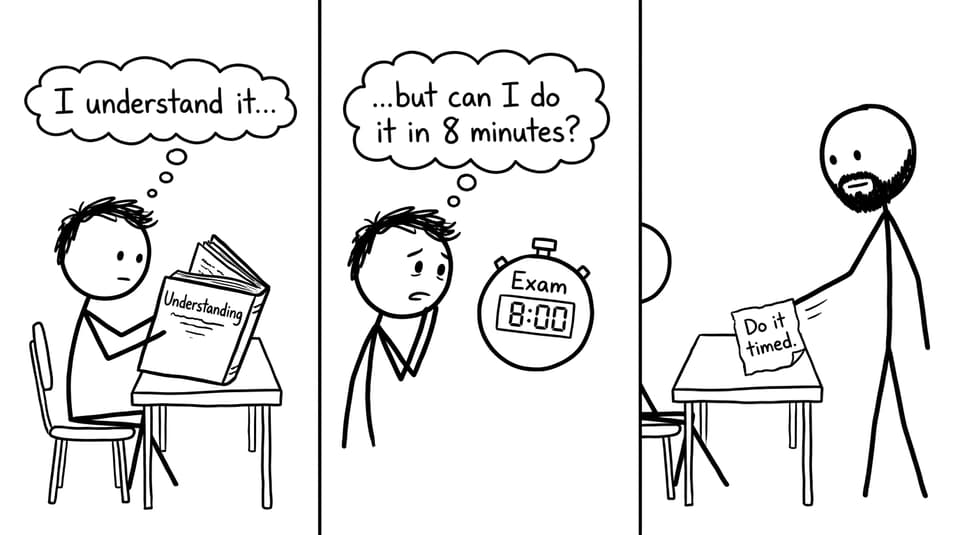
Use this short loop to turn IB Math understanding into reliable exam execution:
-
Learn the core idea once using IB Mathematics Analysis and Approaches Resources or IB Mathematics Applications & Interpretation Resources
-
Reduce it to recall prompts (RevisionDojo Flashcards)
-
Drill a small set in the Questionbank (accuracy first)
-
Repeat the same skill under a timer (Mock Exams and Exam-style practice)
-
Review like an examiner using markscheme logic (RevisionDojo AI Chat + Grading tools)
-
Track patterns (RevisionDojo progress analytics)
That’s the whole engine. Now let’s make it practical.
Why understanding isn’t yet IB exam performance
A student can “understand” differentiation and still lose marks because of three exam realities:
-
Retrieval: you must pull the method from memory without prompts
-
Communication: you must show steps the way marks are awarded
-
Pressure: you must do both while budgeting time
In other words, IB Math grades don’t simply measure what you know. They measure what you can reliably produce.
If you want an expanded roadmap for exam readiness, pair this post with IB Math HL: What to Expect in the Final Exams. Knowing the structure helps your practice match the game you’re actually playing.
Train retrieval: recognition feels like progress, recall makes marks
Many students revise by rereading notes and thinking, “Yes, I remember this.” That’s recognition. It’s comforting, and it’s also a trap.
In an IB exam you don’t get the comfort of “Yes, I’ve seen this before.” You get a blank page and a command term.
A better approach:
-
Read the method once in Study Notes
-
Close the notes
-
Answer a question from scratch
-
Only then check your solution
RevisionDojo is built for that loop. Use the topic practice in the Calculus Questionbank (or your relevant strand) to force recall, then use AI Chat to explain exactly where your reasoning drifted.
For a focused system on question selection, use How to Use the Questionbank for Targeted Math Revision.
Apply concepts in varied contexts (the IB loves disguise)
In IB Math, the hard part is rarely the technique in isolation. The hard part is noticing which technique the question is secretly asking for.
One week, “exponential growth” looks like finance. Next week it’s population. Then it’s decay with a log rearrangement and a constraint.
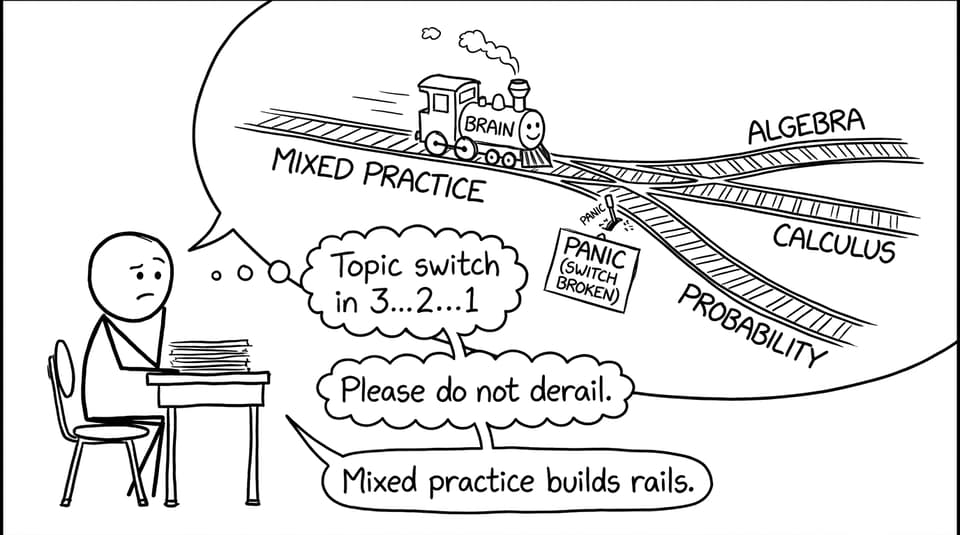
So don’t practice in perfectly grouped sets forever. After you learn a subtopic, deliberately mix it with nearby ideas.
A simple rule:
-
First 20 questions: same subtopic, build stability
-
Next 20 questions: same topic, mixed styles
-
Next 20 questions: mixed topics, timed
That final stage is where understanding becomes IB exam performance.
Use markschemes as a writing coach, not an answer key
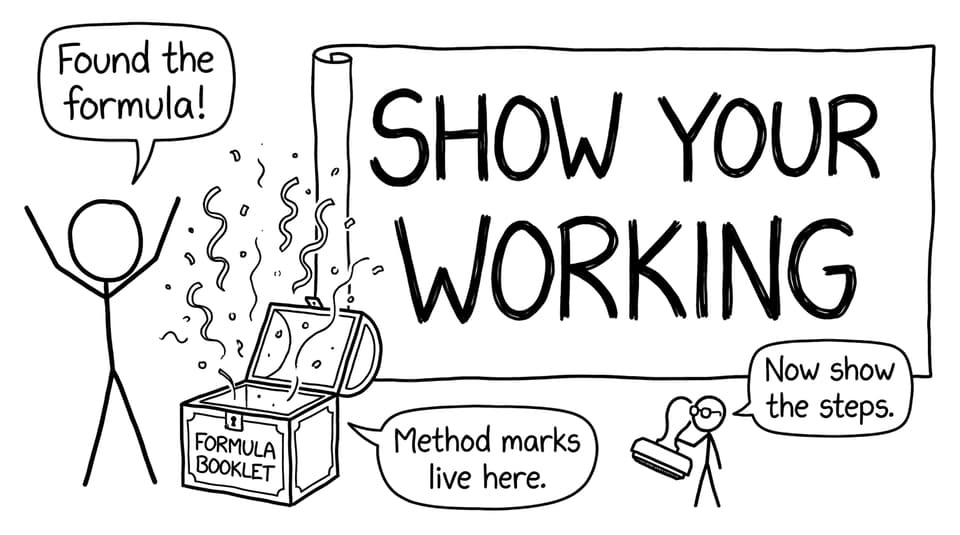
A top student habit is treating the markscheme like feedback on communication.
After each IB practice set, ask:
-
Where were method marks awarded?
-
Did I skip steps that the examiner expects to see?
-
Did I lose accuracy marks because of rounding, sign errors, or domain restrictions?
RevisionDojo’s Grading tools and AI Chat are especially useful here because they can respond to your working, not just show a final answer. That matters in IB Math, where two students can have the same final number but different scores based on structure.
If you want a broader notes-to-marks workflow, read Digital IB Study Notes: Access Anywhere, Anytime.
Start timed practice earlier than you feel ready
Most students delay timing because it feels like a judgment. But timing is a skill, not a personality trait.
In IB Math, you’re often converting marks into minutes. Your goal isn’t to be fast at everything. Your goal is to be calm about trade-offs.
Try this progression:
-
10 minutes: 1 hard question, full focus
-
25 minutes: mini set of mixed questions
-
60-120 minutes: full paper simulation
To build pacing habits that actually hold under stress, use Best Time Management Tips for IB Math Exams: 10 Smart Strategies and Best Study Schedule For IB Math Exams.
Make reflection specific: results don’t teach, patterns do
A score tells you how you did. It doesn’t tell you why.
After each timed set, write a tiny post-mortem:
-
1 mistake from misunderstanding (concept gap)
-
1 mistake from process (forgot a step)
-
1 mistake from pressure (rushed algebra, misread, panicked)
Then build the next session around those three items using RevisionDojo’s Questionbank, Flashcards, and Study Notes.
Over time, your “pressure mistakes” shrink first. That’s a good sign. It means your brain is learning the exam environment.
Turning IB understanding into marks (and what to do next)
The difference between “I get it” and “I can score” is rarely talent. It’s rehearsal. Not endless rehearsal, but the right kind: retrieval, mixed practice, timed pressure, and examiner-style review.
If you want that bridge to feel straightforward, make RevisionDojo your home base: learn with Study Notes, drill with the Questionbank, memorize efficiently with Flashcards, troubleshoot with AI Chat, check your reasoning with Grading tools, and build confidence through Mock Exams, Predicted Papers, and targeted support from Tutors.
Start today by picking one weak IB Math topic, doing 10 untimed questions for accuracy, then repeating 5 of them under a strict timer. That small loop is how understanding becomes exam performance.