



Geography vocabulary has a special talent: it looks easy until you try to say it under exam pressure in a new language.
One minute you can point to a country on a map. The next minute your mind blanks on the word for mountain range, you misspell a capital, and suddenly your confidence feels smaller than a microstate. For IB Languages, that gap matters because exams reward accurate, flexible vocabulary you can use quickly, not just recognize.
This guide shows how to memorize world geography vocabulary in a new language quickly, without turning your week into a miserable list-memorizing marathon. The goal is simple: faster recall, cleaner spelling, and calmer performance in IB Languages.
Quick start checklist for IB Languages geography vocab
-
Pick 30 high-frequency geography terms you actually use (countries, capitals, physical features).
-
Chunk by region + feature type (e.g., Balkans + rivers).
-
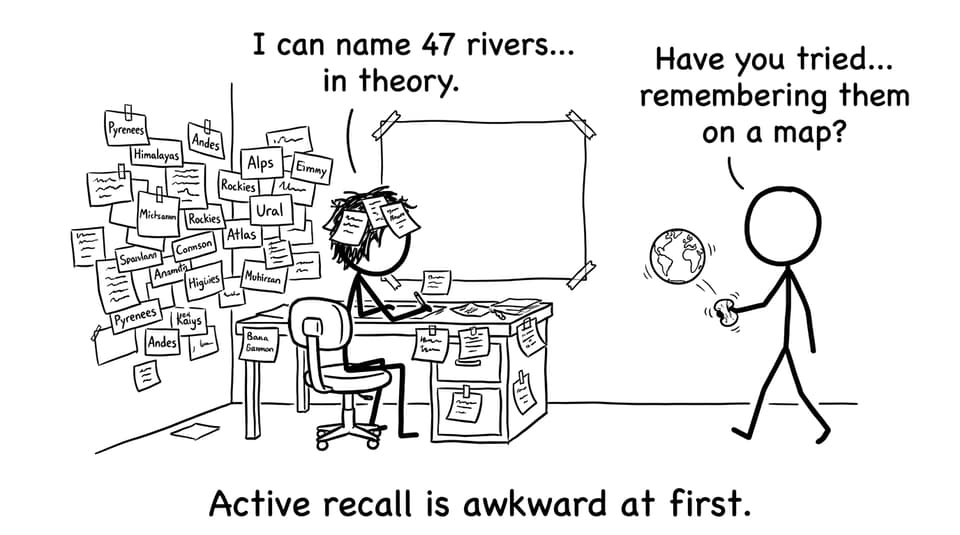
Study on a map first, then off the map.
-
Convert your list into Flashcards with spaced repetition.
-
Do daily 7-minute reviews and 2 short retrieval sprints per week.
If you want an all-in-one setup, combine RevisionDojo Flashcards with the Flashcards feature page so your spaced repetition stays automatic.
Use maps to turn IB Languages vocabulary into locations
Most students start with translations. That’s the slow path.
For IB Languages, you want the word to trigger a place instantly. The fastest way is map-first learning:
-
Print or open a blank map and label in your target language.
-
Cover labels and re-label from memory.
-
Switch directions: see the word, point to the place; see the place, produce the word.
This matters because the brain stores geography naturally as visual space. A word list fights that. A map uses it.
If you also take Geography, the IB Geography glossary is a useful model for how definitions connect to context (even when your focus is IB Languages).
Chunk the world into memorisable sets (without overwhelm)
The world is too big to memorize as “everything.” But it’s very manageable as “small sets that repeat.”
Try this structure:
-
Set A: Continents + major oceans
-
Set B: Regional clusters (e.g., West Africa, Southeast Asia)
-
Set C: Feature types (capitals, rivers, deserts, mountain ranges)
Keep each set to 10-15 items. Your memory prefers finishing. Finishing creates momentum, and momentum is one of the hidden advantages in IB Languages revision.
Mnemonics that actually survive exam day
Mnemonics work when they are vivid, personal, and slightly embarrassing. Your brain remembers what it would rather not.
For geography vocabulary in IB Languages, build mnemonics around:
-
Sound-alikes in your first language
-
Spelling traps (turn the tricky part into the “joke”)
-
Mini-scenes (a 2-second mental movie)
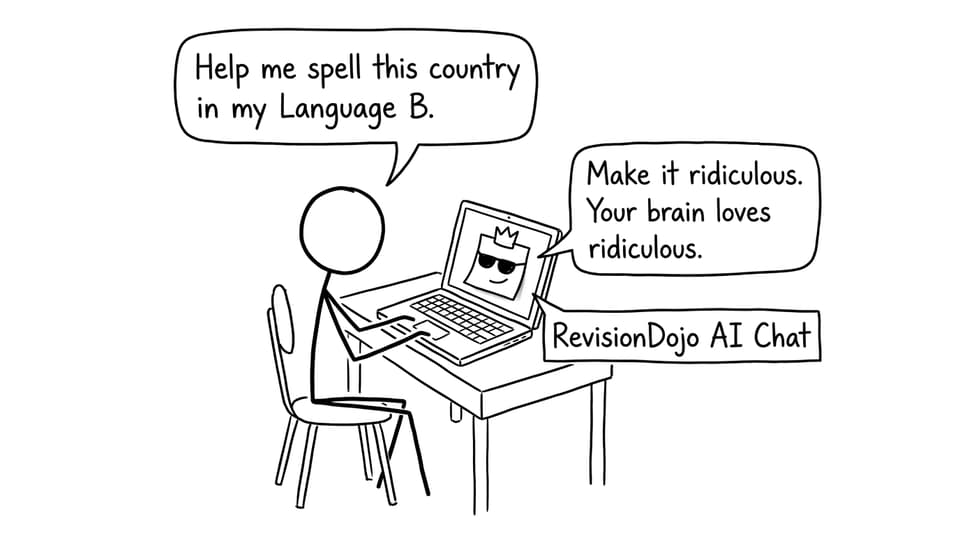
If you get stuck, use RevisionDojo AI Chat to generate a few mnemonic options quickly, then choose the one that feels most ridiculous and therefore most memorable.
Flashcards + spaced repetition: the fastest loop for IB Languages
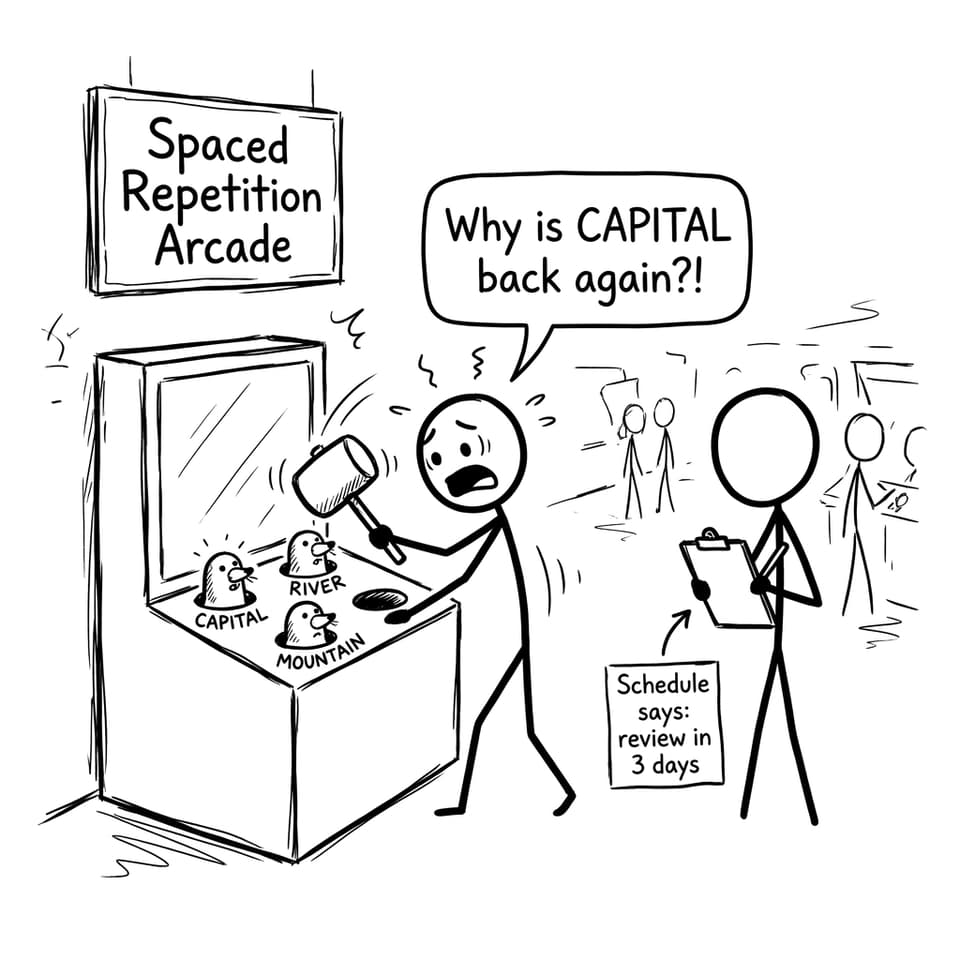
Here’s the honest truth: you don’t forget because you’re bad at languages. You forget because you don’t revisit at the right time.
That’s why IB Languages students improve faster with spaced repetition:
-
Front of card: the place (or a blank-map screenshot)
-
Back of card: the word in your target language, plus one short example phrase
Use a tool that schedules reviews automatically, like RevisionDojo Flashcards with SRS. For tactics, borrow the workflow from IB Flashcard System: Active Recall for Better Memory.
Make your geography vocab “speakable” for IB Languages exams
Memorized words fail when they have never been used.
So once a week, do a 10-minute “geography speaking circuit”:
-
Describe a region using 5 target words.
-
Compare two countries using simple connectors.
-
Explain a journey route with 3 physical features.
This turns vocabulary into performance. And performance is what IB Languages grades.
To keep it IB-aligned, pair this with the structure advice in How to Effectively Revise for Language B Exams and theme-based resources like Core Themes for IB French B (even if you study another language, the theme approach transfers).
Conclusion: turn IB Languages geography vocab into a daily advantage
Memorising world geography vocabulary in a new language quickly isn’t about talent. It’s about building a loop: map context, active recall, and spaced repetition that you actually maintain.
If you want that loop to feel simple, use RevisionDojo as your hub: build with Study Notes, lock it in with Flashcards, reinforce with AI Chat, and keep your momentum through targeted practice in the Questionbank, Mock Exams, and Predicted Papers. When IB Languages revision becomes small and consistent, it stops being scary and starts being reliable.
Start today: choose one region, make 15 cards, and let the next week of reviews do what cramming never could.