


When an IB problem feels impossible, it rarely arrives with a clean label that says “too hard.” It arrives as a blank page, a ticking clock, and the quiet fear that you’re the only one who doesn’t get it.
But here’s the inconvenient truth that eventually becomes freeing: confidence isn’t a personality trait. In the IB, confidence is a repeatable outcome of doing the right things in the right order. Not perfectly. Not heroically. Just consistently.
This guide is about building that kind of confidence for hard questions, the kind you meet in Math, Sciences, Economics, even essay-heavy subjects. We’ll turn “I freeze” into a practical method you can trust, using RevisionDojo’s Questionbank, Study Notes, Flashcards, AI Chat, Grading tools, Predicted Papers, Mock Exams, Coursework Library, and Tutors.
A quick confidence checklist for IB students
If you want a fast start, use this before you dive deeper:
-
Pick one topic and do 10-15 targeted questions (not random).
-
Start at “challenging but possible,” then climb.
-
Write the first logical step even when you feel stuck.
-
Review mistakes like data, not drama.
-
Reattempt the same skill within 48 hours.
-
Add timed practice once a week so pressure stops being novel.
For structured practice, open RevisionDojo’s Questionbank and treat confidence like something you build, not something you wait for.
Redefine what “hard” means in the IB
In the IB, “hard” usually means one of three things:
-
The question is testing multiple ideas at once.
-
The wording hides the first step.
-
You don’t yet recognize the pattern.
None of those are permanent problems. They’re simply signals.
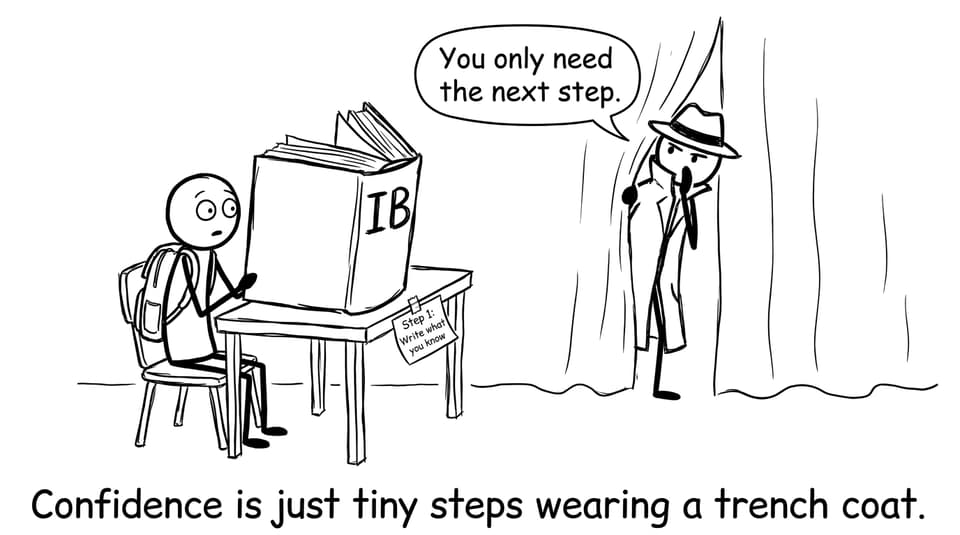
A useful mental shift: a hard IB problem is often a medium problem wearing a disguise. Your job is to remove the disguise by translating the question into smaller, familiar moves.
If you need a calm reminder that the difficulty is real but solvable, this piece helps: Is IB the Hardest Curriculum? A Calm, Honest Answer.
Build confidence with “small wins” that stack
Most students try to build confidence by jumping straight into the hardest questions. It feels noble. It’s also unreliable.
Confidence grows faster when you collect evidence. Evidence looks like:
-
“I solved 6/10 medium questions on this subtopic.”
-
“My method was right even when my arithmetic slipped.”
-
“I can now start these questions without staring for five minutes.”
On RevisionDojo, you can structure this with:
-
Study Notes to tighten understanding quickly: Study Notes
-
Then immediate practice using the Questionbank
That pairing matters because confidence doesn’t come from reading. It comes from applying.
The step-by-step method for hard IB problems
When a question feels huge, your brain looks for an exit. The method below removes the need for bravery by making the next action obvious.
Write what you know (even if it feels embarrassing)
Write down:
-
Definitions, formulas, laws, or key terms
-
What’s given
-
What the question is actually asking
This is not “wasting time.” In the IB, marks often reward method and reasoning. And writing what you know is how you start earning those marks.
Find the smallest possible first mark
Ask: What is the easiest true statement I can write that moves this forward?
Examples:
-
Label a diagram.
-
Define the variable.
-
State the relevant principle.
-
Rewrite the question in your own words.
Momentum is a confidence engine. One correct step makes the next step easier to see.
Use feedback to protect the loop
After you attempt, don’t just check “right/wrong.” Ask:
-
Did I misread a command term?
-
Did I choose the wrong model?
-
Did I skip justification?
RevisionDojo’s AI Chat can be your “unstuck button” when you’re close but foggy: Jojo AI. Use it like a tutor who keeps you moving, not like a shortcut that steals your learning.
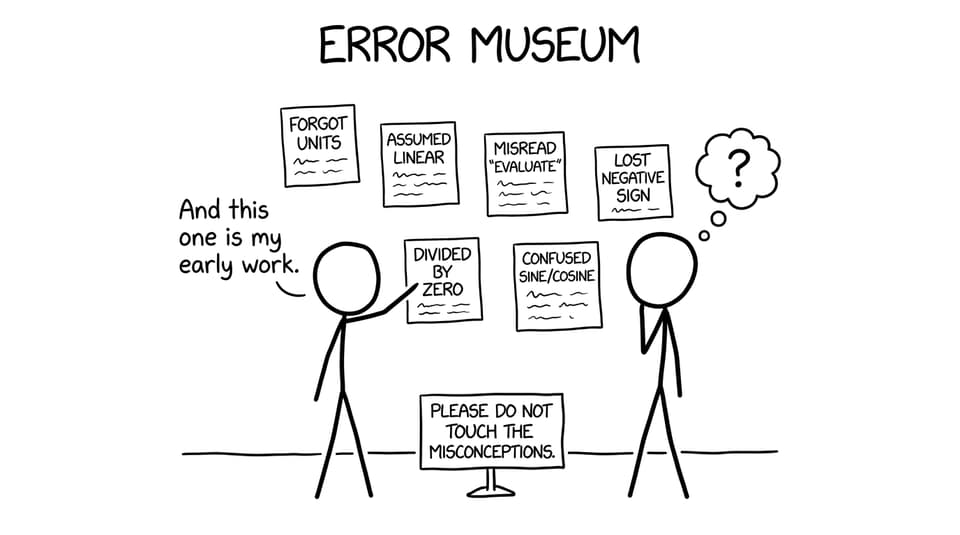
Turn mistakes into an “error museum” (and get your marks back)
Most confidence collapses after mistakes because students treat errors as identity: “I’m bad at this.”
Better: treat errors as categories.
Create an error log with labels such as:
-
Misread the question
-
Forgot a constraint
-
Correct idea, weak explanation
-
Algebra/units slip
-
Wrong command term response
Then do something bold but simple: reattempt the same type of question two days later. This is how the IB becomes familiar.
If you want a more detailed workflow for systematic practice, this guide connects well: IB Question Bank | How to Use It Effectively.
Practice under pressure without burning out
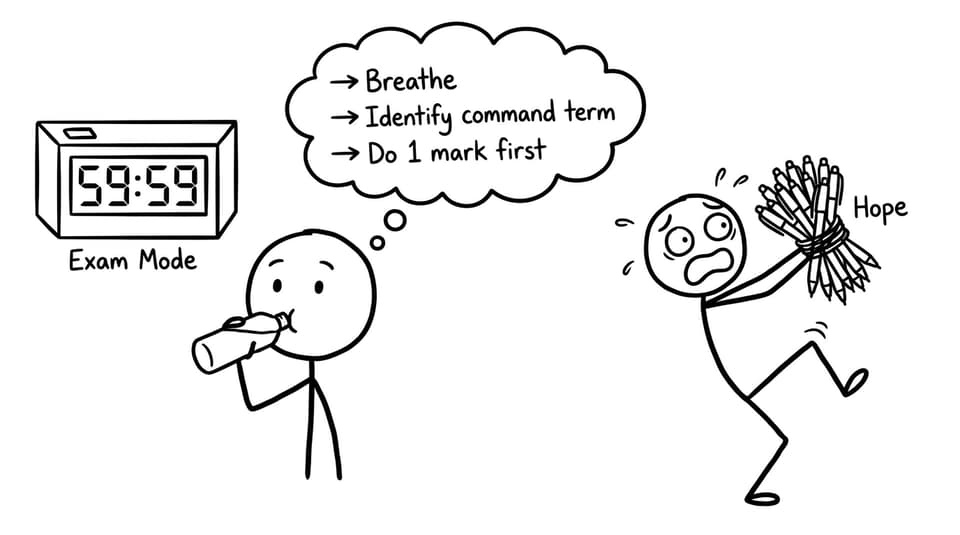
A lot of IB anxiety isn’t about content. It’s about timing and uncertainty.
You fix that by rehearsing pressure in controlled doses:
-
Once per week, do a timed section.
-
Then spend longer reviewing than attempting.
-
Immediately drill the same weakness using targeted questions.
RevisionDojo makes this smoother when you combine:
-
IB Predicted Papers for realistic full-paper rehearsal
-
Focused retention using Flashcards
-
The tight practice loop inside the Questionbank
If you’re unsure how to use exam-style sets wisely, this clarifies the purpose: IB Predicted vs Specimen Papers: What They Mean.
Use RevisionDojo as your confidence system (not just a resource)
The easiest way to lose confidence is to study in fragments: notes in one place, questions somewhere else, feedback nowhere.
RevisionDojo works best as a single loop you repeat:
-
Learn fast with Study Notes
-
Lock recall with Flashcards
-
Build skill with the Questionbank
-
Get unstuck with Jojo AI
-
Rehearse performance with IB Predicted Papers
-
Reduce background stress with criterion clarity via the IB Coursework Grader
Confidence grows when your study plan produces evidence every week.
Conclusion: IB confidence is built, not found
Hard IB problems will still look hard. The difference is that you’ll know what to do when they do.
Confidence comes from a simple promise you keep to yourself: I can always take the next step. That’s why the best strategy isn’t motivation. It’s a system: learn with notes, practice with the Questionbank, reflect on errors, then rehearse timing with predicted papers and mock-style sessions.
If you want one place where that entire loop lives, start with RevisionDojo’s Questionbank, then connect it to Study Notes, Flashcards, and Jojo AI. Build enough evidence, and confidence stops being a feeling you chase and becomes a result you expect.