Join 650k+ students breezing through the IBReady to breeze through the IB?
A quick story before we start
The first time I timed myself for an IB Language B oral, I did what most stressed students do: I tried to control everything.
I wrote a near-perfect mini-essay. I memorized it. I even practiced the “confident pause” in the mirror.
Then the follow-up questions arrived and my script had nowhere to hide. The exam wasn’t asking for a speech. It was asking for a conversation that could think.
If you want a higher IB Language B score, your prep should train flexibility, structure, and cultural depth, not just “sounding fluent.”
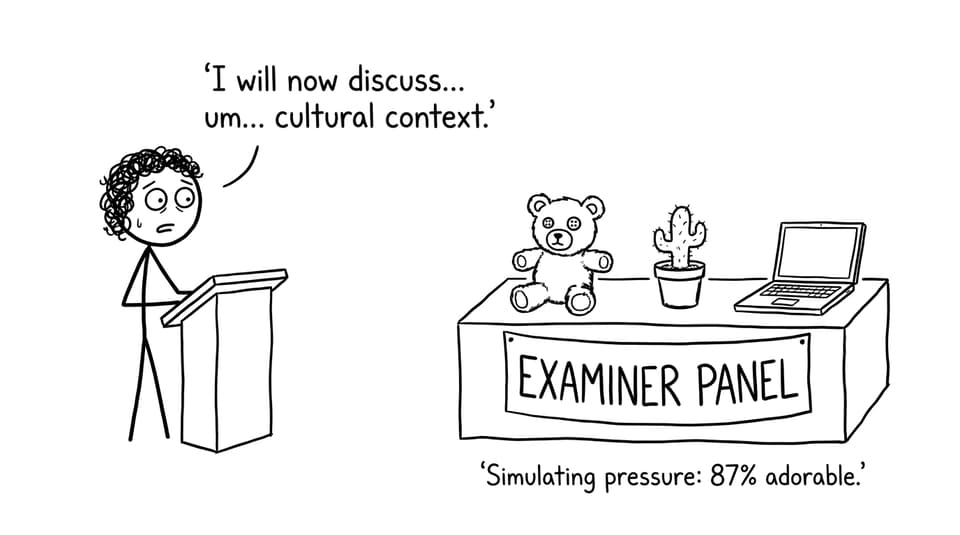
Student practices oral with stuffed animal examiners
10 proven tips to prepare for your IB Language B oral exam
1) Treat the format like a map, not trivia
The oral is short, but it has clear phases: prep, presentation, discussion. In IB Language B, many marks are lost when students over-describe the image and under-develop ideas in the conversation.
Build a simple plan: 20 seconds to frame the stimulus, 2 minutes of analysis and theme link, then a short closing that sets up discussion.
When you have options, pick the image that connects to experiences you can talk about with detail. In IB Language B, detail creates fluency because it gives your brain something real to describe.
Ask: Can I talk about causes, effects, and one personal example? If yes, that’s your stimulus.
3) Use a 3-box prep template
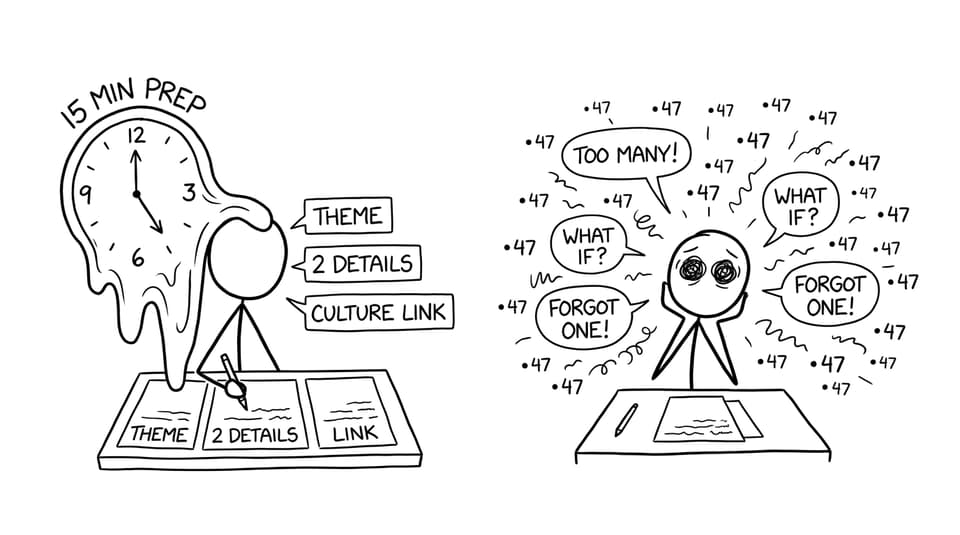
In the 15-minute prep, don’t write paragraphs. Write three boxes:
Theme (one prescribed theme)
Two specific details from the stimulus
One culture link (custom, tradition, social issue, perspective)
This keeps your IB Language B presentation coherent and makes the discussion easier.
Melting 15-minute prep timer vs calm 3-box planner
4) Build theme vocabulary in clusters, not lists
Vocabulary sticks when it’s connected. Create small clusters for each theme (identities, experiences, human ingenuity, social organization, sharing the planet). For IB Language B, learn:
5) Practice with exam-style prompts and real timing
You don’t rise to the occasion; you fall to your training. Use authentic prompts, set a timer, and do the full run: prep, speak, discuss.
On RevisionDojo, you can pair theme practice with an IB Language B question routine using resources like IB English B Resources and targeted practice from the Paper 1 Questionbank.
6) Record, then review like a coach
Recording is uncomfortable because it’s honest. Listen for:
Are you using connectors (“however,” “on the other hand,” “as a result”)?
Are you repeating the same basic verbs?
Do you answer follow-ups with reasons and examples?
This feedback loop is one of the fastest ways to improve IB Language B fluency.
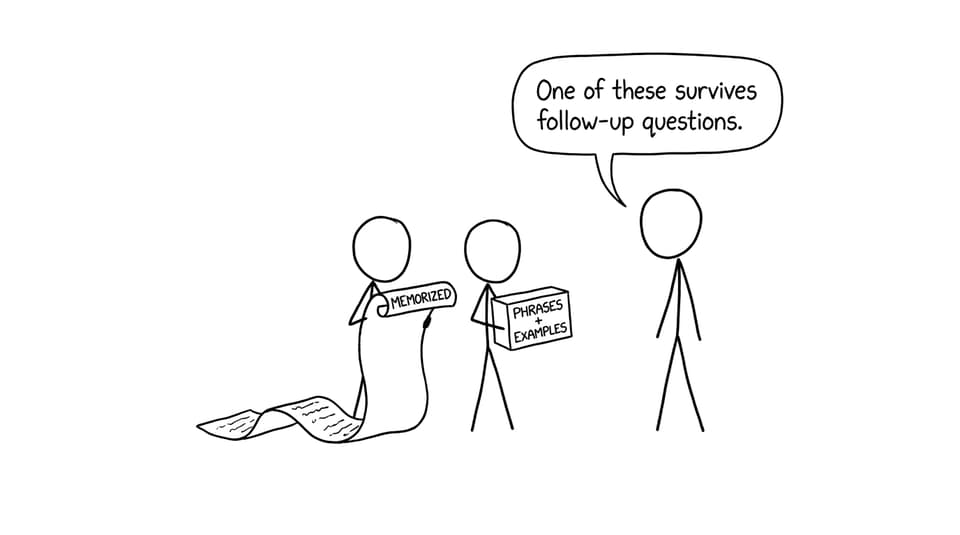
7) Stop memorizing full scripts (memorize tools)
A memorized speech sounds safe until the examiner changes direction. Instead, memorize:
Memorized scroll vs toolkit of phrases and examples
8) Train pronunciation with “shadowing”
Pick 30-60 seconds of audio from a native speaker source. Listen once, then repeat at the same rhythm. Don’t chase perfection; chase natural stress and intonation.
In IB Language B, clearer rhythm often scores better than fast speech with messy pronunciation.
9) Make cultural connections concrete
“Culture” isn’t a vague compliment about food or festivals. It’s perspective. Add one specific cultural point: a social norm, a school system detail, a workplace expectation, or a current debate.
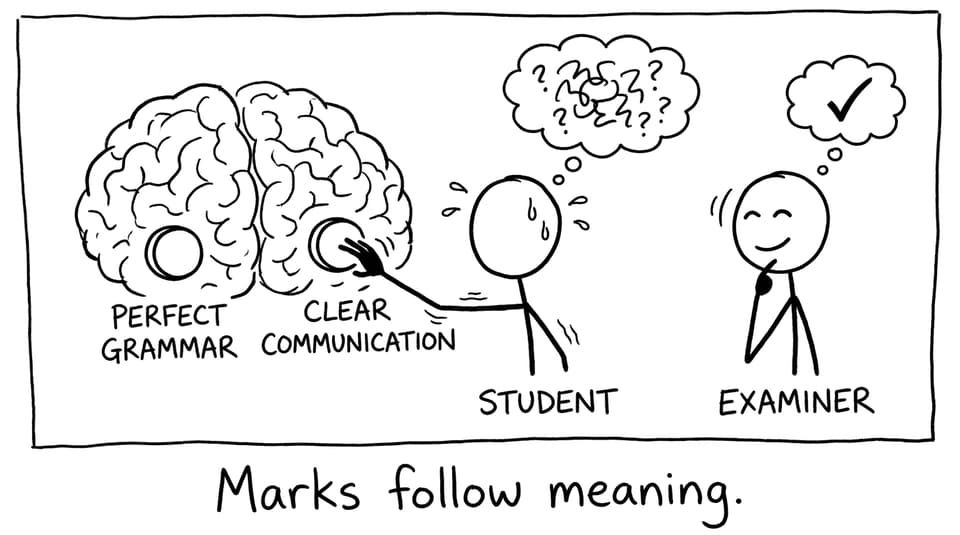
Brain chooses clear communication over perfect grammar
Final thought: prepare for conversation, not performance
A high-scoring IB Language B oral isn’t a flawless monologue. It’s a structured conversation where you show theme knowledge, cultural awareness, and the ability to think in the language.
If you want to systemize your prep, RevisionDojo can support the full loop: Study Notes for themes, Flashcards for vocabulary, AI Chat to rehearse follow-ups, Questionbank for skill practice, Grading tools for targeted feedback, plus Mock Exams and Predicted Papers to build exam confidence across your subjects. When you train that way, your oral stops feeling like a gamble and starts feeling like a skill you own.